DreamWorks has donated MoonRay, its rendering engine, to the Academy Software Foundation. Designed to be scalable and efficient, it enables everything from photorealism to stylized aesthetics. The tool stands out for its modern architecture, distributed rendering, and XPU mode, which processes rays on GPU and CPU. Integration with OpenUSD facilitates its adoption in current workflows.
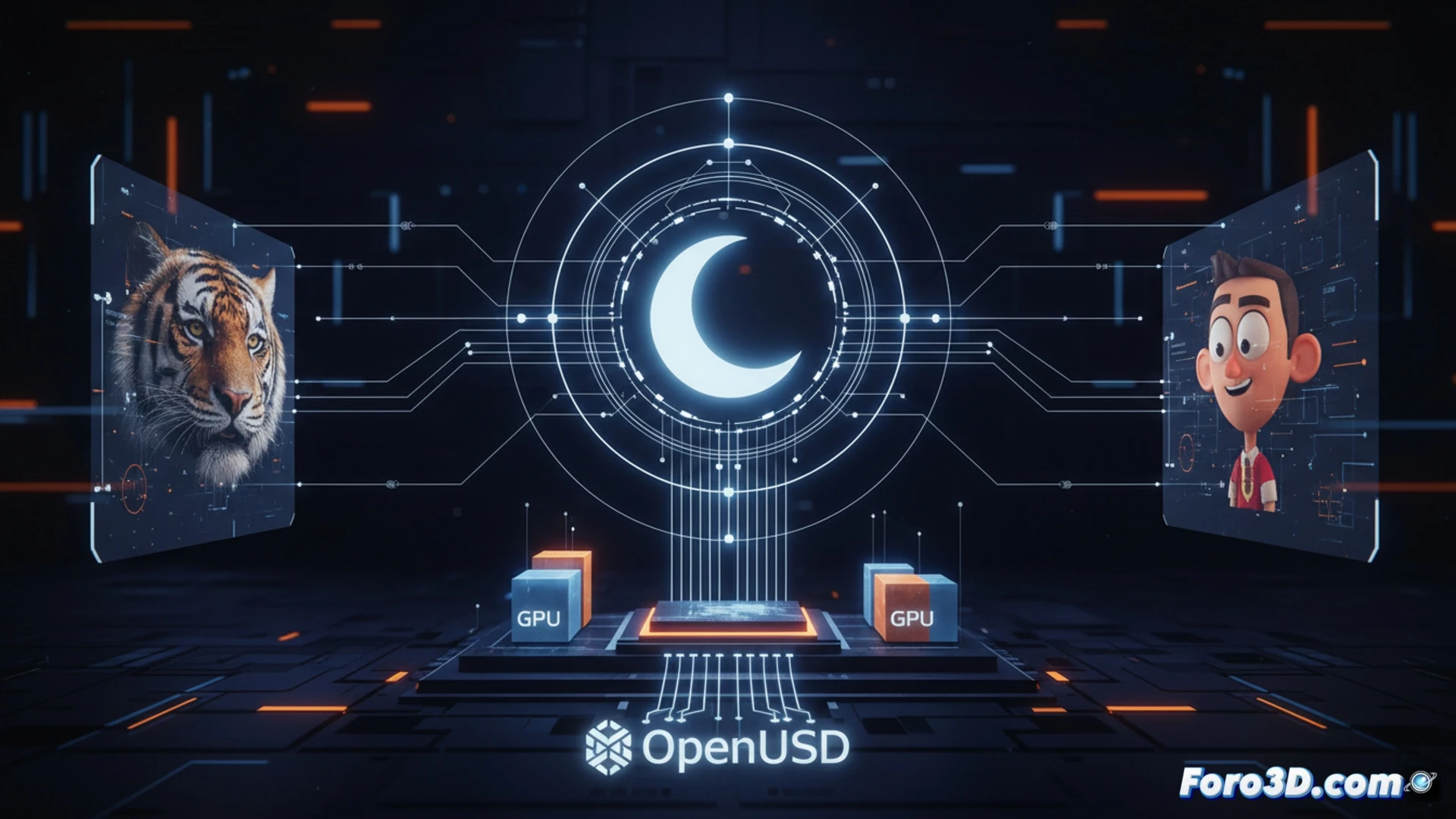
Architecture without legacy: technical keys of MoonRay 🚀
MoonRay is built on a clean architecture, with no legacy code, granting it flexibility and performance. Its distributed rendering capability allows scaling complex tasks across multiple nodes. The XPU mode optimizes hardware usage by combining GPU and CPU for ray tracing. Native integration with OpenUSD ensures compatibility with modern pipelines, facilitating work in collaborative and demanding environments.
The renderer that doesn't apologize for being modern 😎
While other engines drag code from the floppy disk era, MoonRay arrives without baggage or existential drama. David Morin thanked DreamWorks for releasing this gem, and Jeff Budsberg assured that it enables artistic styles without technical limitations. So, if your scene looks like a Van Gogh painting or an IKEA photo, MoonRay processes it without complaint. What a relief.