The development of Record of Lodoss War: Deedlit in Wonder Labyrinth demonstrates how a proprietary engine, the Mogura Engine, can emulate classic Castlevania gameplay without relying on commercial middleware. This technical analysis breaks down the 2D art pipeline and animation techniques that allow an indie title to achieve fluidity and aesthetics comparable to the major benchmarks of the Metroidvania genre. 🎮
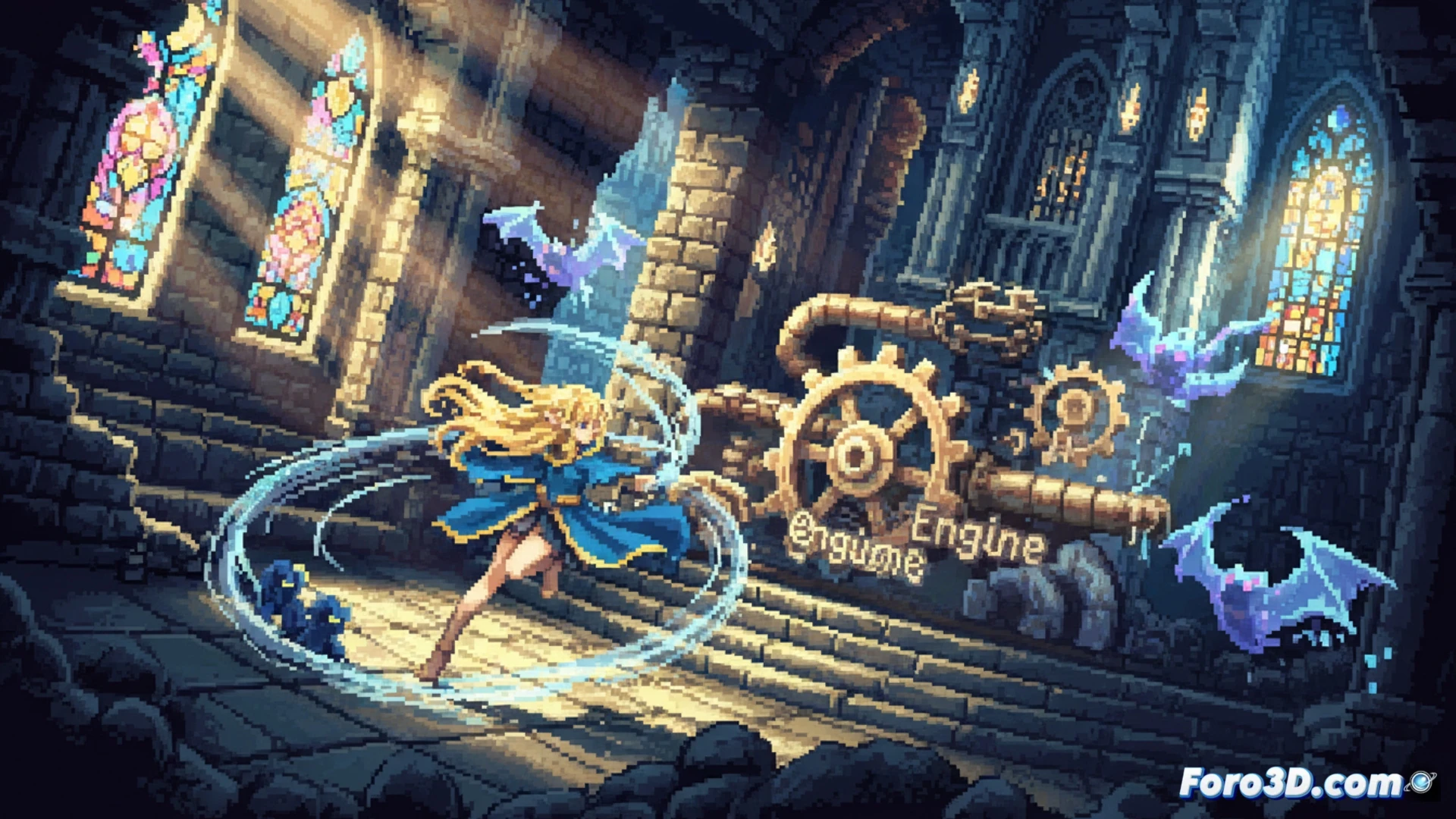
2D Art Pipeline: From Aseprite to Mogura Engine 🖌️
The workflow for sprites begins in Aseprite, where keyframes are drawn with a limited palette and sub-pixel animation techniques are applied to achieve smooth transitions between poses. Subsequently, Photoshop is used to retouch global lighting and apply trail effects using blending layers and motion blur. The Mogura Engine, programmed in C++, imports these sprites into optimized texture sheets and manages frame blending in real-time, interpolating frames to achieve stable 60 FPS even on modest hardware. The integration of pixel-perfect collision, inherited from Castlevania's design, is calibrated directly from color masks exported from Aseprite.
Lessons for indie developers on graphical fluidity ✨
The key to Deedlit's visual success lies in not sacrificing the identity of pixel art for fluidity. Instead of increasing resolution, the team prioritized the number of animation frames per action (up to 12 frames for a single attack) and the use of trail effects generated by semi-transparent duplicates of the sprite. For any indie developer, this demonstrates that a lightweight engine like Mogura, combined with accessible tools (Aseprite and Photoshop), can reproduce the feel of control and responsiveness of a triple-A title if time is invested in synchronizing player input with sprite transitions.
As an indie developer, what specific technical advantages does the Mogura Engine offer over commercial engines like Unity or GameMaker for achieving smooth pixel art animations consistent with the visual style of Deedlit in Wonder Labyrinth?
(PS: a game developer is someone who spends 1000 hours making a game that people complete in 2)