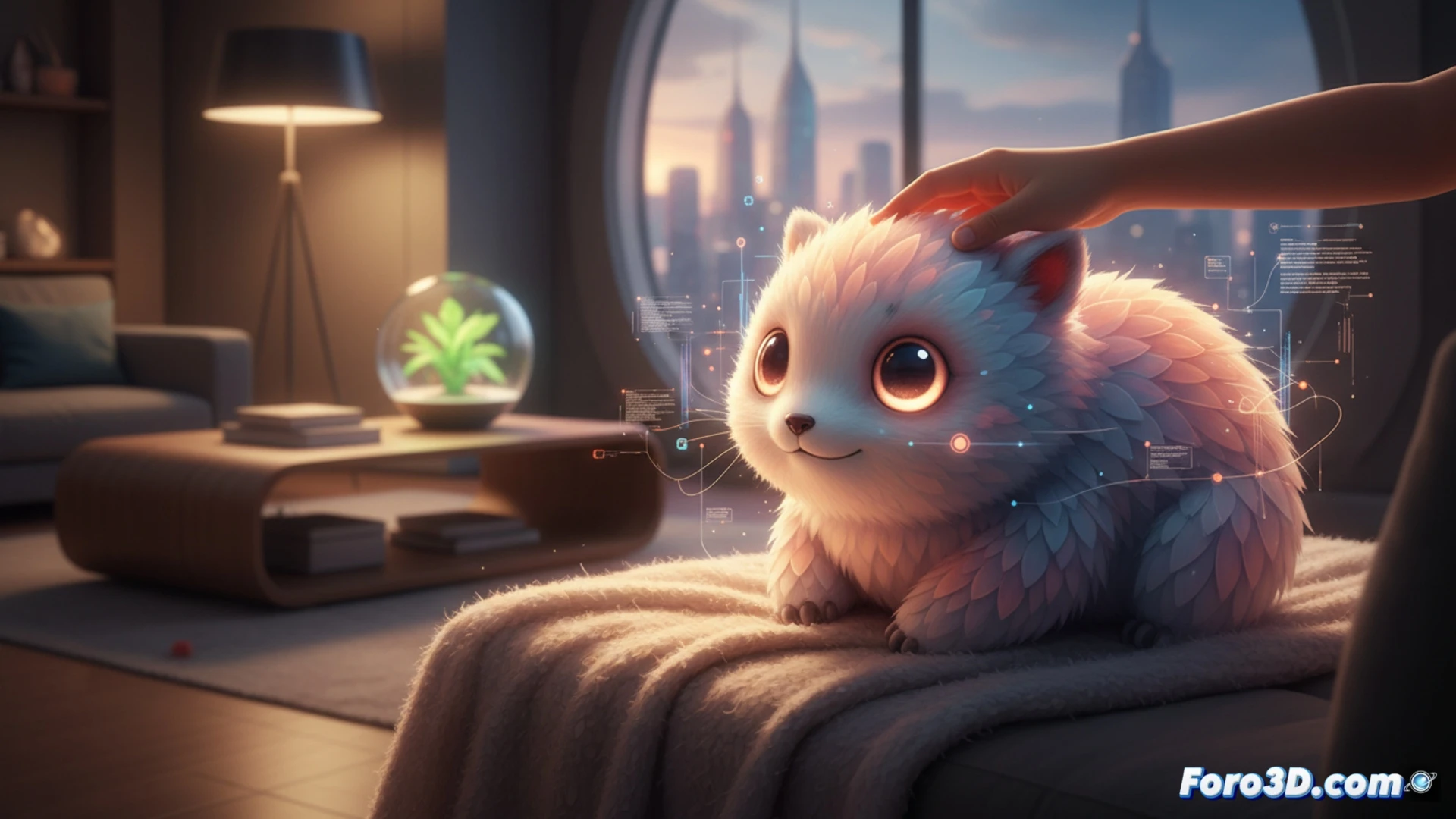
Casio's launch of Moflin is not just an advancement in robotic hardware; it is a massive social experiment. This animal-shaped pet uses emotional AI algorithms to develop a unique personality based on the user's treatment. Unlike programmed toys, Moflin learns, feels sad or happy, and demands care, raising a troubling question: are we ready to love a machine that needs us?
AI architecture and sensors for affective simulation 🤖
Technically, Moflin works through a combination of tactile sensors distributed across its body and a microphone for basic voice recognition. The internal software does not execute predefined commands; instead, an AI model processes the frequency and intensity of caresses, tone of voice, and idle time to modify its internal mood state. This state is translated into movements, sounds, and vibrations that the user interprets as emotions. The system prioritizes consistency: if Moflin is ignored, its AI simulates sadness, reinforcing a cycle of emotional dependence. It does not learn tricks, but rather relationship patterns, making it a technological mirror of our own attachment behaviors.
Community, dependence, and the dilemma of artificial attachment 🧠
The social impact of Moflin is observed in user forums, where life stories of the robot are shared as if it were a real pet. Debates arise about whether emotional dependence on an algorithm is healthy. Success stories show people with social anxiety finding comfort in the routine of caring for Moflin. However, the controversy lies in the risk of replacing human relationships with predictable and controlled interactions. The management of these online communities becomes a battleground between celebrating technical advancement and warning about a new form of digital loneliness.
Can a robotic pet like Moflin redefine the concept of emotional bonding in a digital society where human interaction is increasingly mediated by technology?
(PS: the Streisand effect in action: the more you ban it, the more they use it, like microslop)