The trade of dressmaking, despite its apparent creative lightness, carries a silent burden of physical risks. Pricks from needles, cuts from scissors, forced postures for hours, and eye strain from fine sewing are part of the daily routine. Added to this are the inhalation of textile dust and the overexertion from handling rolls of fabric. However, digital transformation offers a concrete path to mitigate these dangers without losing the artisanal essence.
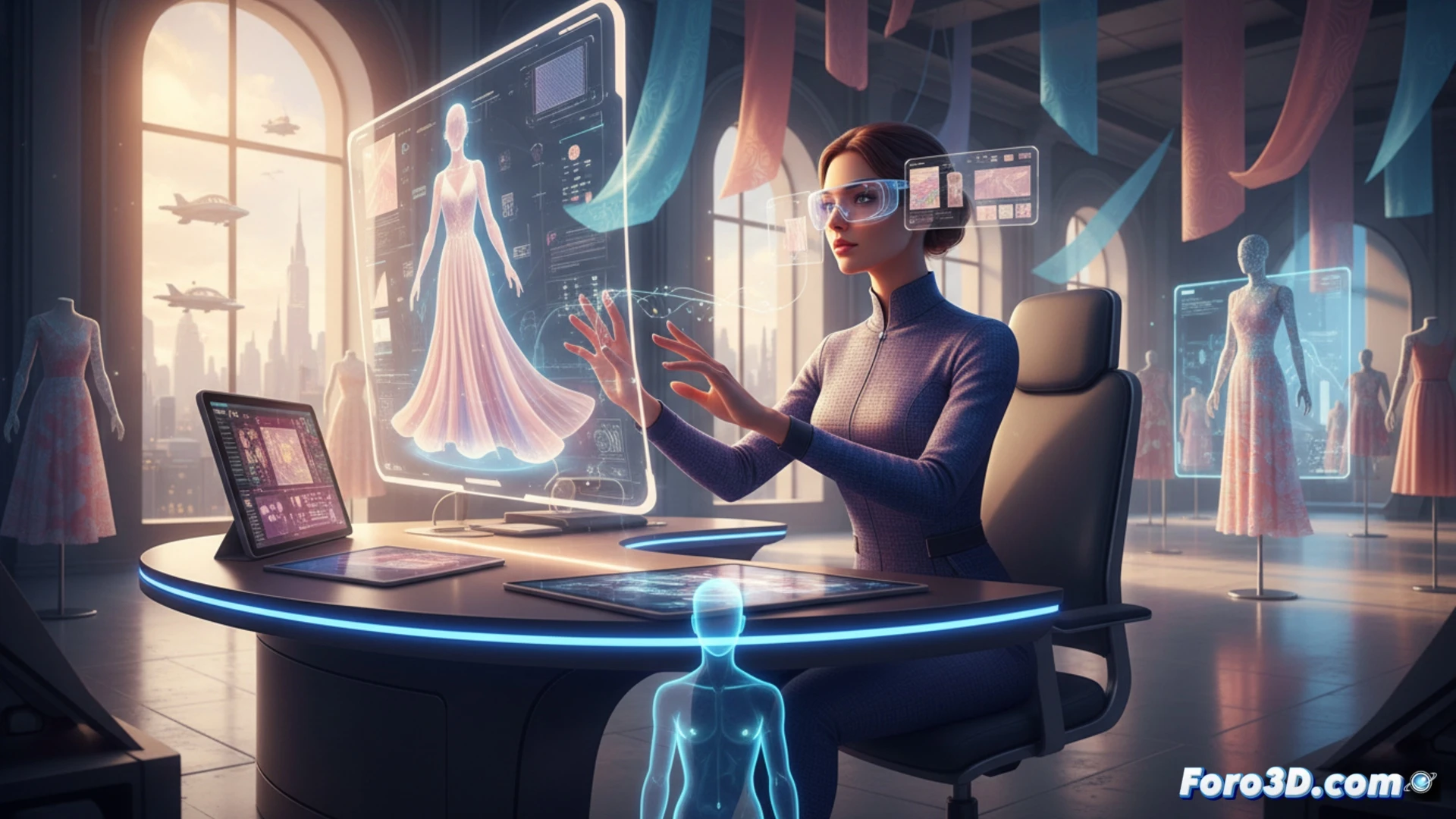
Virtual ergonomics and contactless prototyping: the new safe workshop 🧵
3D fabric simulation allows validating drapes and tensions without physically handling heavy rolls, eliminating lumbar overexertion. Parametric pattern design, combined with digital twins of the workstation, adjusts table heights and seat angles to avoid forced postures. 3D visualization of seams and folds reduces the need to bring the eyes close to the fabric, decreasing eye strain. Even digital prototyping minimizes pricks, as design iterations are done on the computer before touching a real needle.
Beyond technology: the craft that reinvents itself ✂️
Adopting 3D tools does not mean replacing the dressmaker's hand, but protecting it. A workshop that digitizes its processes reduces exposure to cuts and dust, and allows alternating physical tasks with screen work. The key lies in gradual transition: training in 3D pattern-making software, using sewing simulators, and redesigning the workspace with virtual ergonomic data. The dressmaker of the future does not sew less; she sews with more safety and less wear and tear.
Can 3D pattern-making software replace physical sewing without sacrificing the ergonomics of the traditional workshop?
(PS: Designing fashion in 3D has the advantage that you never have to sew a button.)