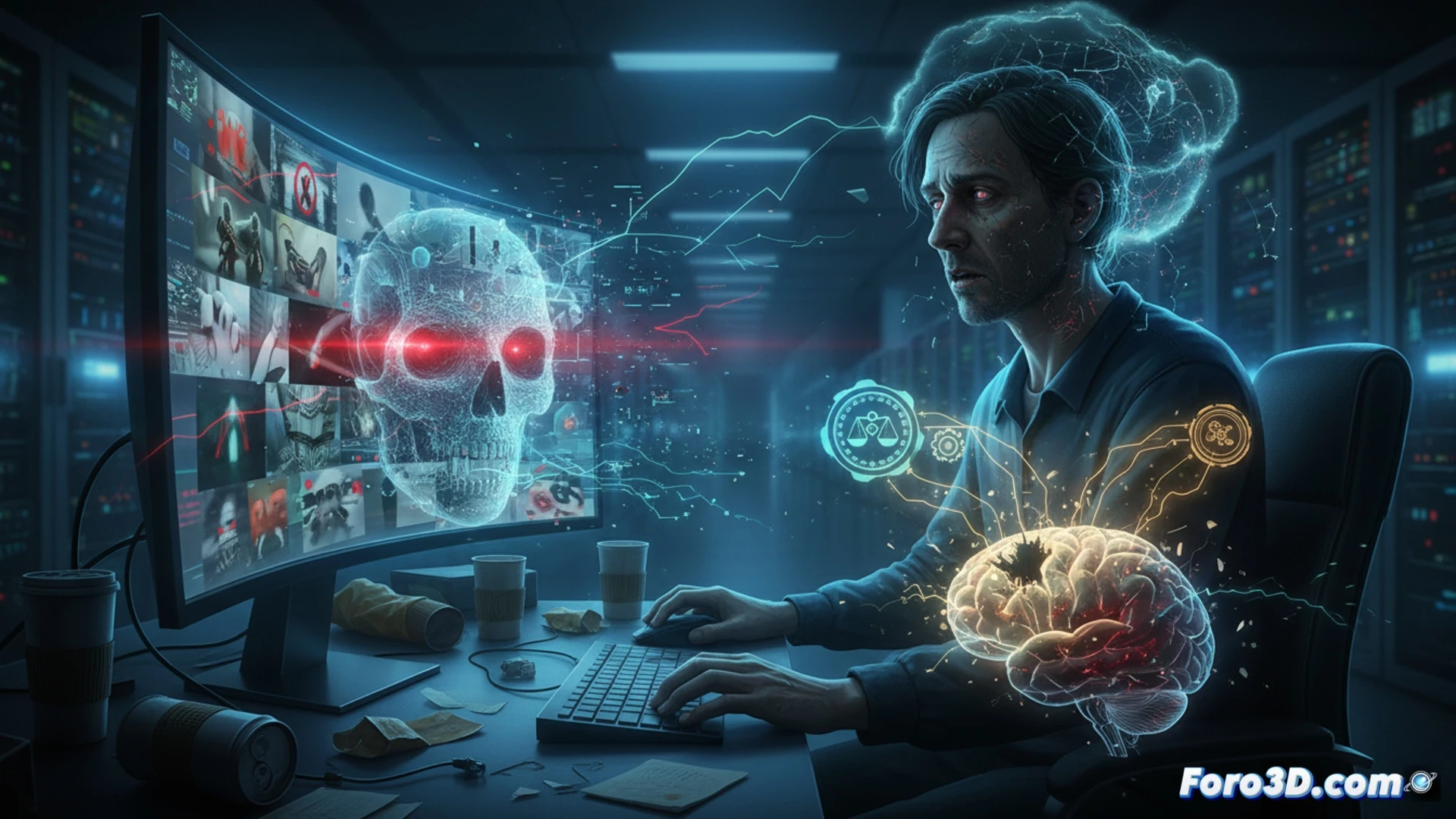
Content moderation has become an invisible pillar of the digital economy, but those who practice it pay a devastating psychological price. Constant exposure to graphic violence, child abuse, and hate speech generates severe stress that leads to post-traumatic stress disorder (PTSD), chronic anxiety, and deep depression. This technical analysis breaks down the specific occupational risks of a profession that operates in the digital trenches.
Eye strain, sedentary lifestyle, and the trap of metrics 🖥️
The average moderator faces a triple biomechanical and psychosocial burden. Eye strain from high-brightness screens and reviewing hundreds of images daily causes computer vision syndrome (CVS), with symptoms like dry eyes and headaches. Continuous sedentary behavior, combined with static postures in front of monitors, increases the risk of musculoskeletal disorders in the neck and wrists. However, the most toxic factor is the anxiety generated by productivity metrics: hourly review quotas that force quick decisions, reducing emotional processing time and accelerating burnout. The mental overexertion is constant, as each image requires a binary judgment (approved/rejected) with no room for reflective pause.
Can AI be the antidote to burnout? 🤖
Automation through artificial intelligence emerges as the most promising solution to mitigate these risks. Filtering systems based on computer vision and natural language processing can absorb up to 80% of the most traumatic material (explicit violence, child pornography) before it reaches a human. This would reduce the toxic load, allowing moderators to focus on ambiguous or culturally contextual cases. However, platforms must complement this technology with mandatory psychological support, decompression sessions, and legal limits on review quotas. Labor legislation must recognize this profession as a high psychosocial risk, ensuring active breaks, task rotation, and access to specialized therapy. Without these measures, the human cost of maintaining safe communities will remain unsustainable.
How can digital platform companies implement artificial intelligence systems that mitigate the psychological trauma of human moderators without losing accuracy in detecting harmful content?
(PS: at Foro3D we know that the only AI that doesn't generate controversy is the one that's turned off)