Astrophysics studies objects and events that occur at scales and distances impossible to replicate in a laboratory. 3D technology allows researchers to build volumetric models of phenomena such as supernovae or black holes. Instead of only observing flat images, they can rotate, section, and analyze the three-dimensional structure of gas clouds or magnetic fields.
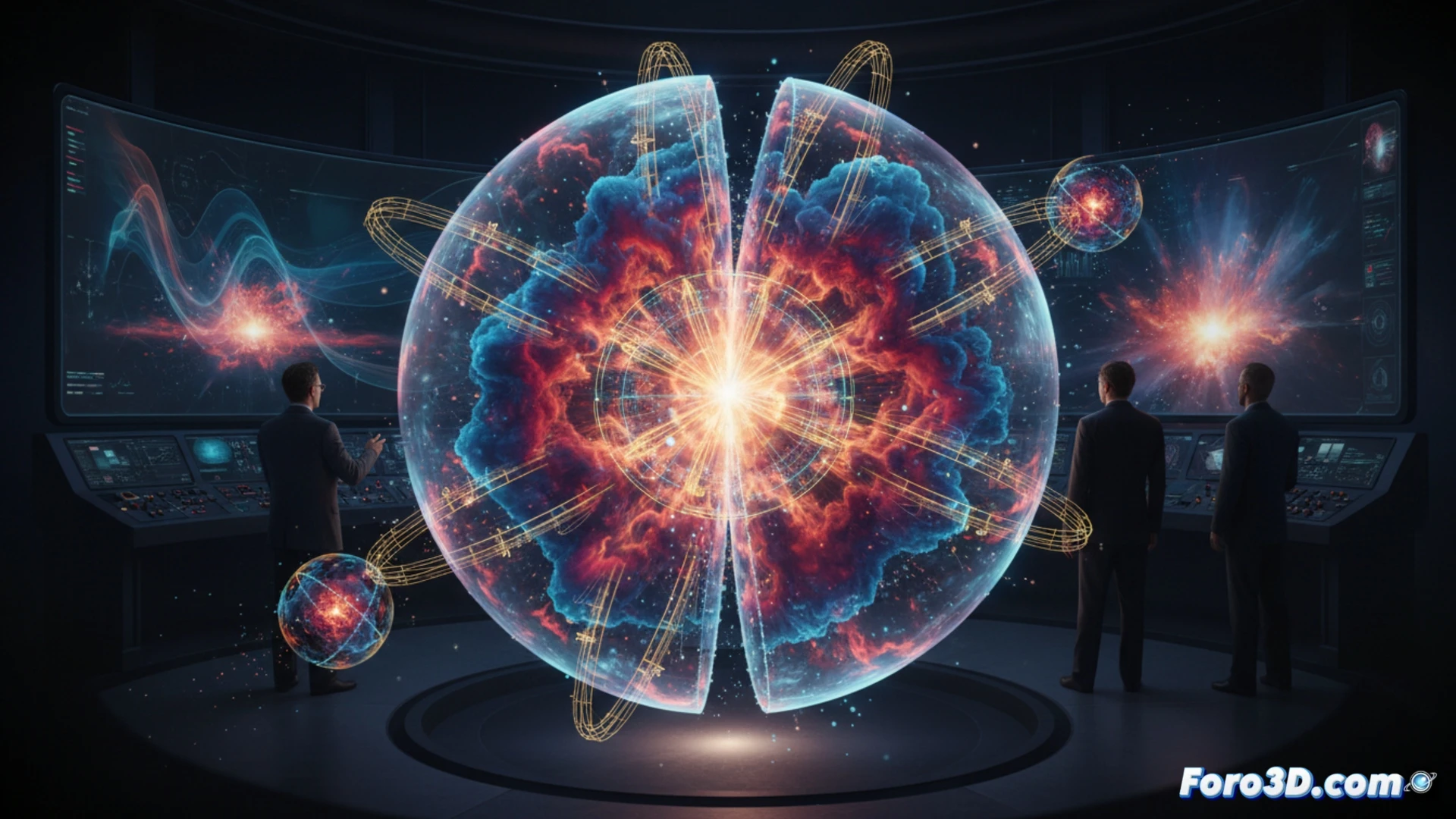
Data visualization and simulation with specialized software 🌌
A concrete example is the simulation of the collision of two neutron stars. Using programs like Blender for scientific rendering and VisIt or ParaView for massive data, the astrophysicist imports numerical simulation files (in HDF5 or FITS format) and converts them into interactive 3D models. This allows detecting patterns of gravitational waves or matter jets that would go unnoticed in 2D. Unity is also used for immersive virtual reality environments.
The day the astrophysicist modeled their coffee in 3D ☕
Of course, the true use of 3D technology in astrophysics is modeling the flow of caffeine in a cup while waiting for the supercomputing cluster to finish its calculation. The astrophysicist spends hours adjusting textures of virtual nebulae, but when you ask them why the Milky Way on their desk is donut-shaped, they reply: it's a dark matter simulation... or a mesh error. Humor is the only cosmological constant.