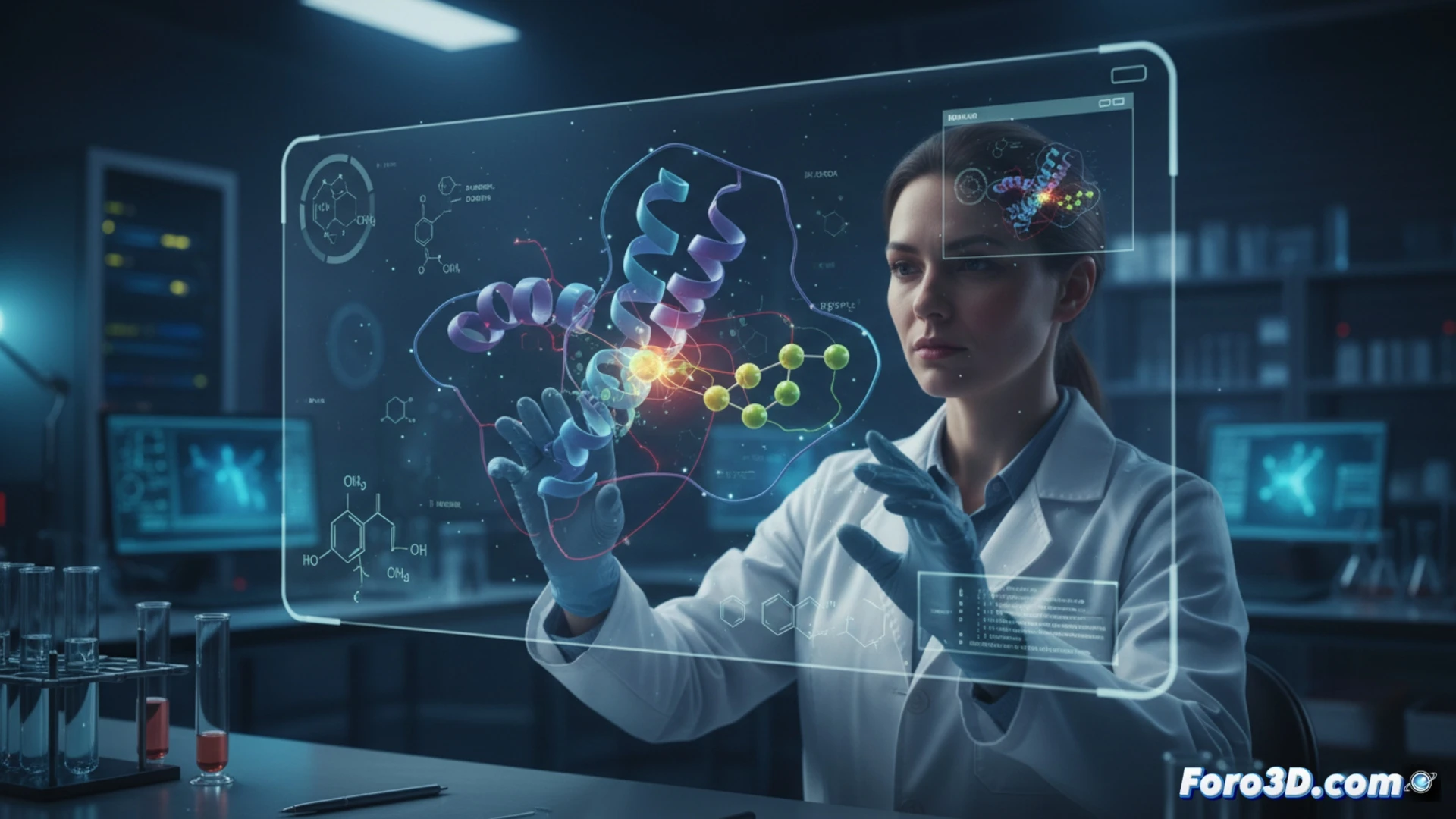
Modern chemistry studies structures that the human eye cannot see. 3D technology converts abstract data into tangible models. It allows rotating bonds, measuring angles, or predicting interactions without using a gram of reagent. A clear example: simulating how a drug fits into a protein before synthesizing it in the laboratory.
Essential software for molecular visualization 🧪
To work with 3D models of compounds, programs like Avogadro are used, ideal for building molecules from scratch, or PyMOL, a standard in biochemistry for analyzing proteins. Chem3D also stands out, allowing molecular mechanics calculations. These tools export files compatible with 3D printers or virtual reality. The typical workflow: draw the molecule, optimize its geometry, and export to STL.
When your molecule looks like Ikea furniture 🛠️
Trying to assemble a 3D model of a complex protein without a manual is like putting together a shelf with leftover parts. There's always a missing hydrogen atom or a crooked bond. The worst part is when you print the molecule in plastic and your colleagues ask if it's a Christmas decoration. But hey, at least it doesn't explode on your desk, which is more than you can say for real flasks.