Domestic work, predominantly carried out by vulnerable groups, faces occupational risks that are often invisible: forced postures, exposure to chemicals, falls on stairs or wet floors, and stress from task overload. Regulations require verification systems, but the lack of visual tools hinders effective training. 3D technology offers a tangible solution to simulate these hazards and design interactive safety protocols.
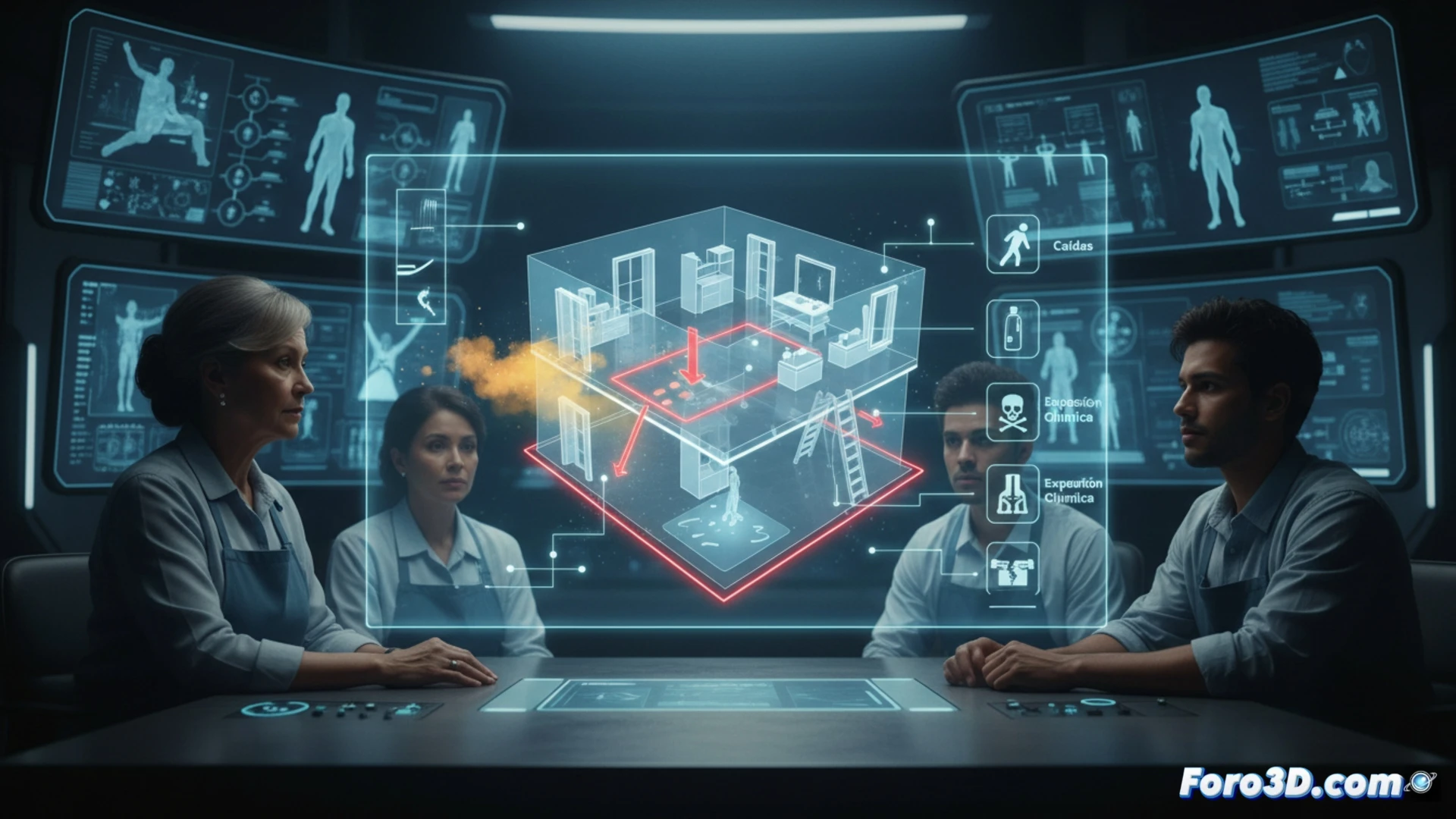
Simulation of critical environments with digital twins 🏠
Three-dimensional modeling allows recreating kitchens, bathrooms, and stairs to identify blind spots of risk. Using digital twins, falls from stairs can be simulated by detecting slippery surfaces or poor lighting. The animation of forced postures during baseboard cleaning or ironing helps calculate muscle tension angles. Additionally, the overlay of virtual particles visualizes the dispersion of cleaning chemicals, alerting about high-exposure areas. These systems generate real-time alerts during training, allowing the worker to interact with the virtual environment before facing the real space.
Towards inclusive and verifiable prevention 🛡️
3D technology not only documents risks but humanizes prevention by adapting to real home conditions. An interactive model can indicate the need for active breaks after simulating two hours of continuous ironing, or propose changes in furniture layout to avoid overexertion. For the regulatory verifier, these simulations act as evidence of compliance, transforming the protection of this vulnerable group into a measurable and replicable process, without relying on subjective inspections.
How can 3D modeling be applied to simulate and mitigate invisible ergonomic risks in domestic tasks such as cleaning or caring for dependent individuals?
(PS: the 28 affected soldiers are like 28 polygons with inverted normals: they shouldn't be like that)