3D technology can assist the shepherd's craft in planning pastures and shelters. With a terrain scan, optimized shelters for livestock can be designed and efficient grazing routes predicted. Programs like Blender are used to model structures and QGIS to analyze topography, reducing unnecessary travel and improving animal welfare.
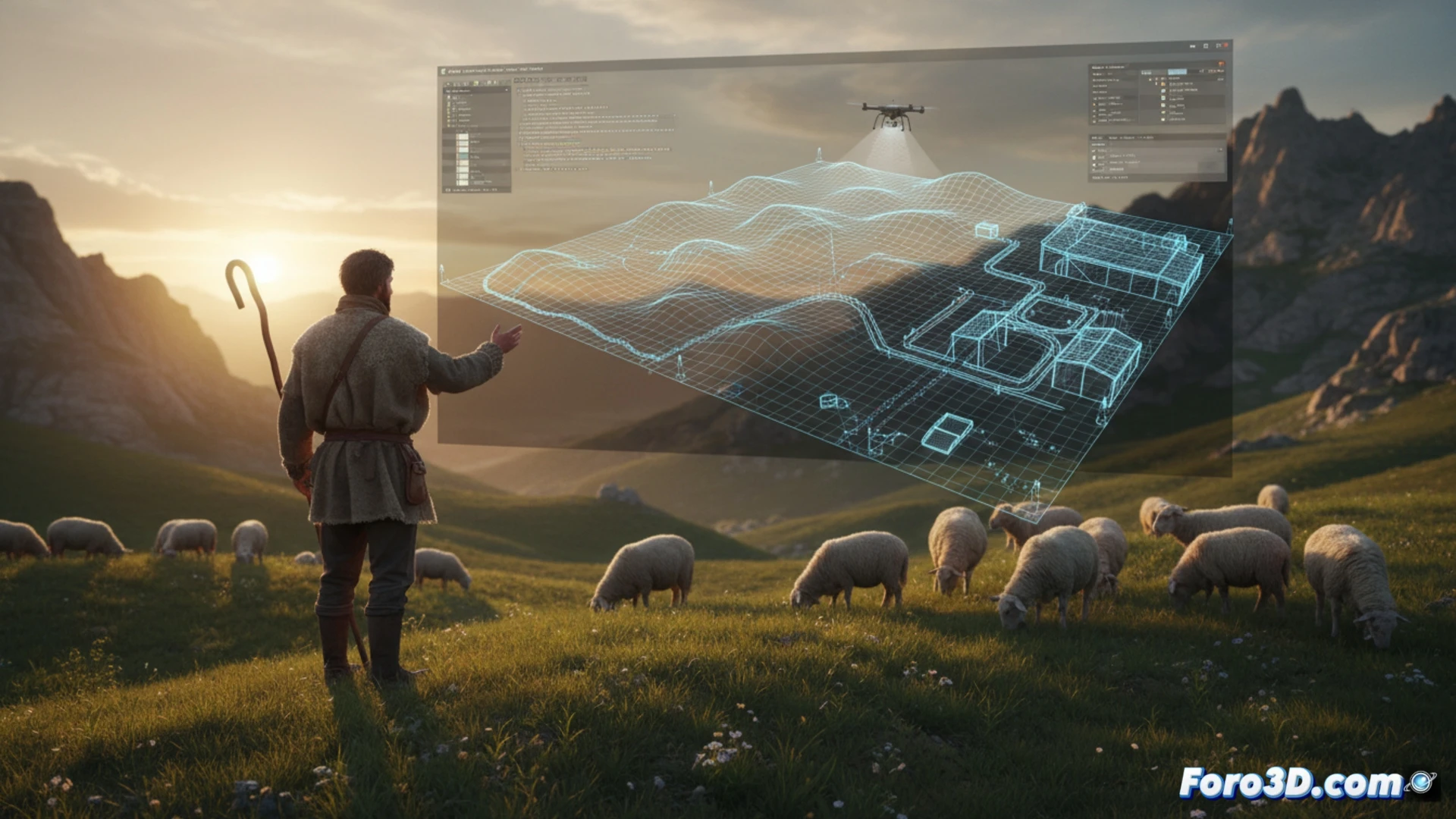
How 3D modeling optimizes rotational grazing 🌿
Rotational grazing benefits from 3D modeling by simulating grass growth in virtual plots. With software like SketchUp or Fusion 360, mobile fences and water points are designed. A drone captures field images, processed with Meshroom to create a three-dimensional model, and then soil rest times are calculated. This prevents overgrazing and allows the shepherd to manage the flock from a tablet.
3D printing of a smart staff (that doesn't fix sheep) 🐑
If the shepherd 3D prints a staff with a GPS sensor, they might locate the lost sheep, but it won't prevent another from escaping while they search. The real problem is that the sheepdog still doesn't update via USB. Meanwhile, the printed staff serves to scratch the shepherd's back when the flock doesn't cooperate. Technology helps, but the craft still involves dealing with animals that ignore your 3D models.