3D technology offers nutritionists tools to visualize and calculate portions with precision. A practical example is scanning food to obtain its actual volume and estimate macros without scales. Programs like Blender or Meshmixer allow creating reference models for visual diets, improving patient adherence.
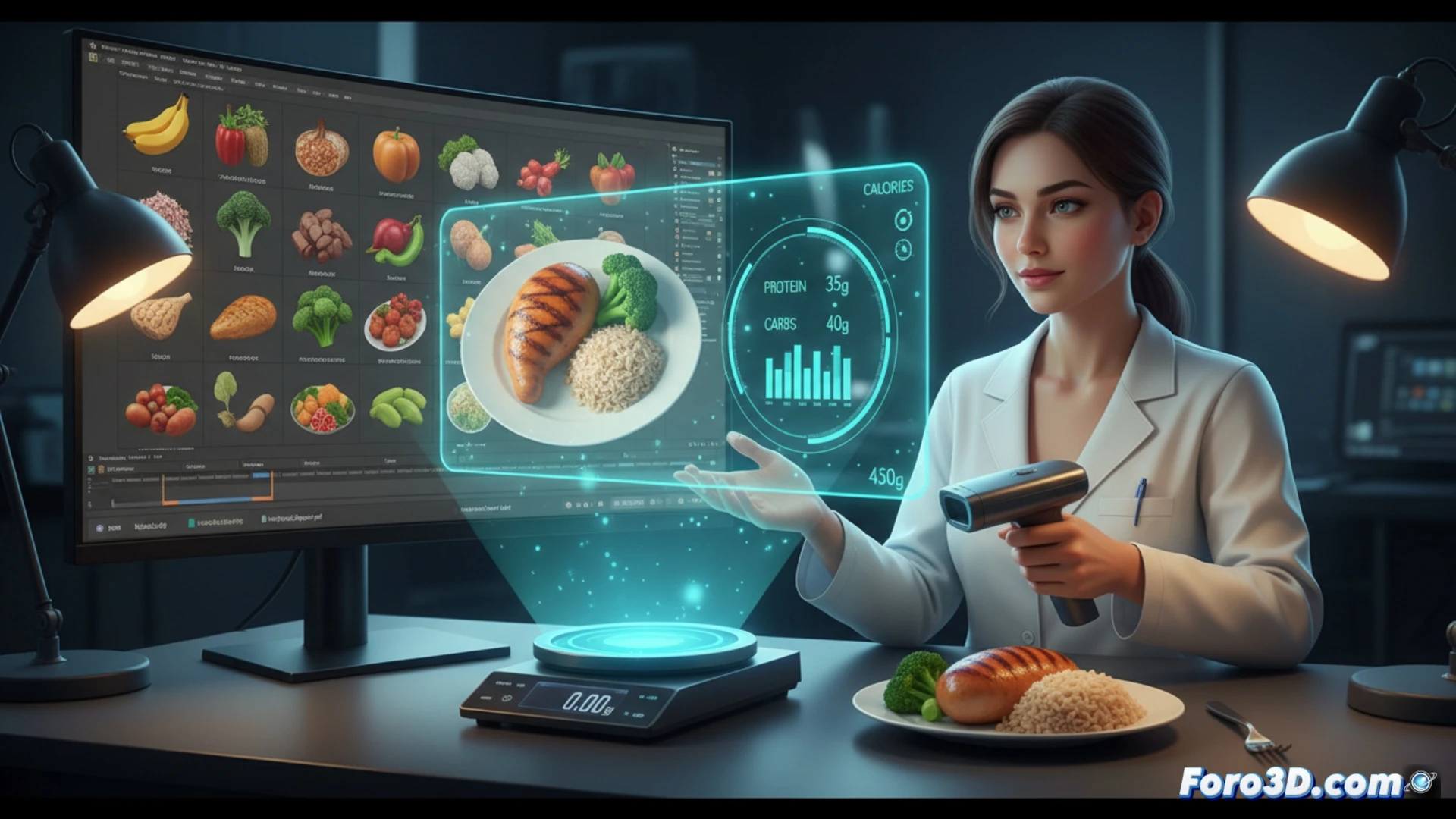
Scanning and volumetric modeling for personalized diets 🥗
The technical process involves using a handheld 3D scanner (such as the Revopoint POP 3) to capture the geometry of a dish or serving. Then, software like 3D Slicer or MeshLab processes the point cloud to calculate the exact volume in milliliters. By multiplying by the food's density (USDA tables), grams and macros are obtained without the need for weighing. This allows creating visual databases of standard portions for the clinic.
When the 3D chicken weighs more than your conscience 🍗
Of course, scanning your chicken breast won't make it juicier or save you from a pizza binge on a Saturday night. But at least you can discuss with the patient whether their rice serving is 200 or 250 grams, using a 3D model that doesn't lie. The next time someone says they eat little, you'll show them their virtual plate and say: this is a quarter of your daily intake. Technology is unforgiving, but at least it doesn't make you gain weight.