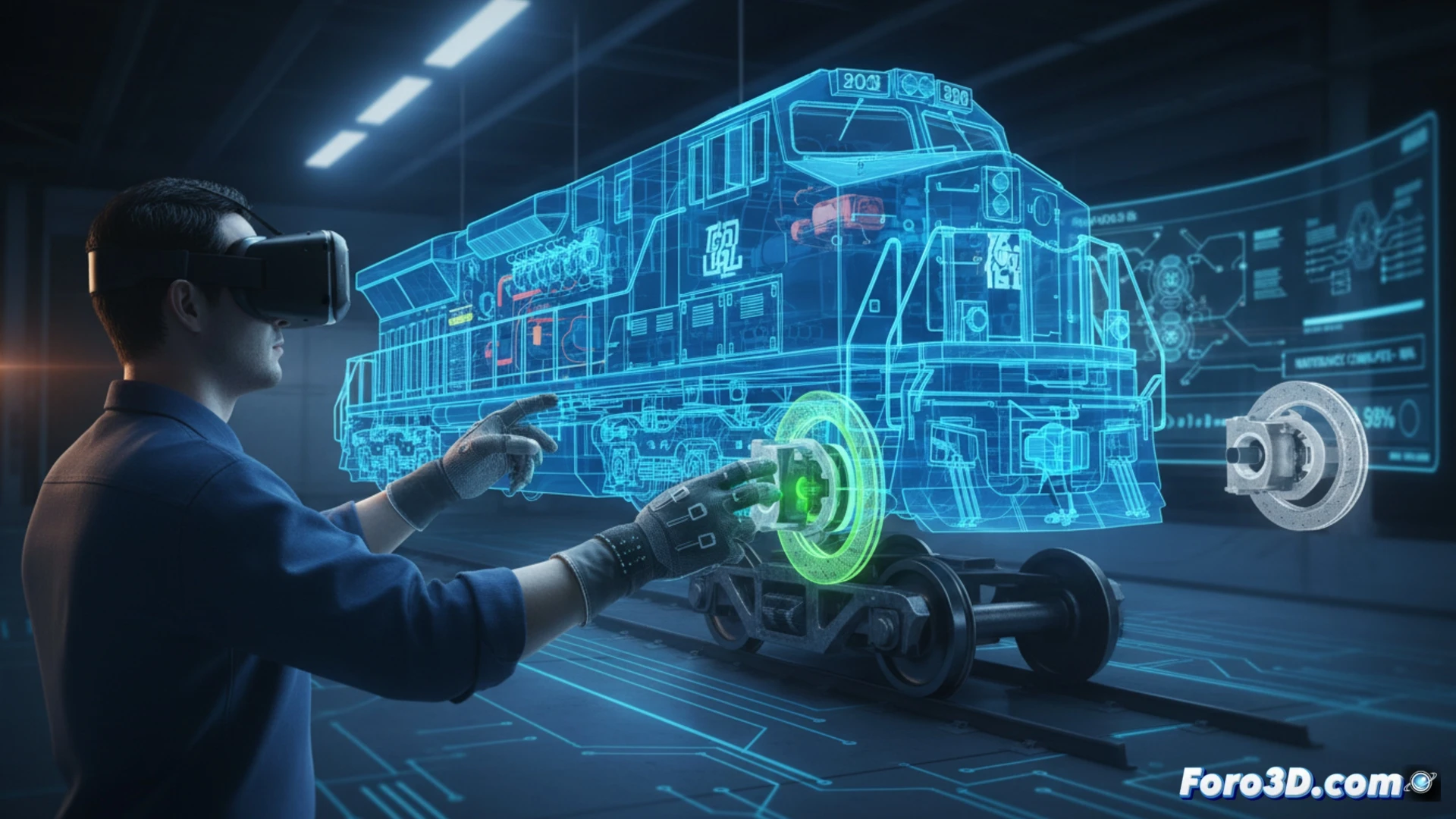
The profession of a railway machinist requires knowing every part of the train, but accessing them is not always easy. 3D technology allows for the creation of digital twins of locomotives. A practical example: a machinist can practice changing an emergency brake on a virtual model before touching it on the real train, reducing errors and downtime.
Digital twins and cab simulators 🚆
The key software is Siemens NX or SolidWorks for modeling parts, and Unity or Unreal Engine for interactive simulators. With a digital twin, the machinist examines the compressed air system without opening a single nut. If a valve fails, the 3D model shows its exact location and the disassembly manual on screen. Blender is also used for complex parts and CATIA for specific railway designs. All of this avoids disassembling components that they later don't know how to reassemble.
The machinist who no longer loses nuts on the track 🔧
Before, the novice machinist would open a panel, loosen three screws, and one would fall onto the ballast. Then they would spend twenty minutes looking for it with a flashlight. With the 3D model, they now see the virtual part, rotate it with the mouse, and discover that the nut was supposed to go on the other way. The fault is not with the digital model, but with their ego for not wanting to read the instructions. At least the computer doesn't laugh at them when they put their hand in the wrong place.