The figure of the drafter has evolved from the drawing board to the screen, but their occupational risks have transformed into silent enemies: eye strain, musculoskeletal disorders, and deadline stress. Unlike the physical dangers of a construction site, these factors are invisible and accumulate over time. Through 3D visualization, we can turn this abstract issue into an interactive visual experience that educates and prevents.
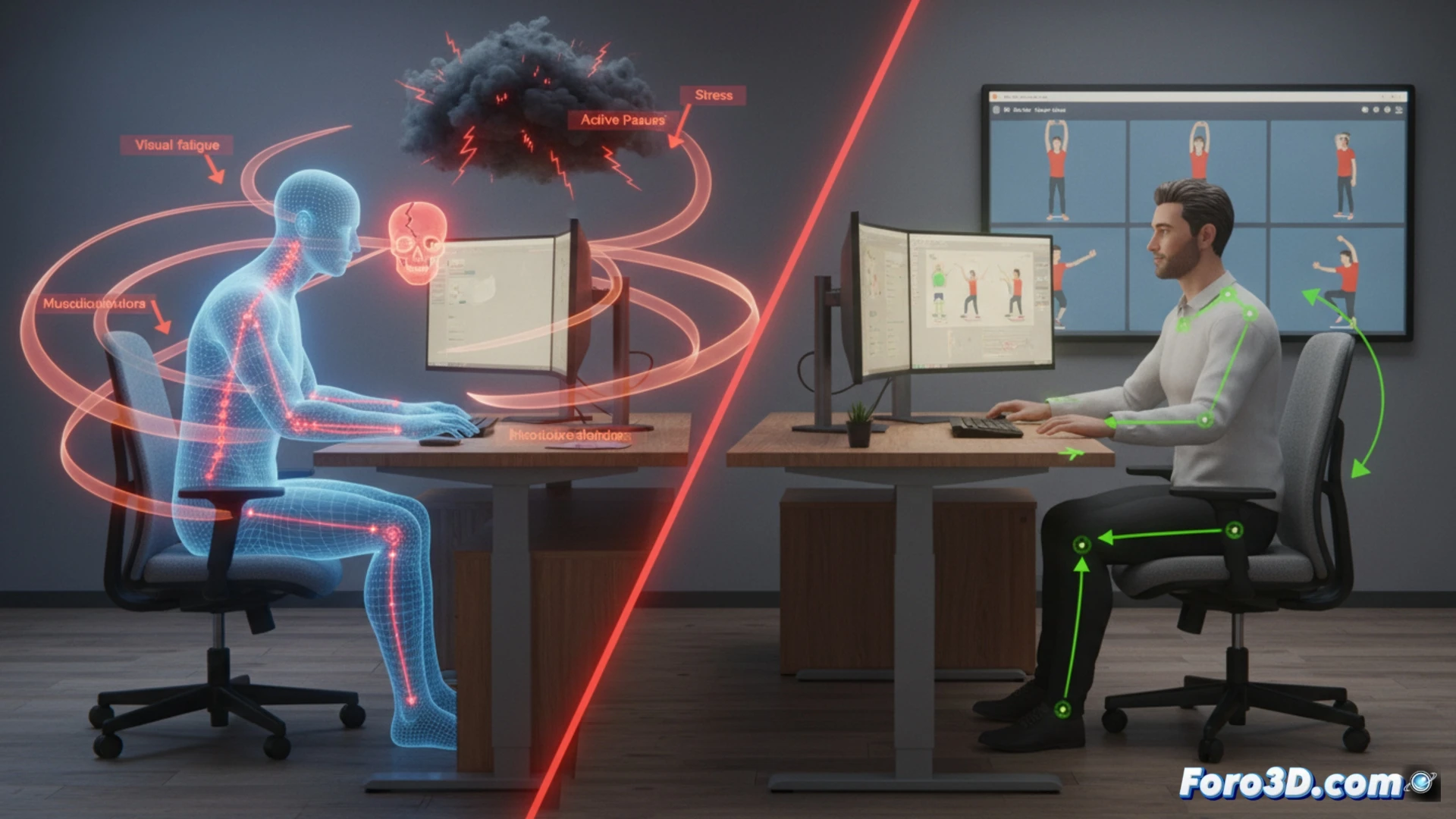
Risk scanning: from monitor to polygon model 🖥️
To address eye strain, we model a monitor with simulated glare and an incorrect distance from the face. The chair and desk become hot spots where the drafter's joints form harmful angles, highlighted with warning spheres. The keyboard and mouse include pressure zones that trigger visual alerts. Through a web viewer or in virtual reality, the user can orbit around the workstation and activate information layers that detail each risk factor, from sedentary behavior to mental workload.
Active breaks rendered in real time 🧘
The model not only points out the problem but also offers the solution. When training mode is activated, an animated figure performs neck stretching and wrist rotation exercises directly on the virtual desk. Each animation is accompanied by a timer and ergonomic tips. This approach transforms a technical prevention article into an immersive pedagogical tool, ideal for occupational training courses where seeing is believing is the first step toward awareness.
Since 3D modeling allows simulating and correcting ergonomic factors in the drafter's workstation, what specific risk prevention methodologies could be integrated directly into modeling software to anticipate silent injuries before they manifest?
(PS: Teaching with 3D models is great, until students ask to move the parts and the computer freezes.)