3D technology is transforming the esthetician's trade by allowing results to be visualized before applying a treatment. Using scanners and modeling software, the client's facial structure can be analyzed, changes in skin or volume can be predicted, and interventions can be planned with precision. This reduces errors and improves communication with the patient.
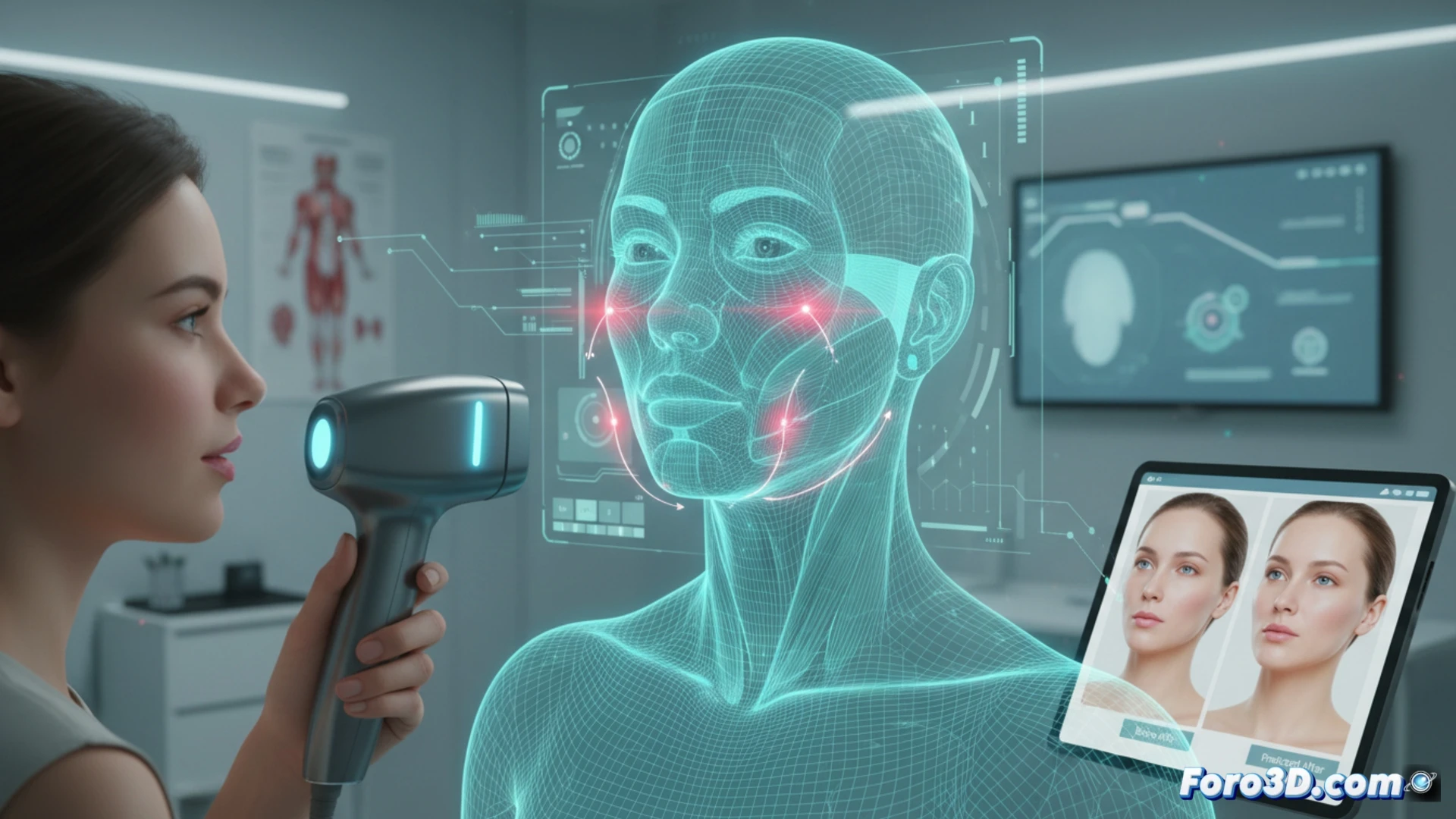
Facial scanning and simulation with specific software 🖥️
The process begins with a 3D scanner like the Artec Eva or Bellus3D, which captures the geometry of the face in minutes. Then, programs like Blender or ZBrush allow modifying the model to simulate fillers, lifts, or wrinkle reduction. Tools like Crisalix or Vectra H2 go further: they integrate artificial intelligence to predict visible results. The esthetician adjusts volume and texture parameters and shows the client a realistic preview. This avoids unrealistic expectations and facilitates informed decisions.
The client sees their future face and asks for touch-ups like in a video game 🎮
Now the client arrives, gets scanned, and instead of saying give me Botox, they say can you give me the face I had when I was 25 but with fewer wrinkles than Brad Pitt?. And you, as an esthetician, move a 3D slider while they shout no, that nose reminds me of my ex!. At least, when the real result isn't exact, you can blame the software. The technology isn't perfect, but at least it gives you a digital scapegoat.