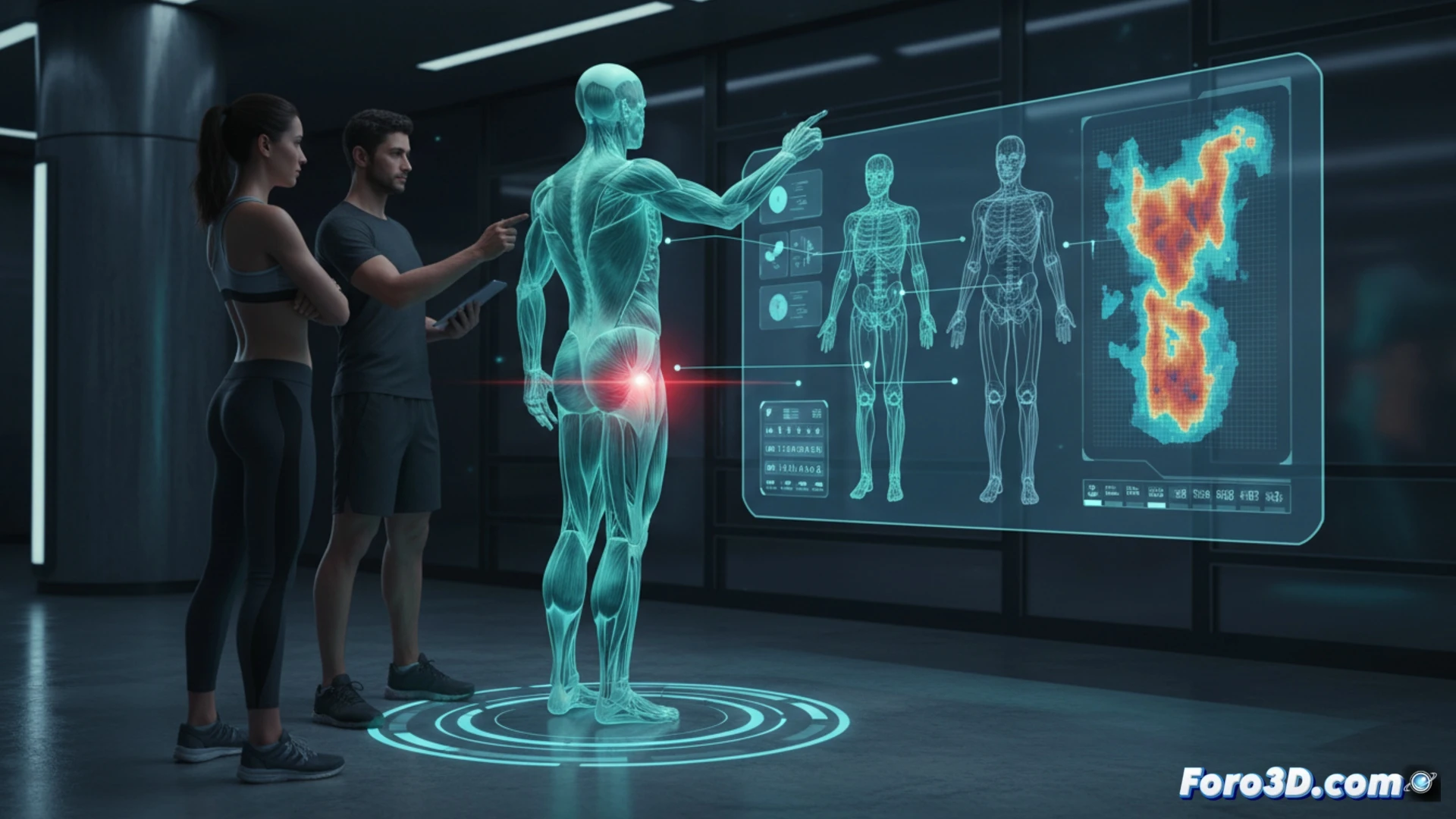
3D technology allows personal trainers to visualize the client's anatomy in three dimensions. This helps design routines that prevent injuries and optimize performance. For example, a 3D body scanner measures volumes and symmetries, allowing exercises to be adjusted according to the user's actual posture. Programs like BodyScan or Naked Labs facilitate this analysis.
Key 3D software for biomechanical analysis 🦾
Tools like Blender or Maya allow importing scanner data and creating virtual avatars of the client. With biomechanics plugins, such as Rigify or MakeHuman, joint movements and muscle loads are simulated. This allows the trainer to predict imbalances without the need for expensive equipment. Additionally, programs like Kinovea analyze 3D videos to correct technique in real time, improving the effectiveness of each repetition.
When the digital twin weighs more than the real one 😅
The client thinks they pay to sweat, but now they also fund a 3D model that follows them on the screen. The worst part is that the digital twin doesn't complain, doesn't ask for a break, and always has the perfect posture. Meanwhile, the real one pants trying to imitate their virtual self. At least, if the model breaks, there's no need to take it to the physio; just reset the program.