3D technology is no longer just for engineers or designers. In aviation, flight attendants can use it to improve safety and passenger service. With three-dimensional models of the cabin, it is possible to practice emergency procedures or locate equipment without being on board. A concrete example: simulating the opening of a door under conditions of smoke or differential pressure.
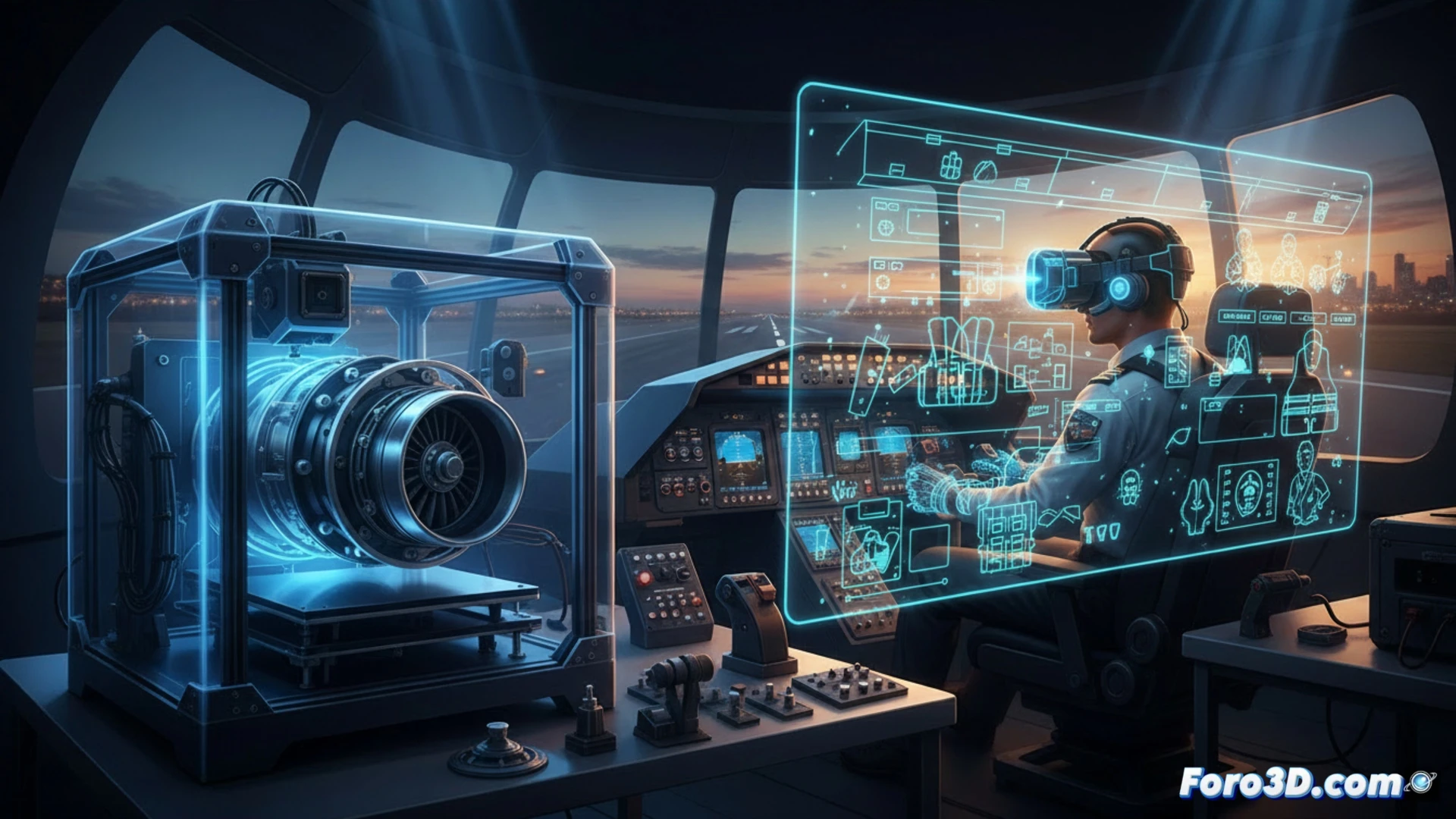
Key software for 3D training 🛠️
For these simulations, programs like Blender, which is free and has a good community, are used to model the cabin. Then, Unity or Unreal Engine allow creating interactive environments where the flight attendant can practice evacuation routes or cart handling. There is also SmartBlades, a plugin for analyzing movements in tight spaces. These programs allow repeating scenarios without burning fuel or putting anyone at risk.
And if the passenger asks for a gin and tonic in 3D 🍸
Of course, there is still no software that can silence the passenger in seat 14B when they ask for a beer right after takeoff. But imagine being able to 3D print a snack with your favorite logo to distract them. Or better yet: an exact replica of their lost suitcase so they can point out where they left it. 3D technology solves many things, but infinite patience still has to be trained the old-fashioned way.