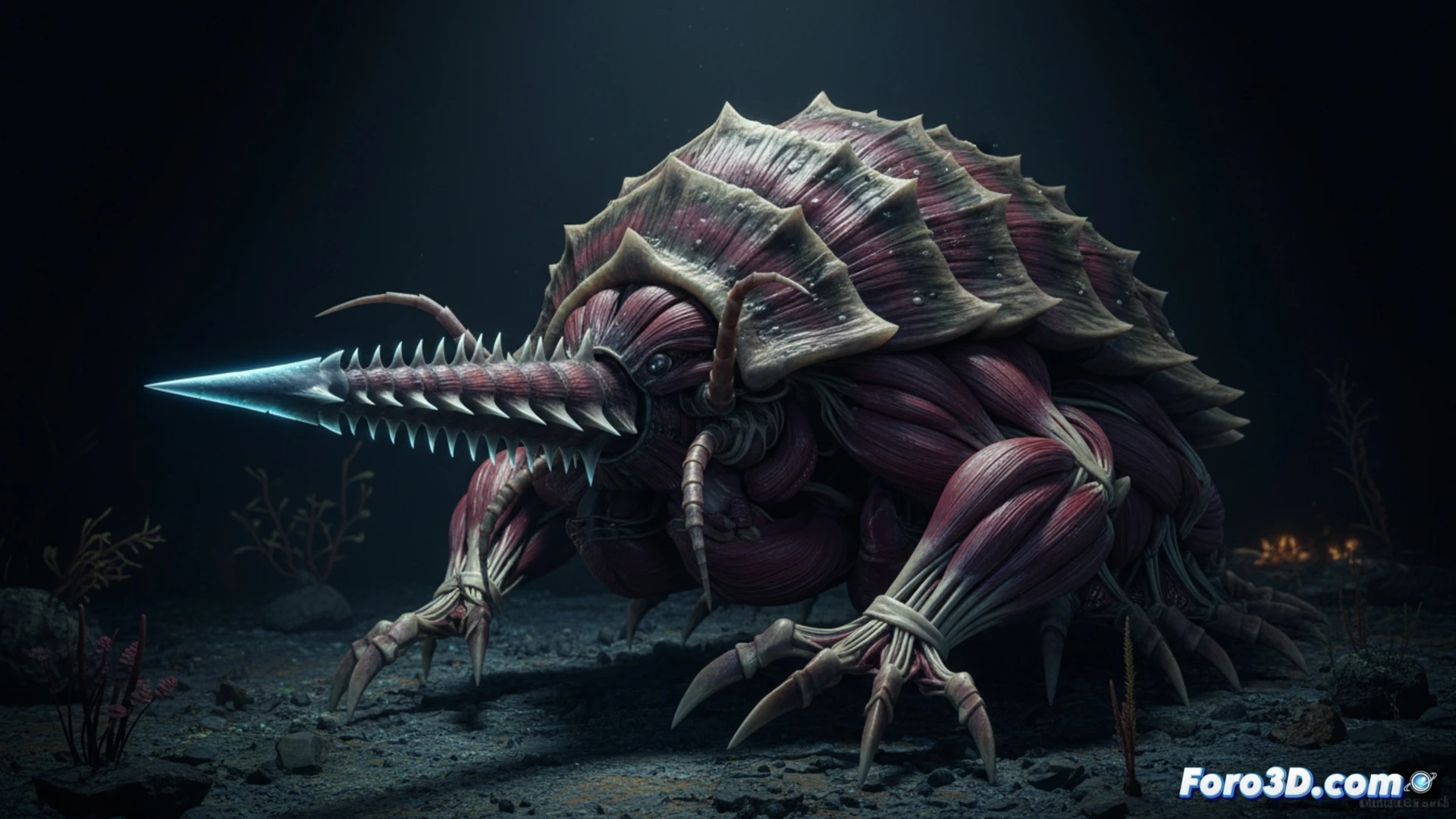
The discovery of the Carnivorous Abyssal Chiton challenges classical mollusk biology. While its shallow-water relatives are scraping herbivores, this species has developed an active hunting system in total darkness. For scientific visualization, creating an anatomical 3D model of this creature requires mapping a modified radula into a chitinous harpoon and a hypertrophied muscular system for lethal grip. The technical challenge is representing the transition from a defensive shell to an offensive armor. 🐚
Mapping Evolutionary Adaptations in the 3D Environment 🧬
The model must prioritize three key structures. First, the eight shell plates, which in the abyss have lost pigmentation but gained thickness and sensory spines. Second, the muscular foot, which instead of gliding, contracts to generate an ambush movement similar to a trap. Third, the radula system: instead of the typical tooth ribbon for scraping algae, this species possesses a hollow central tooth connected to a venom gland. The simulation must show toxin injection into prey such as crustaceans. The lighting in the render should be almost nonexistent, simulating the bathypelagic zone, with bioluminescence activated only during the attack.
The Modeler's Dilemma: Realism vs. Biological Functionality 🎯
When comparing this chiton to its shallow-water cousin, the greatest challenge is not falling into exaggeration. The shallow-water chiton is slow and passive; the abyssal one is fast and aggressive. However, both share the same base anatomy of eight plates. The technical trick lies in the animation of the muscular system: using soft body dynamics for the foot and rigid bodies for the plates. The visual comparison should highlight that evolution does not create new organs but rather twists existing ones to survive in extreme pressure.
As a 3D modeler, what is the greatest technical challenge when recreating the biomechanical anatomy of the carnivorous abyssal chiton, considering that its attack structures defy the known rules of mollusk biology so far?
(PS: modeling manta rays is easy; the hard part is making them not look like floating plastic bags)