The recent description of Orthotomus chaktomuk, known as the Cambodian Tailorbird, represents a milestone in modern ornithology. This small bird, identified by a distinctive red spot on its crown, inhabits dense scrub and forest edges of the Mekong River floodplain. For the field of scientific visualization, its 3D modeling offers a unique opportunity to merge taxonomic data with precise anatomical representation techniques, allowing researchers and educators to explore a species that, paradoxically, lives near urban areas but went unnoticed for decades.
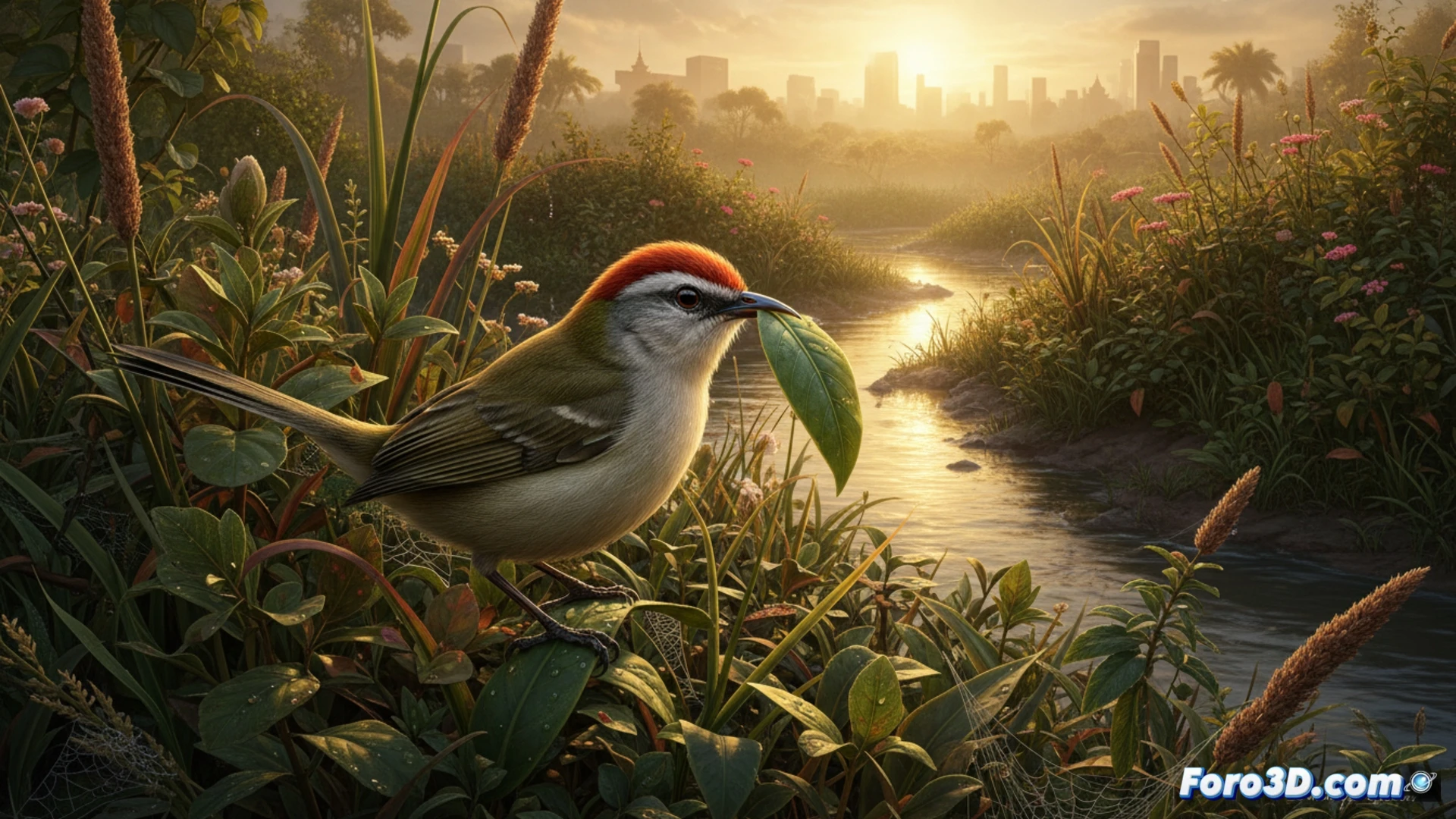
Technical Process of Anatomical and Environmental Reconstruction 🛠️
The development of the 3D model was based on morphometric data extracted from type specimens deposited at the University of Kansas Natural History Museum. Using digital sculpting software, priority was given to accuracy in the morphology of the thin, slightly curved beak, characteristic of insectivorous sylviids. Texturing the plumage required meticulous study of coloration: the olive-green back, whitish ventral parts, and especially the reddish-orange frontal spot diagnostic of the species. For the habitat, a dense riverside scrub environment was recreated, integrating vegetation models from the Lower Mekong ecoregion with a lighting system simulating partial canopy. A structural comparison with Orthotomus sutorius was conducted to validate differences in tail length and intensity of the cephalic tone.
Implications for Conservation and Immersive Outreach 🌿
The 3D model of the Cambodian Tailorbird transcends mere zoological illustration to become a conservation tool. By visualizing its cryptic plumage and dependence on scrub habitat pressured by urban development, viewers understand the fragility of its ecological niche. This representation allows museums and educational platforms to offer an interactive experience where the specimen can be rotated, plumage details magnified, or even nesting behavior simulated. Democratizing access to this newly discovered species fosters an emotional connection that paper data cannot achieve, underscoring the urgency of protecting the last remnants of dense vegetation on the outskirts of Phnom Penh.
What technical and methodological challenges did you face when 3D modeling the cryptic plumage and nesting adaptations of the Cambodian Tailorbird to ensure the biological accuracy of its visualized habitat?
(PS: if your manta ray animation doesn't excite, you can always add documentary music from Channel 2)