The scientific community has confirmed the Tapanuli orangutan (Pongo tapanuliensis) as the third species of great ape in Sumatra, inhabiting a forest area of only 1,100 square kilometers. This primate, with fewer than 800 living individuals, holds the title of the great ape with the highest risk of extinction on the planet. Its recent taxonomic classification, based on genetic and morphological differences, opens a window of opportunity for scientific visualization applied to conservation biology.
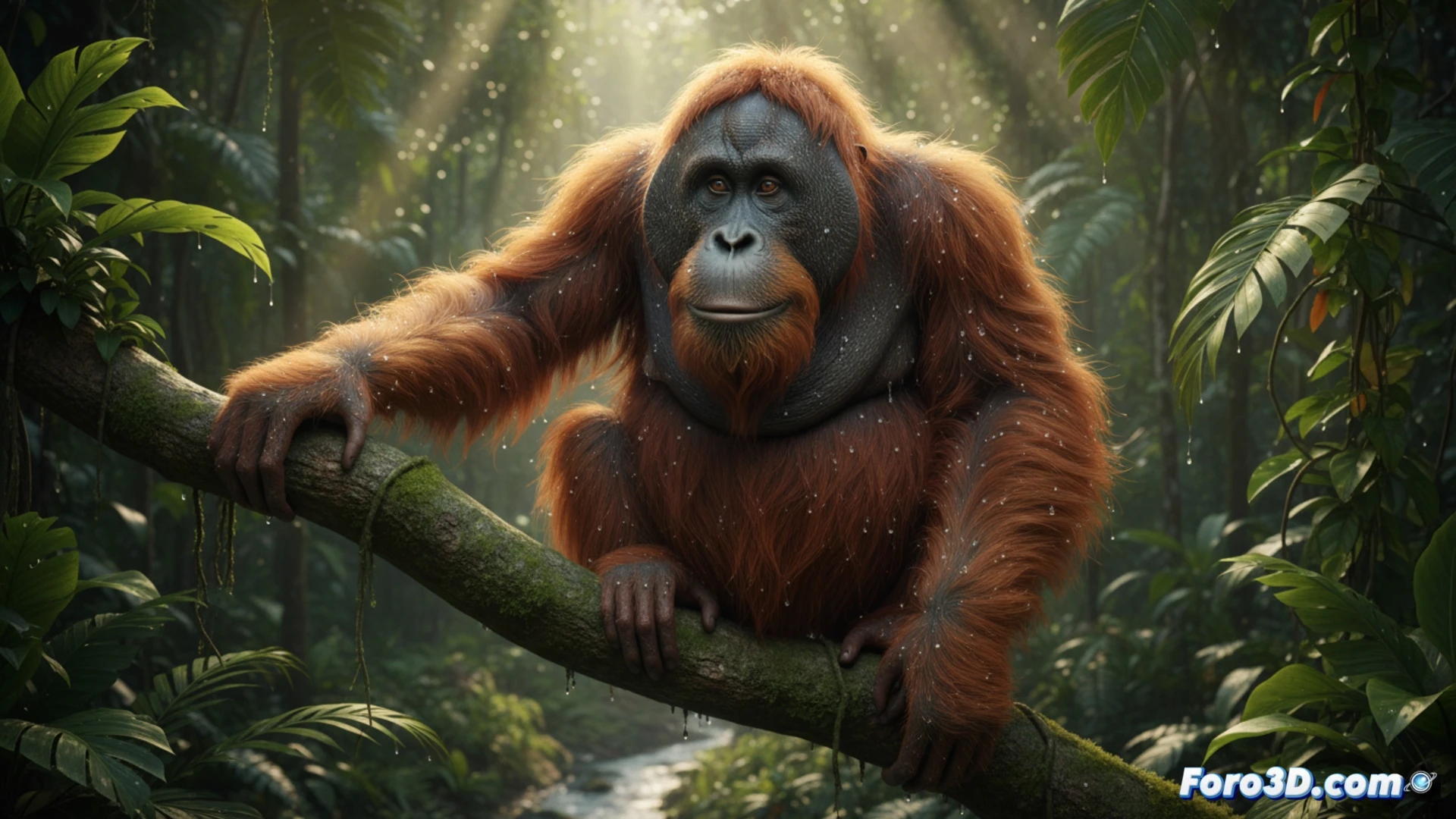
Comparative anatomical reconstruction and habitat modeling 🌿
For 3D visualization specialists, Pongo tapanuliensis represents a fascinating technical challenge. Creating a detailed anatomical model requires integrating skull and dentition scan data, as this species has a smaller skull and more robust canines than its relatives in Borneo and Sumatra. In parallel, reconstructing the Batang Toru ecosystem requires the use of multispectral satellite data to map altitude and tree canopy density. Integrating these models allows simulating the animal's movement in a fragmented environment, visualizing how deforestation for mining and agriculture reduces genetic dispersal routes.
Visualization as an outreach tool and conservation strategy 🛡️
Beyond aesthetics, 3D modeling of this species becomes a tactical weapon for biologists. By rendering habitat connectivity scenarios, conservationists can present governments and communities with interactive maps showing the impact of a road or a hydroelectric dam. Animating an orangutan moving through a virtual ecological corridor allows communicating the problem immediately, transforming abstract data into a visual narrative that drives action on the ground.
As a 3D modeler, how can a balance be achieved between photorealistic anatomical detail and polygonal optimization to ensure that the Tapanuli orangutan model is useful both in virtual reality applications for education and in behavioral simulations for biologists?
(PS: at Foro3D we know that even manta rays have better social connections than our polygons)