The discovery of the Namdapha Day Gecko (Cnemaspis namdaphaensis) in 2023 represents a crucial finding for herpetology. This small species, identified in the virgin jungles of the Indian Himalayas, features a pattern of irregular white spots on a dark dermis. For scientific visualization, its 3D modeling demands a meticulous study of the scaly texture and chromatic arrangement, key elements to differentiate it from similar species and to create an accurate educational tool.
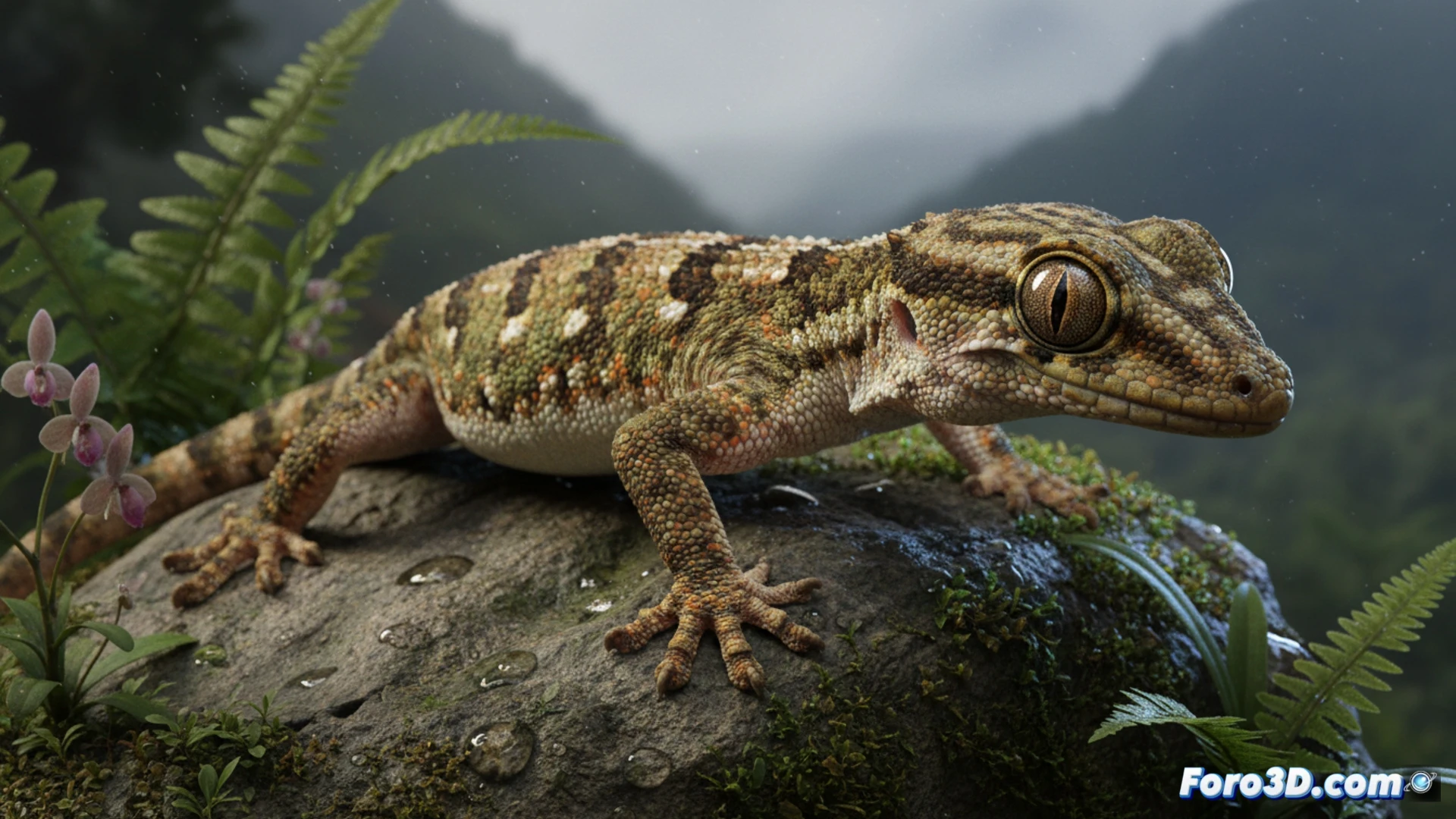
Workflow for Anatomical and Habitat Reconstruction 🦎
The technical process begins with the reconstruction of the gecko's basic morphology, prioritizing the shape of its adhesive pads and the curvature of its tail, typical of Cnemaspis. The texture layer is generated using displacement maps for the scales and high-resolution color maps that replicate the white spots. The render lighting must simulate the filtered light of the forest canopy, combining a cool ambient tone (dense shade) with warm highlights (sunbeams). The habitat is recreated with models of bark, moss, and plant canopy, using reference data from the Namdapha Biosphere Reserve to ensure ecological fidelity.
Digital Conservation of a Virgin Ecosystem 🌿
Beyond technical realism, this 3D model acts as a visual testimony of biodiversity at risk. By allowing biologists and the public to interactively explore the gecko's anatomy and its environment, awareness is fostered about the fragility of these pristine habitats. Each modeled white spot is a reminder that science and digital art can converge to document and protect newly discovered species, before human pressure forever alters the secrets of the Himalayas.
What 3D modeling techniques allow for the most accurate representation of the microstructures of the Namdapha Gecko's adhesive scales for biomechanical analysis in scientific visualization?
(PS: modeling manta rays is easy, the hard part is making them not look like floating plastic bags)