The recent observation of the Nazca Sea Pig (Scotoplanes sp.) off the coast of Chile in 2024 has reignited interest in visualizing abyssal species. This sea cucumber, characterized by its tubular appendages that mimic legs and its gregarious behavior, presents a fascinating technical challenge for 3D modeling. Its anatomy, adapted to extreme pressures and muddy seabeds, demands a rigorous approach to recreating textures and biomechanics for use in documentaries and virtual museums.
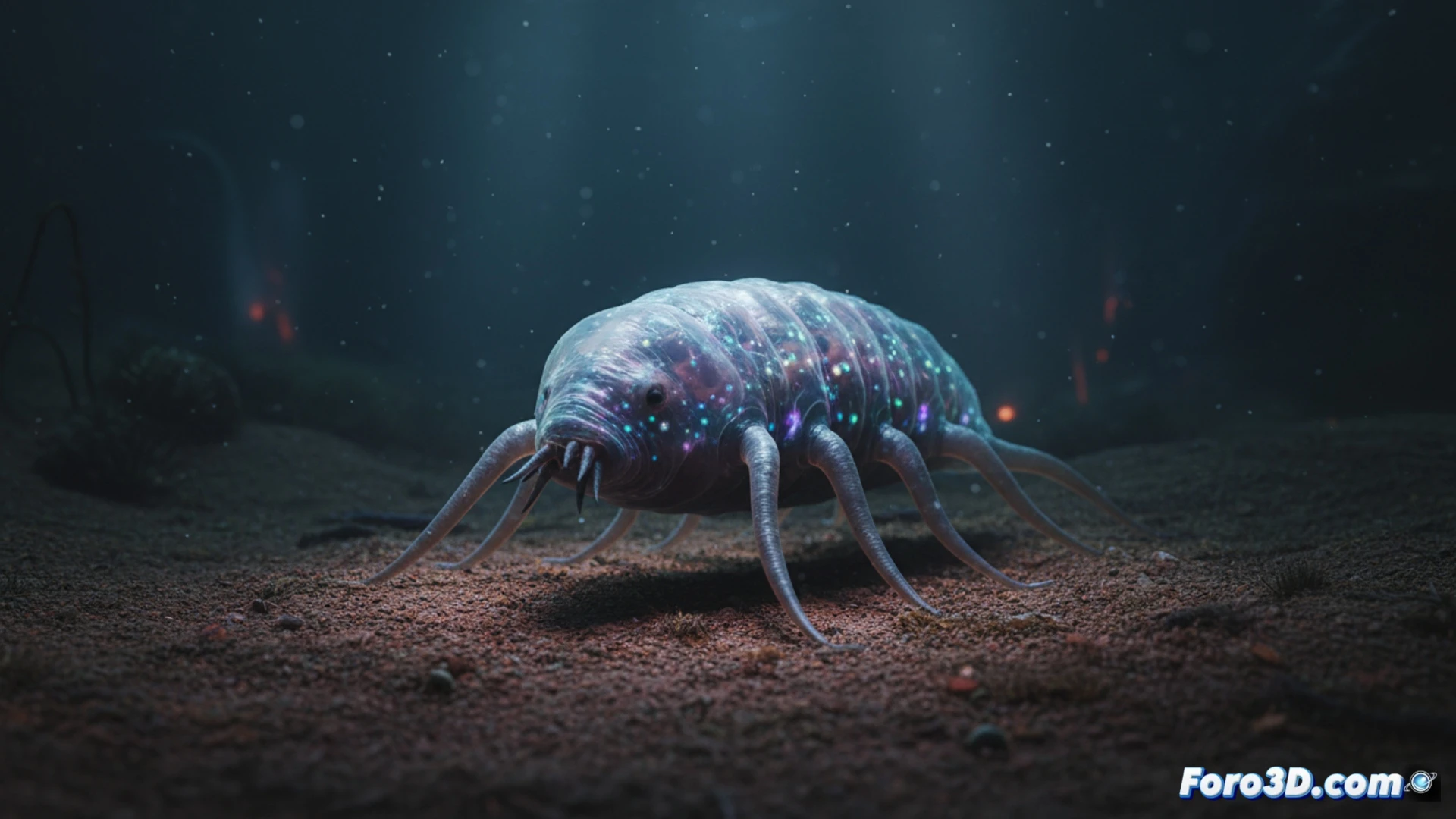
Technical Guide: Anatomy, Texturing, and Procedural Animation 🐚
For accurate modeling of Scotoplanes sp., it is recommended to start with a low-resolution base mesh that captures the ovoid body shape and the radial arrangement of the podia (tubular appendages). The key to realism lies in texturing: using displacement maps to simulate the rough, translucent skin typical of deep-sea holothurians. The coloration should be pale pink or purplish, with subtle variations to reflect the lack of light. Animation should focus on synchronized, undulating movement of the podia, simulating a slow but coordinated gait. It is crucial to include a particle system for the sediment they stir up while moving, and to visually reference depth through low-intensity, bluish lighting characteristic of the bathyal zone (below 1000 meters). Using tools like Blender or Houdini for procedural rigging of the multiple appendages is suggested, allowing efficient control of herds.
The Challenge of Visualizing the Invisible: Impact on Science Education 🌊
Beyond technique, modeling the Nazca Sea Pig forces us to reflect on the role of digital art in science. By recreating an ecosystem nearly inaccessible to the human eye, the 3D modeler becomes a bridge between oceanographic research and the general public. Every detail, from the texture of its skin to the way its legs sink into the mud, must be backed by real data to avoid misinformation. This project seeks not only an aesthetic result but an educational tool that allows biologists and museologists to explain evolution and adaptation in one of the planet's most hostile environments.
How can the anatomical realism of Scotoplanes sp. be balanced with the visual clarity needed for the 3D model to be an effective science communication tool, considering that its most striking features, such as its tubular legs and transparency, are difficult to represent without losing scientific precision in an interactive environment?
(PS: modeling manta rays is easy; the hard part is making them not look like floating plastic bags)