We explore the scientific feasibility of Woodgod, a genetic hybrid with a satyr-like appearance created by Bill Mantlo and Keith Giffen. From a scientific visualization perspective, we analyze how to 3D model its toxin resistance systems, animal communication, and symbiosis with flora. This article proposes a technical approach to represent these hypothetical biological mechanisms using principles of synthetic biology and computational simulation.
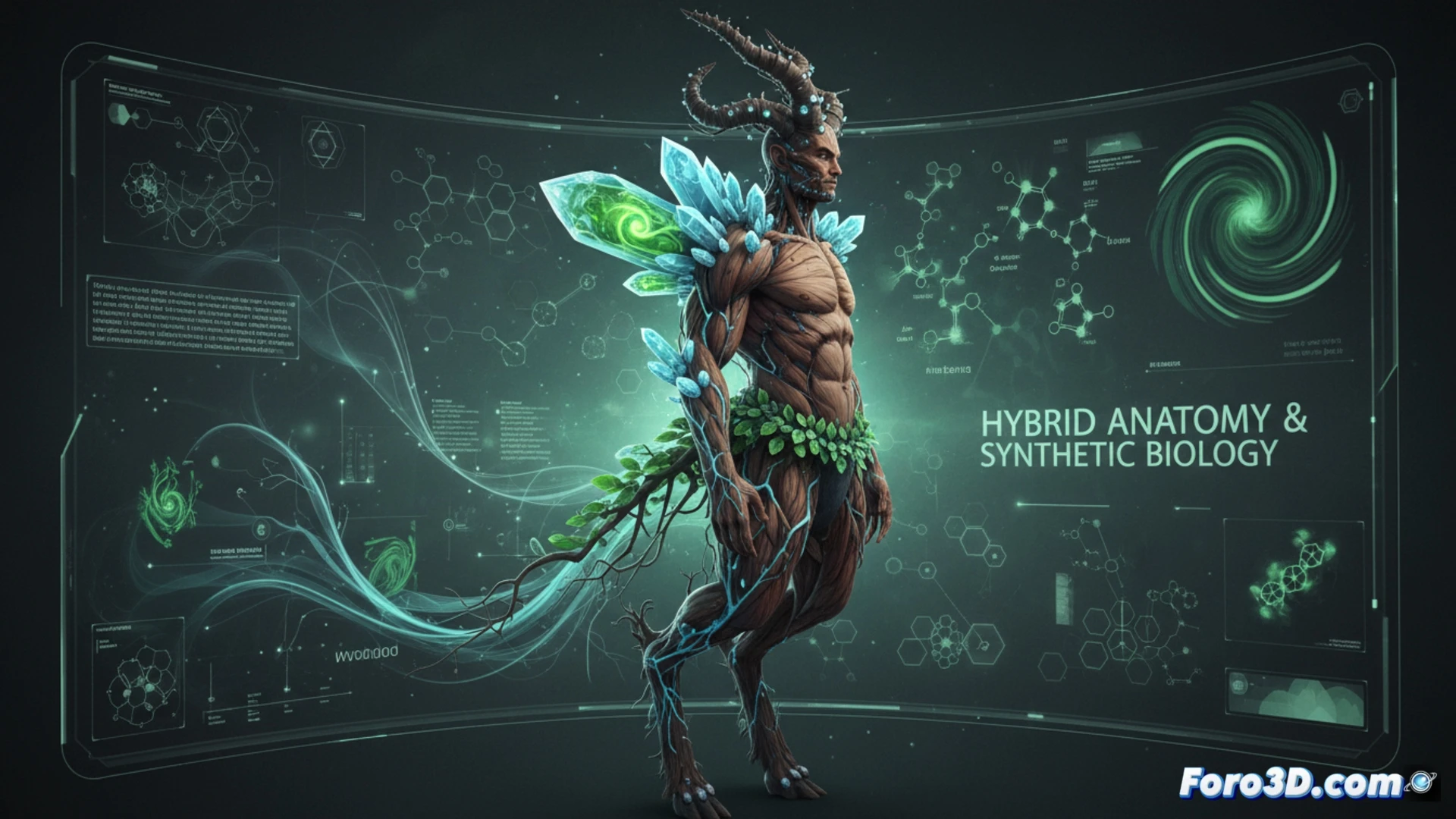
Visualization of Resistance Systems and Bioacoustics 🧬
To model toxin resistance, we propose a cellular-level representation using procedural 3D textures that simulate the activity of efflux pumps and detoxifying enzymes in real time. Animal communication would be visualized through a particle system representing bioacoustic frequencies, mapping sound waves to color patterns on the anatomical model. For affinity with flora, we would create a root symbiosis simulation, where the character's digital roots intertwine with a virtual mycelium, exchanging nutrients represented by flows of semi-transparent polygons. Animations would show how these systems dynamically interact, using real biological data as a reference for plausibility.
Reflection on Biological Plausibility 🌿
This modeling exercise forces us to question the limits of genetic engineering. Could a real organism integrate extreme chemical resistance, inter-species communication, and plant symbiosis? From a scientific visualization perspective, Woodgod is not just a monster; it is a thought experiment on how synthetic biology might converge with evolution. By representing these systems in 3D, we not only illustrate a comic book character but also explore the boundaries between the possible and the speculative in the design of living beings.
What technical and biological challenges does the 3D modeling of Woodgod's hybrid anatomy pose to achieve a credible representation of its synthetic biology in scientific visualization?
(PS: modeling manta rays is easy; the hard part is making them not look like floating plastic bags)