The recent designation of the non-venomous snake Sibon irmelindicaprioae, named in honor of Leonardo DiCaprio's mother, opens a unique window for scientific visualization. This species, endemic to the jungles of Panama and Colombia, possesses a highly specialized jaw for extracting snails from their shells. A detailed 3D model of its skull and dentition allows for understanding the biomechanics of its feeding, a fascinating evolutionary trait that distinguishes it from other tropical snakes.
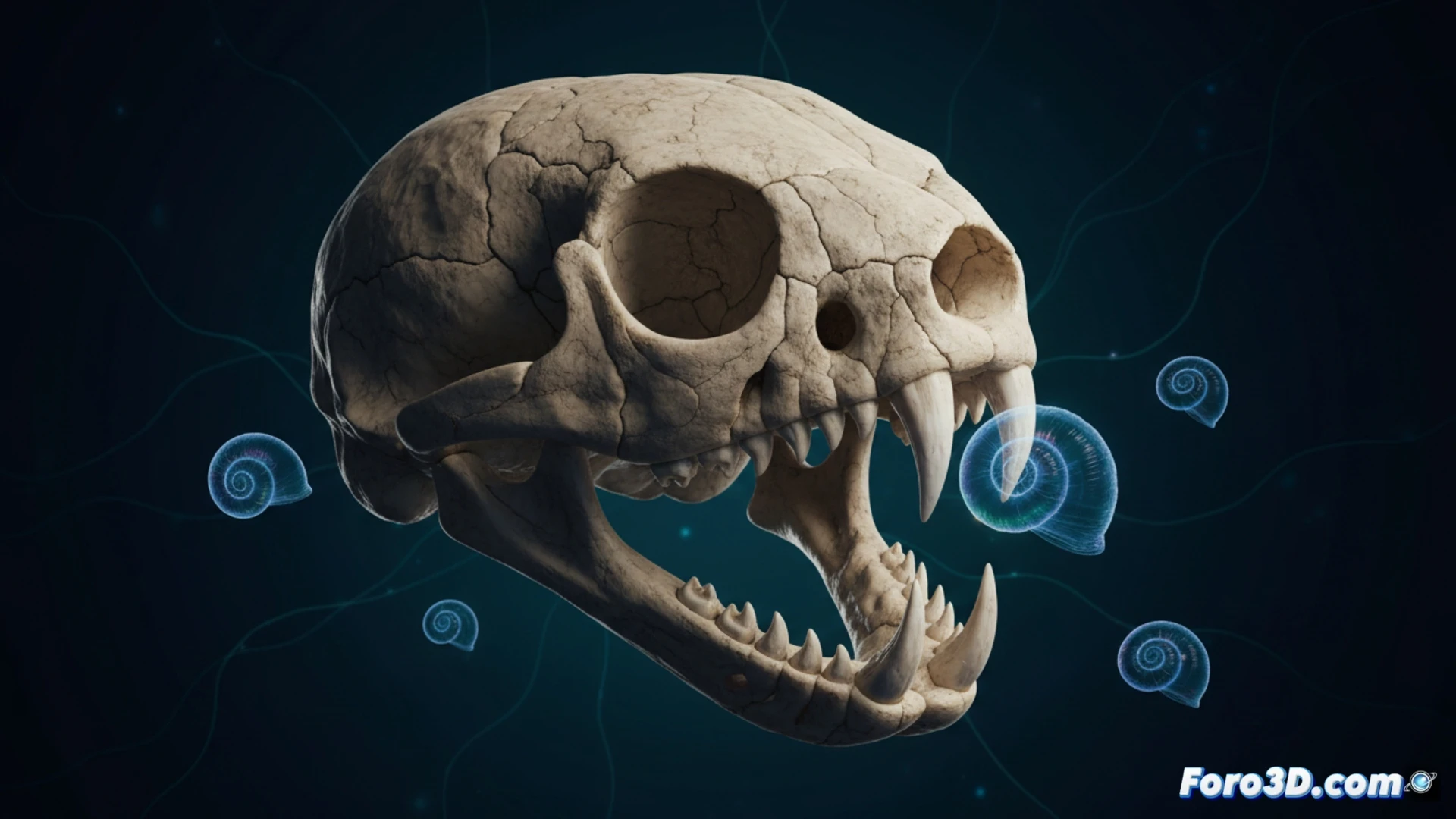
Functional Anatomy and Mandibular Biomechanics 🐍
For the development of the 3D asset, priority should be given to the geometry of the lower jaw, which features a flexible mandibular symphysis and elongated, backward-curved maxillary teeth. These teeth, unlike those of a venomous snake, are neither hollow nor grooved; their function is exclusively mechanical for gripping and tearing the snail's operculum. The animation of the feeding process requires a sequence of keyframes showing the protraction of the jaw, the insertion of the tooth into the shell opening, and the twisting motion to extract the mollusk. The use of rigging with morph target controllers is recommended to simulate the elasticity of the oral tissue during suction.
Ecosystem and Applications in Outreach 🌿
The model should not be limited to isolated anatomy. Integrating the snake into a simulated tropical canopy environment, with textures of leaf litter and arboreal snails, enhances its use in educational documentaries and biodiversity applications. Accurate representation of the cryptic coloration of the Sibon irmelindicaprioae (brown and green tones) is crucial for its identification in the field. This 3D asset, optimized for real-time engines, can serve as a didactic tool to illustrate the coevolution between predator and prey in neotropical ecosystems.
What technical and methodological challenges does the 3D modeling of Sibon irmelindicaprioae present to achieve accurate scientific visualization of its morphology and scale patterns?
(PS: at Foro3D we know that even manta rays have better social connections than our polygons)