The Ocean Census 2024 expedition in the Bounty Trough, off the coast of New Zealand, has revealed a fascinating discovery: the glass sponge Corallistos sp., nicknamed the Soap Bubble. Its spherical, translucent, and extremely fragile structure presents a unique challenge for biological research. This article explores the technical process behind the digitization of this specimen, detailing how scientific visualization techniques allow for the preservation and analysis of its delicate morphology without the need for direct physical manipulation.
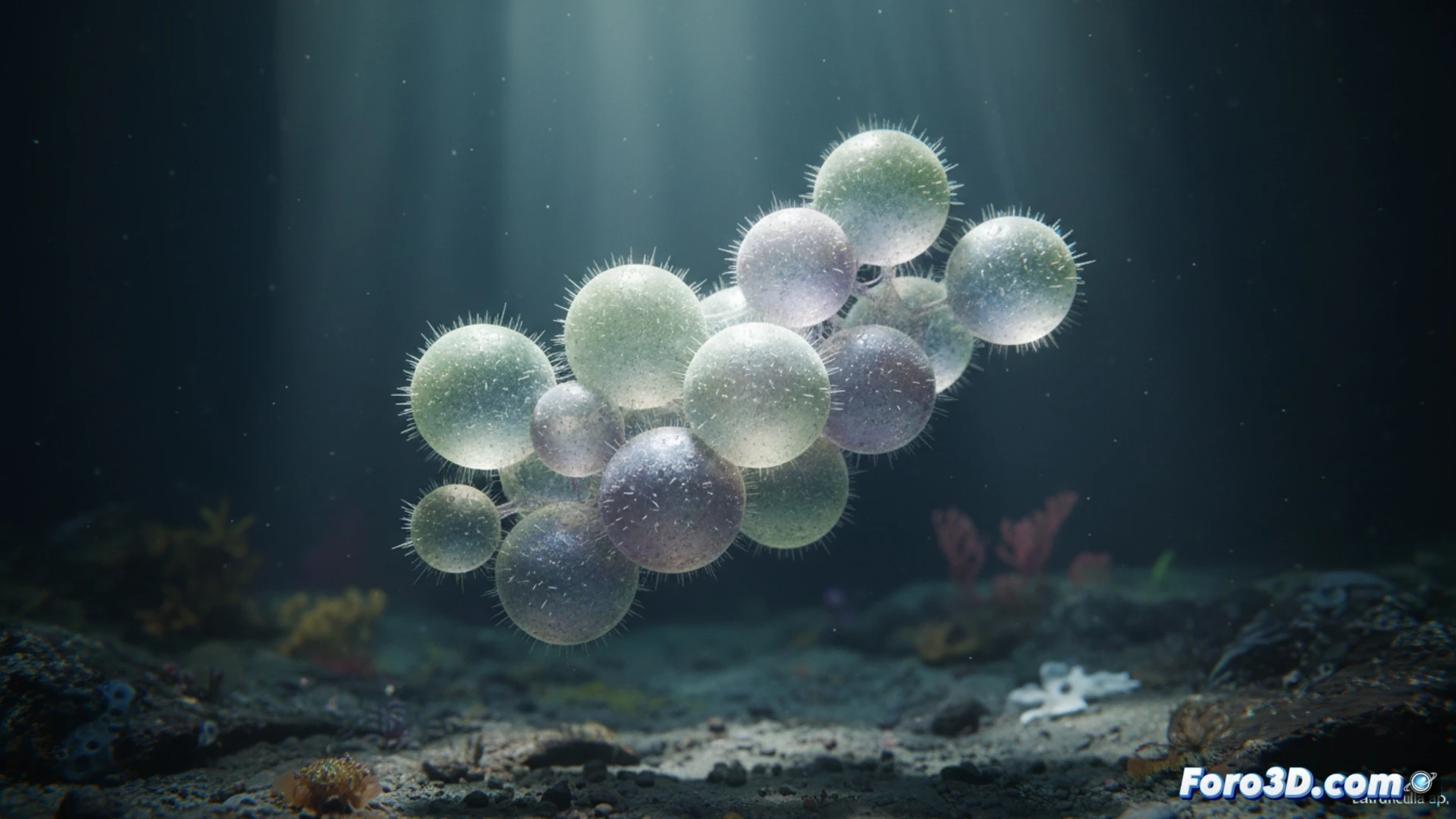
Underwater Photogrammetry and Micro-CT to Capture Transparency 🧊
The main technical challenge in modeling the Corallistos sp. lies in its translucent and spherical nature. Traditional underwater photogrammetry methods fail with glassy materials, as light passes through the structure, generating artifacts and inconsistent point clouds. To overcome this, the Ocean Census team combined two techniques. First, a blue structured light scanner was used in a laboratory tank to minimize refraction. Second, high-resolution micro-computed tomography (micro-CT) was applied, which penetrates the siliceous structure without being affected by optical transparency. The result is a high-fidelity 3D mesh that distinguishes the spicule skeleton from the interior space, allowing biologists to calculate the porosity and actual volume of the organism without sectioning it.
Beyond Conservation: An Interactive Resource for Outreach 🌍
The resulting 3D model not only serves as a research tool to avoid dissecting the unique specimen but also transforms scientific outreach. By integrating this model into virtual reality environments or interactive web viewers, anyone can rotate the sponge, zoom in on its pores, and appreciate the exact geometry of its glassy skeleton. This accessibility allows an extremely rare and fragile biological object to become a global educational resource, democratizing access to knowledge and showcasing the beauty of abyssal biodiversity without risk of damaging the original.
How can the 3D modeling of the Soap Bubble sponge from the Bounty Trough improve our understanding of the structural adaptations of abyssal organisms for scientific visualization?
(PS: at Foro3D we know that even manta rays have better social connections than our polygons)