The Ocean Census 2024 expedition has revealed a gem of abyssal biodiversity: the Craniella sp., a spherical sponge with a dense texture that evokes a snowball. This finding not only enriches marine taxonomy but also presents a fascinating challenge for scientific visualization. Its porous structure and perfect radial symmetry make it an ideal candidate for three-dimensional modeling, allowing biologists to study its anatomy without disturbing the fragile ecosystem where it was located.
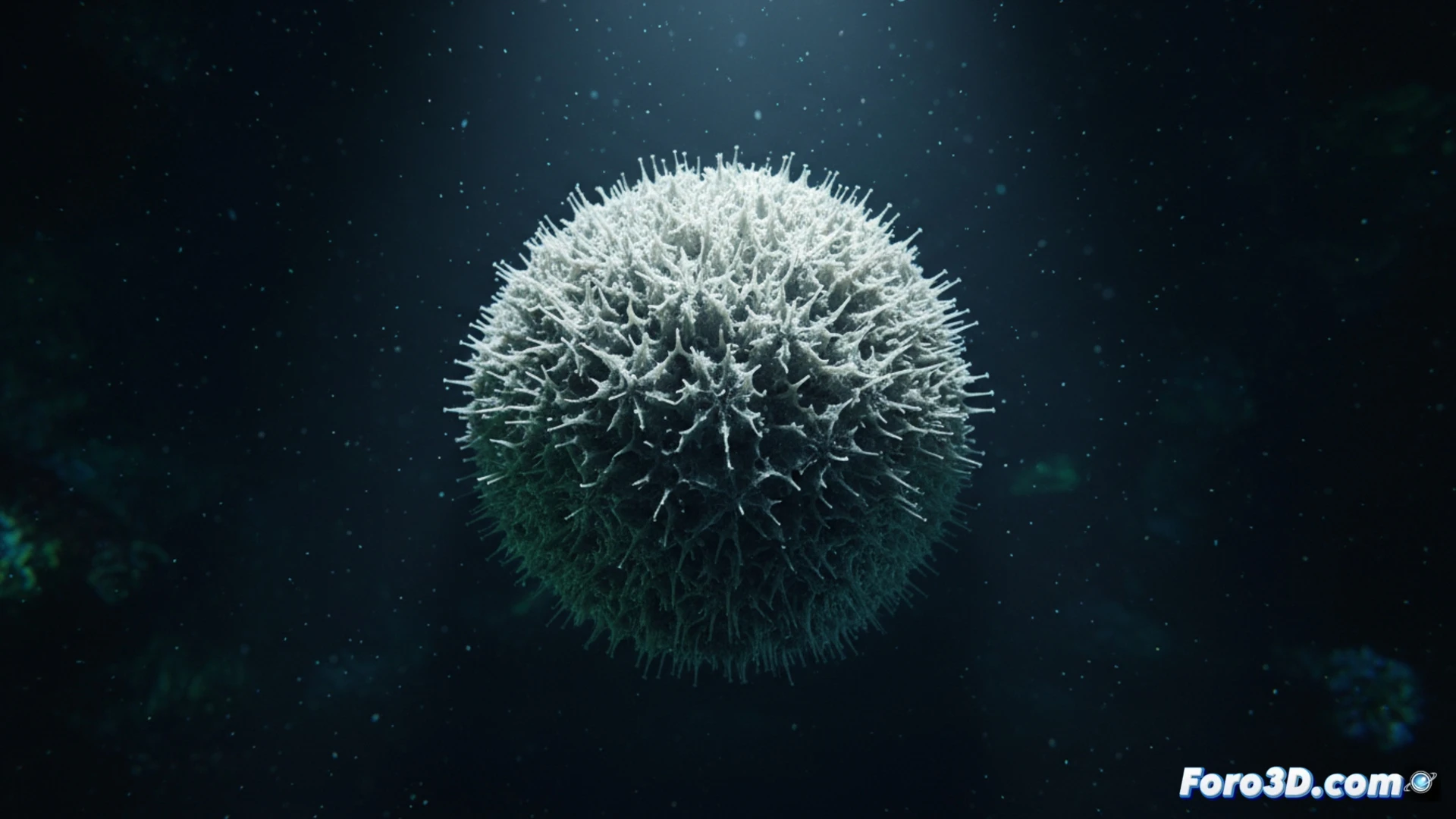
Underwater photogrammetry and scientific rendering 🌊
To capture the essence of the Craniella sp., specialists resort to underwater photogrammetry. Hundreds of high-resolution images are taken from multiple angles, using controlled lighting to avoid reflections on its calcareous surface. Then, 3D reconstruction software generates a high-density polygonal mesh. The real challenge lies in texturing: replicating the irregular porosity and the snow-white color that gives it its name. The final render, illuminated with soft ambient light, allows visualizing the sponge in its oceanic context, simulating currents and suspended particles for filtration studies.
Visualization as a conservation tool 🧊
The 3D model of the Bounty Snowball transcends mere illustration. By being able to digitally manipulate the sponge, scientists can calculate its volume, filtering surface area, and density without the need for physical dissection. This visualization technique respects the integrity of the specimen and accelerates research. Furthermore, by sharing the model on open-source platforms, access to knowledge is democratized, allowing any laboratory in the world to contribute to the study of this newly discovered species.
What technical challenges does the capture and 3D modeling of the dense texture and porous structure of the Craniella sp. sponge present, based on data from abyssal expeditions like Ocean Census 2024?
(PS: modeling manta rays is easy; the hard part is making them not look like floating plastic bags)