Junji Ito's work Gyo presents a unique biological premise: sea creatures developing metallic limbs powered by putrid gas. For a scientific visualization specialist, this design offers a fascinating case study on the integration of decomposing organic tissue with rigid mechanical structures. We will analyze how 3D modeling allows us to dissect this impossible symbiosis, recreating the texture of necrotic flesh and rust within the same polygonal asset.
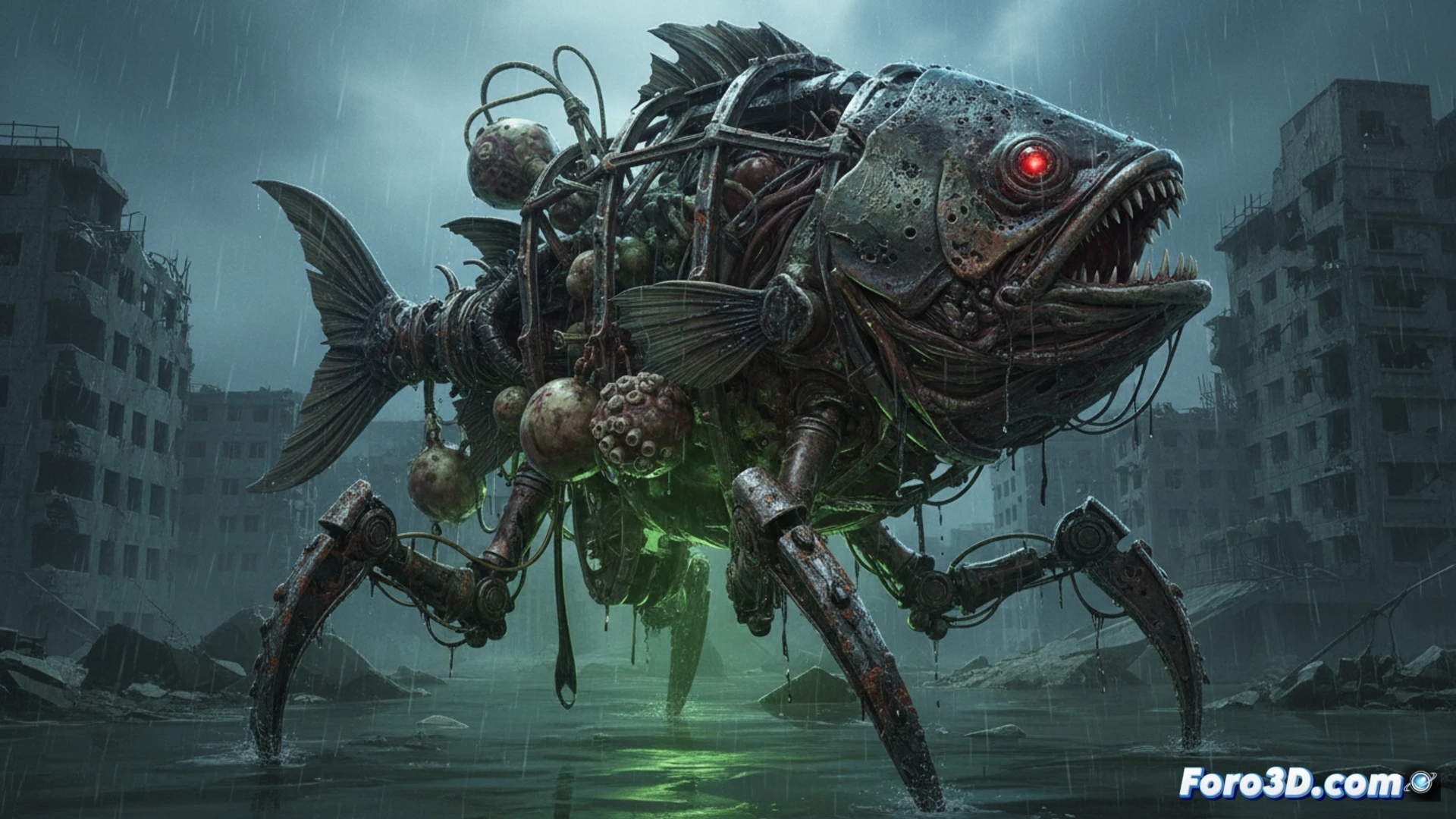
Polygonal reconstruction of the organic-mechanical symbiosis 🦀
3D modeling of these creatures requires a hybrid approach. First, the organic base must be sculpted using references from giant isopods (Bathynomus giganteus) and deep-sea fish, applying dynamics of flaccid flesh and advanced decomposition through displacement maps. Subsequently, the mechanical legs are integrated, whose design must evoke the real biomechanics of crustacean appendages, but with a corroded iron finish. The key factor is the transition between both materials: the flesh must appear perforated and welded to the metal, simulating a tectonic infection. Tools like ZBrush and Substance Painter allow creating these connection channels, where rust mixes with putrid blood.
Smell as texture and the biomechanics of gas 💨
Ito uses the smell of death as another character. In 3D visualization, we can translate this olfactory sensation into visual parameters: yellowish-green volumetric fog, methane gas particles emanating from mechanical valves, and a skin color gradient ranging from cadaverous gray to gangrene black. This approach not only recreates the horror but also educates about real processes of anaerobic decomposition and gas generation on the seafloor, closing the circle between Ito's fiction and documented marine biology.
Is it worth creating a complete underwater environment or are the specimens enough?