The detection of microcracks in a nuclear storage facility has reopened the debate on the safety of critical infrastructure. The structural failure, caused by material fatigue and constant exposure to radiation, represents a risk of lethal leakage. 3D simulation technology becomes the key tool to predict the behavior of these cracks before they become a real catastrophe, allowing the visualization of damage propagation in real time.
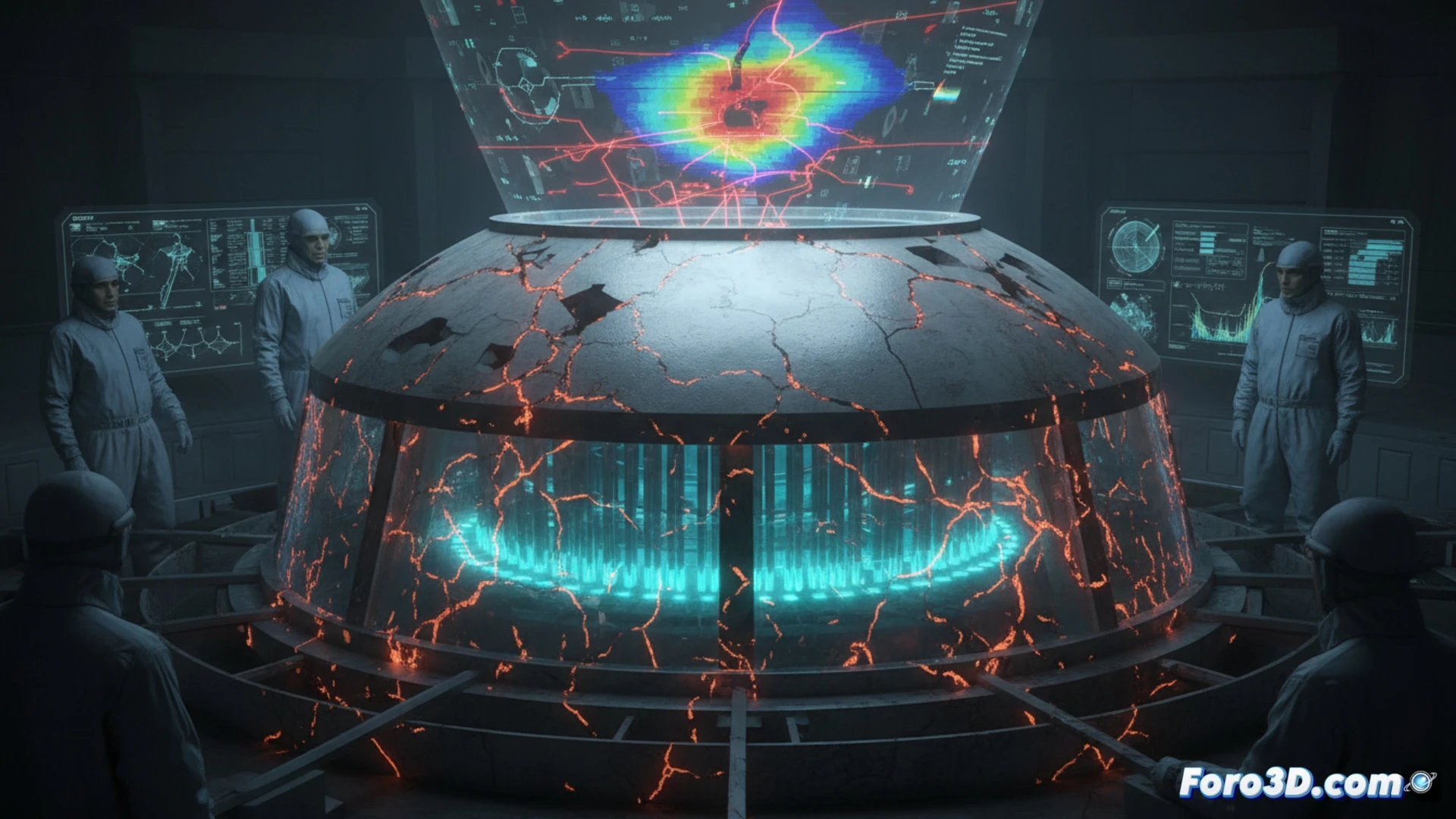
Propagation and radioactive dispersion simulation 🧪
Finite element modeling allows for the virtual recreation of the storage facility and the application of thermal and radioactive loads on its structure. Using mechanical fracture algorithms, engineers can observe how a surface crack extends into the concrete and steel shielding. Additionally, CFD (Computational Fluid Dynamics) simulation integrates the dispersion of radioactive particles in the air, calculating the contamination radius in the event of a collapse. This 3D analysis not only anticipates the breaking point but also optimizes the placement of sensors and containment barriers.
Virtual lessons for real emergencies 🛡️
The virtual recreation of the nuclear storage facility allows response teams to practice interventions without exposing themselves to danger. By simulating critical crack scenarios, emergency sealing, evacuation routes, and structural reinforcements can be planned. This preventive approach demonstrates that 3D technology not only documents the disaster but also offers a roadmap to prevent a technical failure from becoming an environmental tragedy. Prevention begins in the digital model.
What limitations does 3D modeling of radiation-induced microcracks present for predicting catastrophic failures in nuclear storage facilities over the long term?
(PS: Simulating catastrophes is fun until the computer crashes and you are the catastrophe.)