The Marvel character known as Big Bertha, a supermodel who can increase her body mass at will, presents a unique challenge for digital modeling. Capturing her transition from a slender figure to a massive, muscular form requires advanced simulation techniques. This article analyzes the dynamic rigging tools and 3D muscle systems needed to replicate her colossal strength and bulletproof resilience in digital entertainment environments. 💪
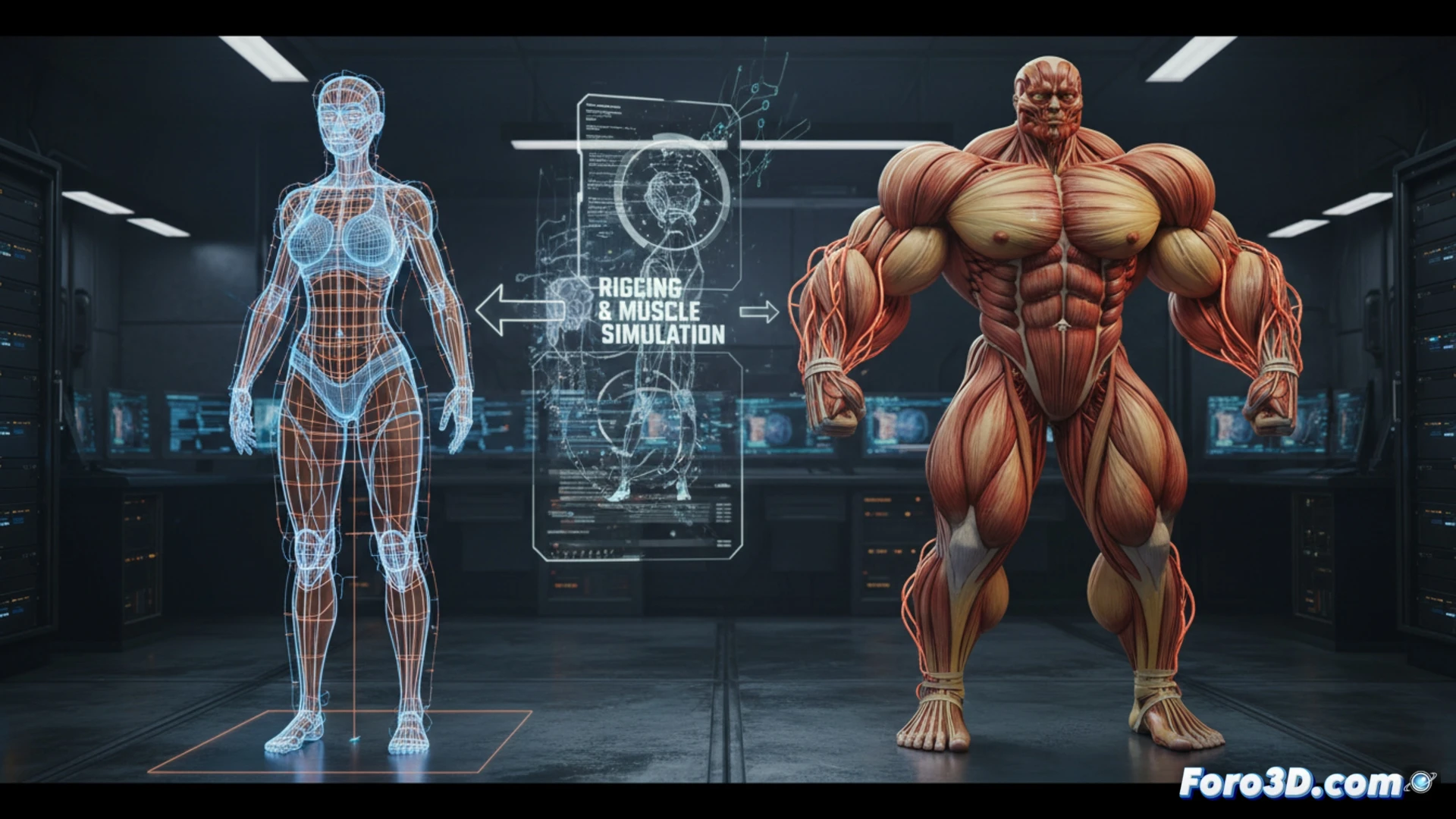
Dynamic Rigging and Tissue Simulation for Body Transformation 🦾
The main technical challenge is volumetric deformation during mass change. To achieve this, a rigging system based on blendshapes controlled by weight sliders is used, combined with flesh simulators such as Maya nCloth or Houdini Vellum. These allow the polygonal mesh to expand realistically, adjusting skin inertia and stiffness. For ballistic resistance, procedural textures are applied that simulate a dense dermis and a pattern of hypertrophic muscle fibers, using engines like Substance Painter to create displacement maps that respond to impact pressure in real time.
Realism in Superhero Animation: Beyond the Comic 🎬
The key to making Big Bertha work in a production pipeline is the integration of motion capture data with physics simulations. When animating her transformation, priority must be given to conserving apparent mass; an increase in volume should translate into a heavier, slower gait. This approach not only validates the character's realism but also sets a standard for digital humanoids that defy the laws of physics, demonstrating how 3D technology can bring the most extreme comic book concepts to life.
Is it possible to achieve dynamic rigging that realistically simulates the transition between the slender supermodel state and the massive volume of Big Bertha without resorting to manual blendshapes for each stage of body mass increase, and how does this affect real-time clothing and hair simulation?
(PS: check the rigging before recording, so we don't end up like with the UV-less textures!)