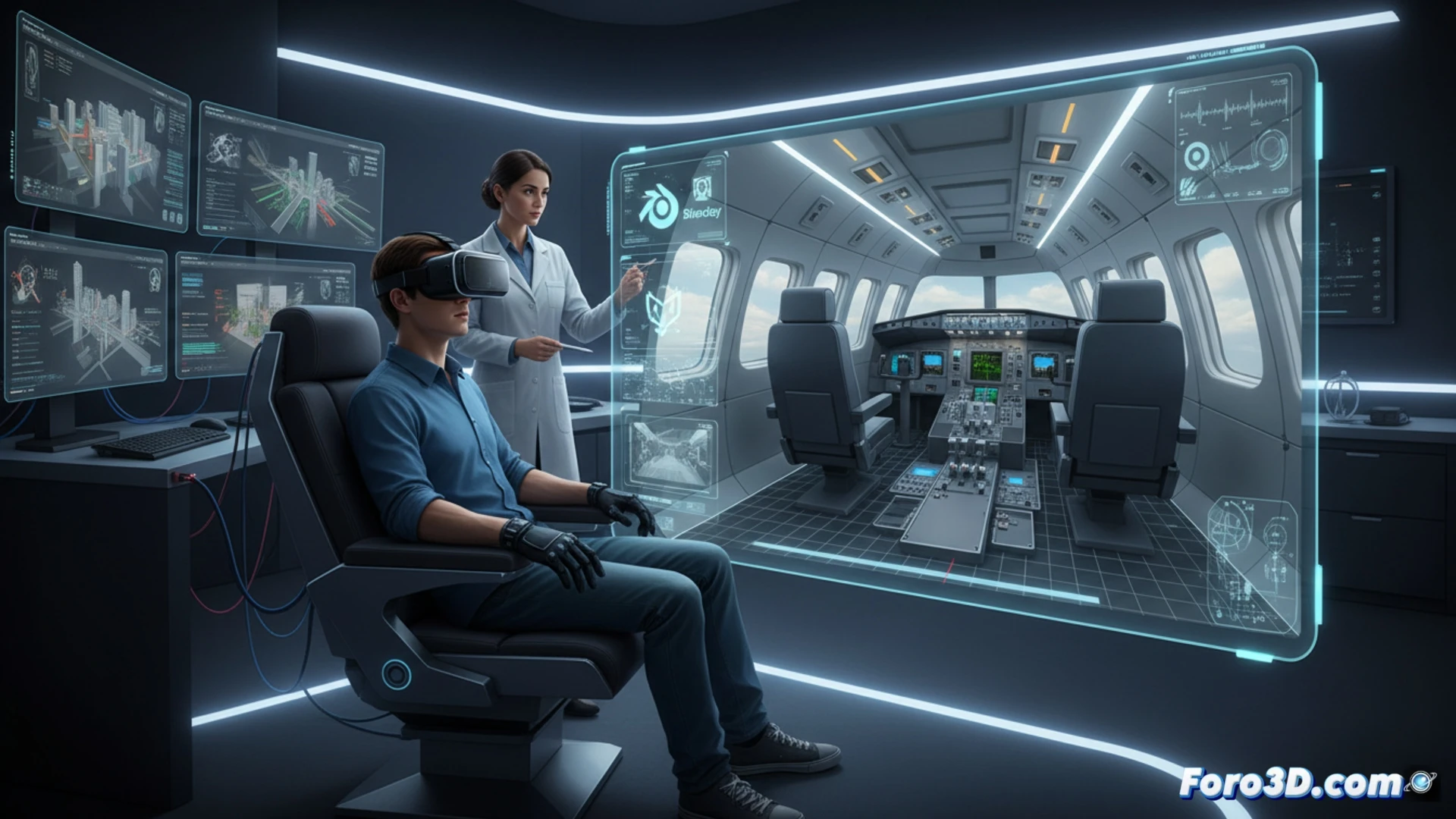
3D technology allows psychologists to create controlled environments to treat phobias or anxiety disorders. A patient with a fear of flying can face a virtual airplane cabin without leaving the office. Programs like Blender for modeling scenes and Unity for integrating the experience are key tools in this process.
Programs and workflow for therapeutic environments 🧠
The workflow begins by modeling objects in Blender, from a spider to a meeting room. They are then exported to Unity, where interactions are added and gradual exposure is programmed. SteamVR or the Oculus SDK is used to visualize in VR. The therapist controls variables such as distance or noise from a panel. This allows for repeatable and safe sessions, without relying on real conditions.
When the couch becomes a .obj file 🕷️
The day a patient asks their psychologist to 3D model their ex-partner for a farewell session, we'll know we've gone too far. For now, virtual environments prevent the therapist from having to keep a real tarantula in the closet. Of course, make sure the 3D model of the elevator has no bugs, or the patient will end up with claustrophobia and a Unity Pro subscription.