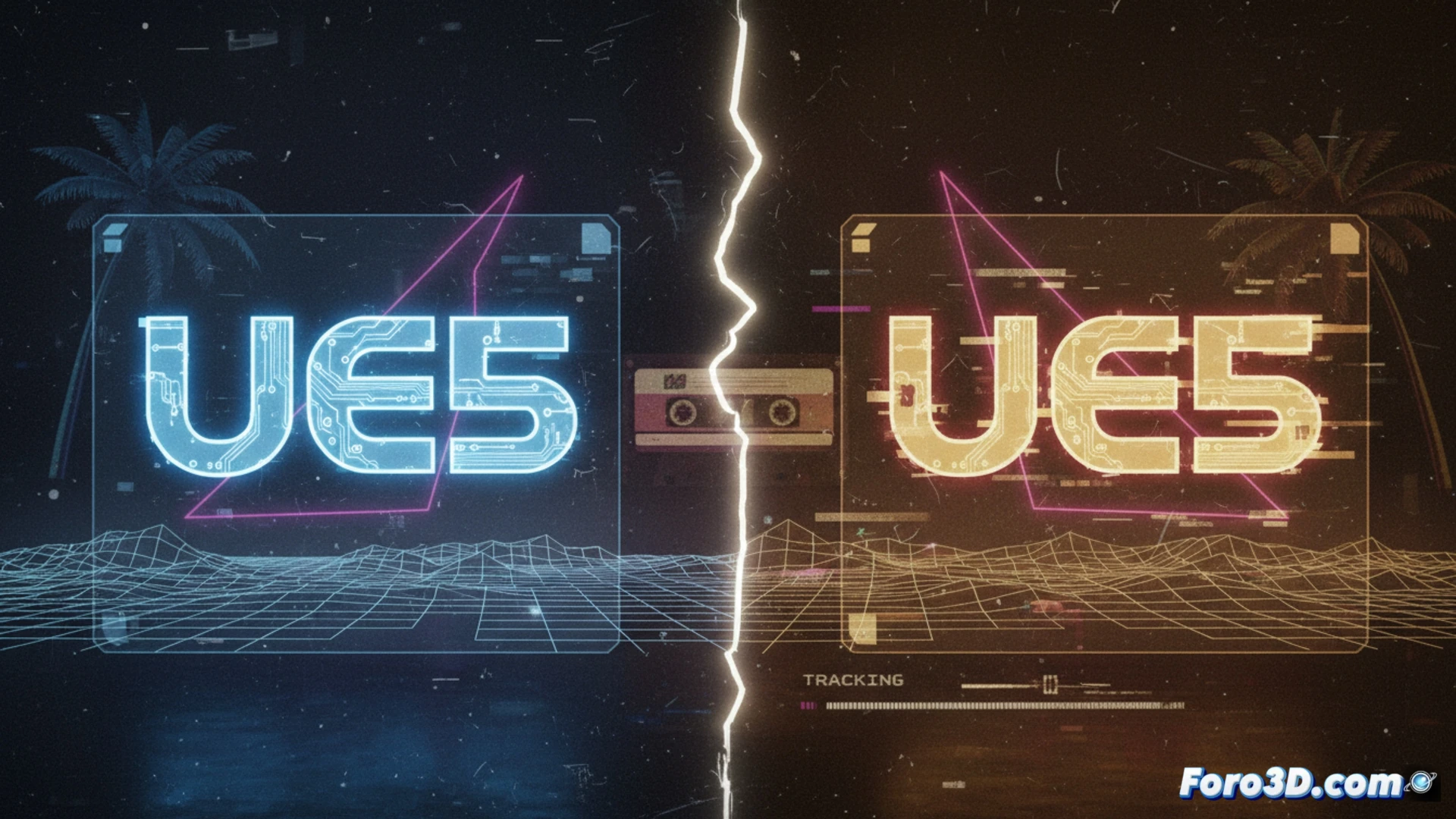
The Mixtape project demonstrates that Unreal Engine 5 is not only useful for photorealism but also for evoking analog nostalgia. This audiovisual short uses a palette of film filters, chromatic aberration, and animations that mimic the editing style of 80s and 90s music videos. The key lies in how real-time post-production can emulate grain, lens flare, and the magnetic degradation of VHS, transforming a game engine into a visual time machine. 🎞️
Technical Workflow: Maya, Substance Painter, and UE5 🛠️
To achieve this retro finish, the team combined Maya for modeling vintage objects (cassette tapes, CRT televisions) with Substance Painter, where they applied worn textures and era-specific dirt. The real trick lies in UE5's post-processing: chromatic aberration materials are used by shifting the RGB channels on the camera plane, combined with a LUT that simulates the saturation and contrast of 80s Kodak film. Additionally, noise and vignetting parameters are animated to simulate the erratic movement of a physical tape. Projects like The Matrix Awakens or the works of Ian Hubert show that this low-fi aesthetic is increasingly popular in cinematic pre-production.
Visual Narrative and the Power of Imperfection 💡
Mixtape reminds us that visual narrative doesn't always depend on sharpness. By embracing technical imperfections (flicker, sync lines, exaggerated motion blur), an immediate emotional connection is generated with the viewer who lived through that era. For creators, the advice is clear: don't be afraid to break the perfect image. Use UE5's post-processing tools to tell a story through visual texture, not just through geometry. Nostalgia is a filter, but also a language.
How does Mixtape in Unreal Engine 5 balance the analog imperfection of VHS without sacrificing the narrative legibility of its shots?
(PS: Previs in film is like storyboarding, but with more chances for the director to change their mind.)