Mitsuo Iso is a name that fans of technical animation know well. After leaving his mark as an animator on masterpieces like Evangelion and Ghost in the Shell, he decided to make the leap to directing to materialize his own obsessions. His approach is distinguished by an almost obsessive precision with realistic physics, applying principles of inertia and weight to every movement. This technical rigor has allowed him to build advanced science fiction narratives, such as the augmented reality in Dennou Coil, that feel authentic and not mere visual fantasies.
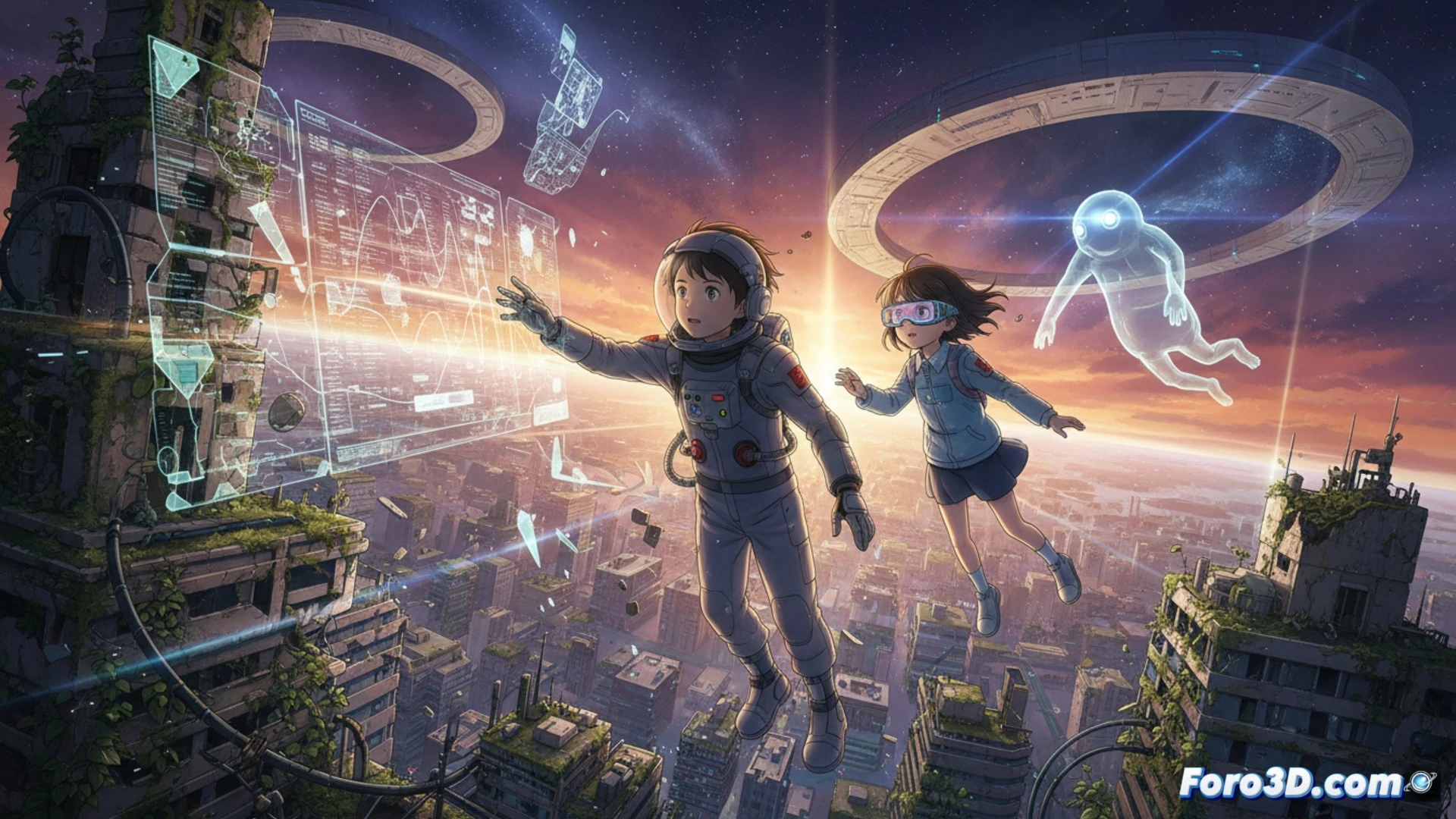
The engineering behind Iso's animation ⚙️
Iso does not draw movements; he simulates them. In Dennou Coil, every character jump or interaction with virtual objects follows laws of gravity and friction that an engineer would recognize. The Orbital Children takes this into space, where the lack of gravity translates into precise displacements and collisions with calculated inertia. This realism is not decorative: it serves to anchor his speculative technology plots, making the viewer accept complex concepts like cyberspaces or distributed artificial intelligence without questioning their feasibility.
When anime kids explain quantum physics to you 🧒
The curious thing is that Iso chooses to tell these technical stories with child protagonists. In Dennou Coil, kids with augmented reality glasses solve mysteries while dealing with digital bugs. And in The Orbital Children, the children literally manage a space station. You expect to see them playing tag, but they end up discussing principles of thermodynamics. It's as if Iso thought: if adults don't understand physics, let the kids do it. At least they don't complain about the long shots of floating objects.