Mitsuo Fukuda, a key figure in the recent history of Japanese animation, took the reins of a declining franchise in the early 2000s. With Mobile Suit Gundam SEED, he not only revitalized the universe of mobile suits but also set a new standard for drama and spectacle. His approach, inherited from his work on Future GPX Cyber Formula, prioritizes immediate visual impact and the emotion of armed conflict, leaving an unmistakable mark on the industry.
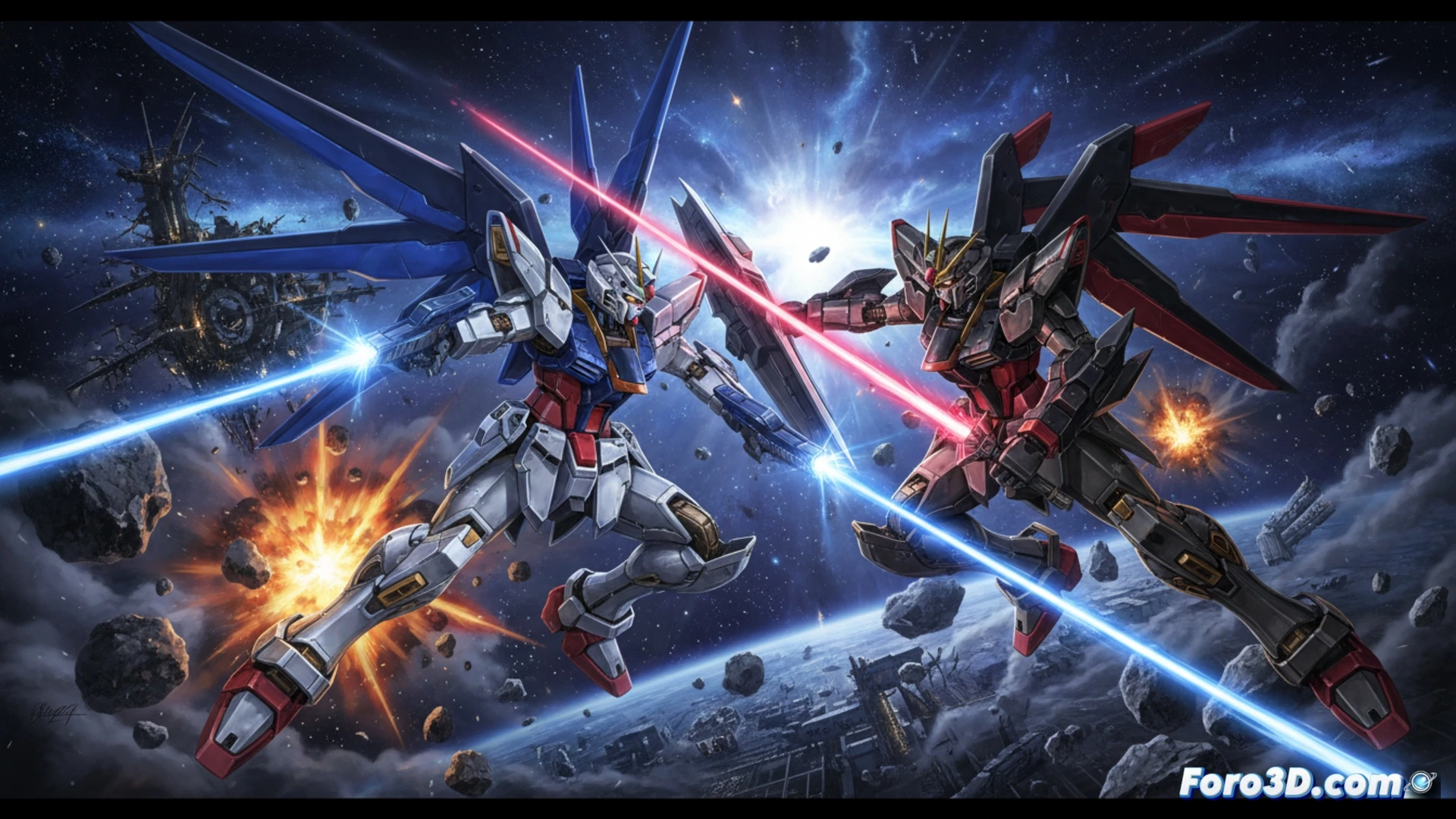
The technique behind the impact: shots and visual rhythm 🎬
Fukuda developed a directing style that combines close-up shots of the machines with quick cuts and a carefully synchronized soundtrack. In Gundam SEED, each confrontation between the Gundams is built like a visual choreography, using repeated animation and cockpit close-ups to underscore the tension. This formula, perfected in Cyber Formula, where cars turned every corner into an event, demonstrates a mastery of rhythm that prioritizes emotion over physical logic. The result is an effective commercial product that connects with a young audience.
When drama overcomes physics (and sanity) 🤖
Of course, Fukuda's approach has its comedic side. In Gundam SEED, characters can have three-minute existential conversations while their mobile suits dodge missiles at supersonic speed. And let's not forget the flashbacks: every time a character remembers something, the viewer sees the same stock clip. The formula is simple: if you don't understand the plot, wait thirty seconds and you'll see a replay. It's like watching a soap opera with giant robots, but with more sparkles and less logic.