In December 1900, three lighthouse keepers on the Flannan Isles, Scotland, vanished without a trace. The table was set, the clock had stopped, and the logbook contained entries about a violent storm that no other ship recorded. From the Forensic Pipeline, this case is a perfect challenge for virtual reconstruction: a closed scene, documented physical evidence, and a data void that 3D technology can help illuminate.
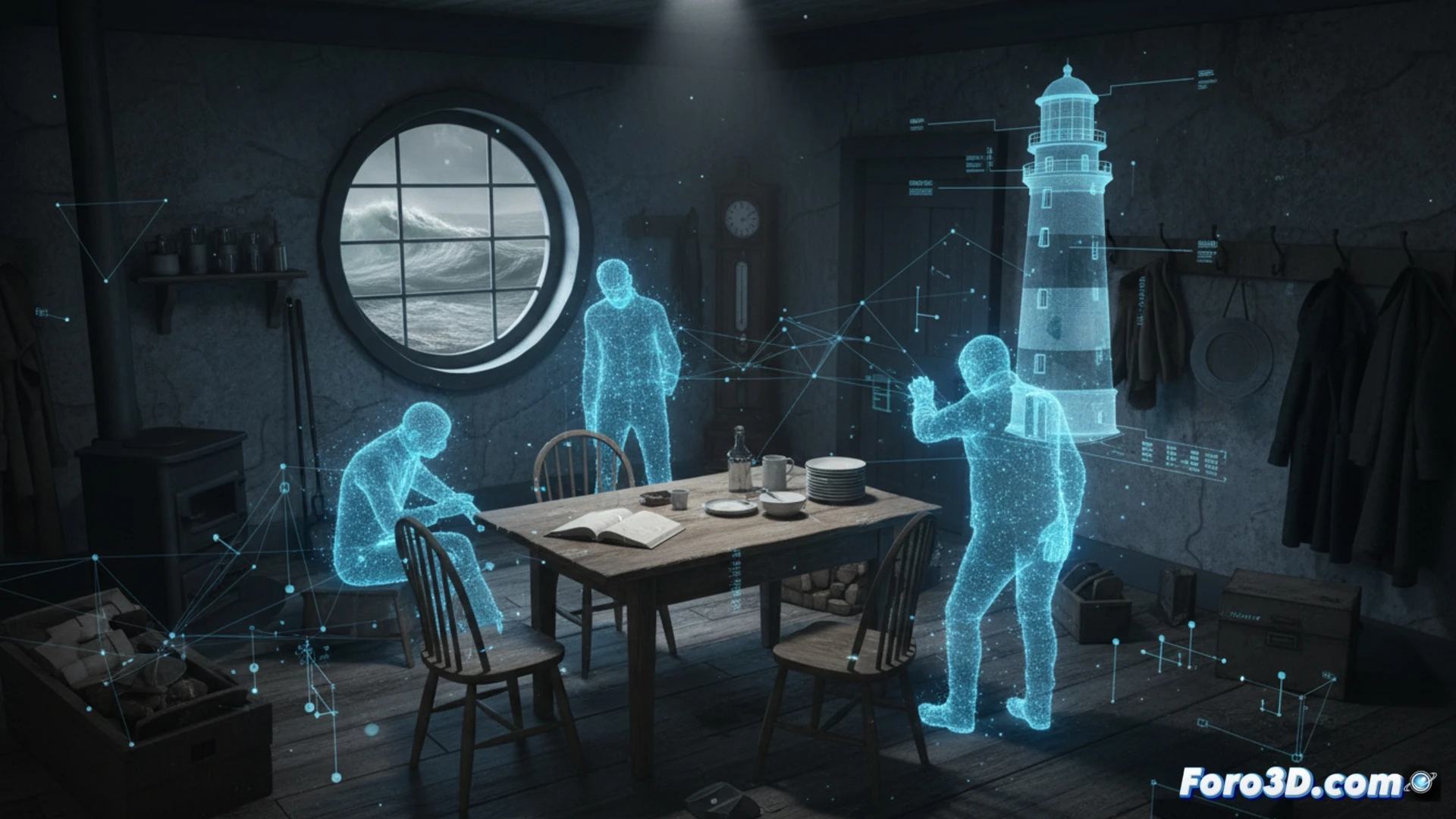
Workflow for the digital forensic scene 🖥️
The first step is photogrammetry applied to the few historical images of the lighthouse and the original plans from the Northern Lighthouse Board. With this data, we model the interior of the tower, the engine room, and the accommodation. The second step is meteorological simulation: using wind and wave data from the period, we recreate the conditions of December 15th. The third step is the interactive timeline, where we place the lighthouse keepers in the virtual space according to the logbook entries. This allows us to contrast the described storm with real ocean records and visualize whether a rogue wave could have swept the external platform without leaving a trace.
Visualized hypotheses, hidden truths 🔍
Forensic visualization allows us to test three theories: the accident due to anomalous waves, external human intervention, or an extreme natural phenomenon. Simulating the movement of the lighthouse keepers on the concrete walkway, with winds of 150 km/h and waves of 20 meters, shows that the intact set table is incompatible with a real storm. The 3D model suggests the weather was calm when they disappeared. The discrepancy between the logbook and the simulation points to a cognitive failure or a non-meteorological event, opening new lines of investigation for the Forensic Pipeline.
What scanning and photogrammetry methodologies were used to capture with forensic precision the everyday objects of the lighthouse, such as the stopped clock and the set table, and how do these 3D data help contrast the disappearance hypotheses in the Flannan case?
(PS: In the forensic pipeline, the most important thing is not to mix the evidence with the reference models... or you'll end up with a ghost at the scene.)