The heroine Miss America, created by Otto Binder and Al Gabriele for Marvel Comics in 1943, represents a key case study for digital creators. Her current legal status is complex: although the character appeared in the Golden Age, Marvel has maintained its rights through trademark renewals and subsequent appearances. This implies that, despite her age, she is not in the public domain.
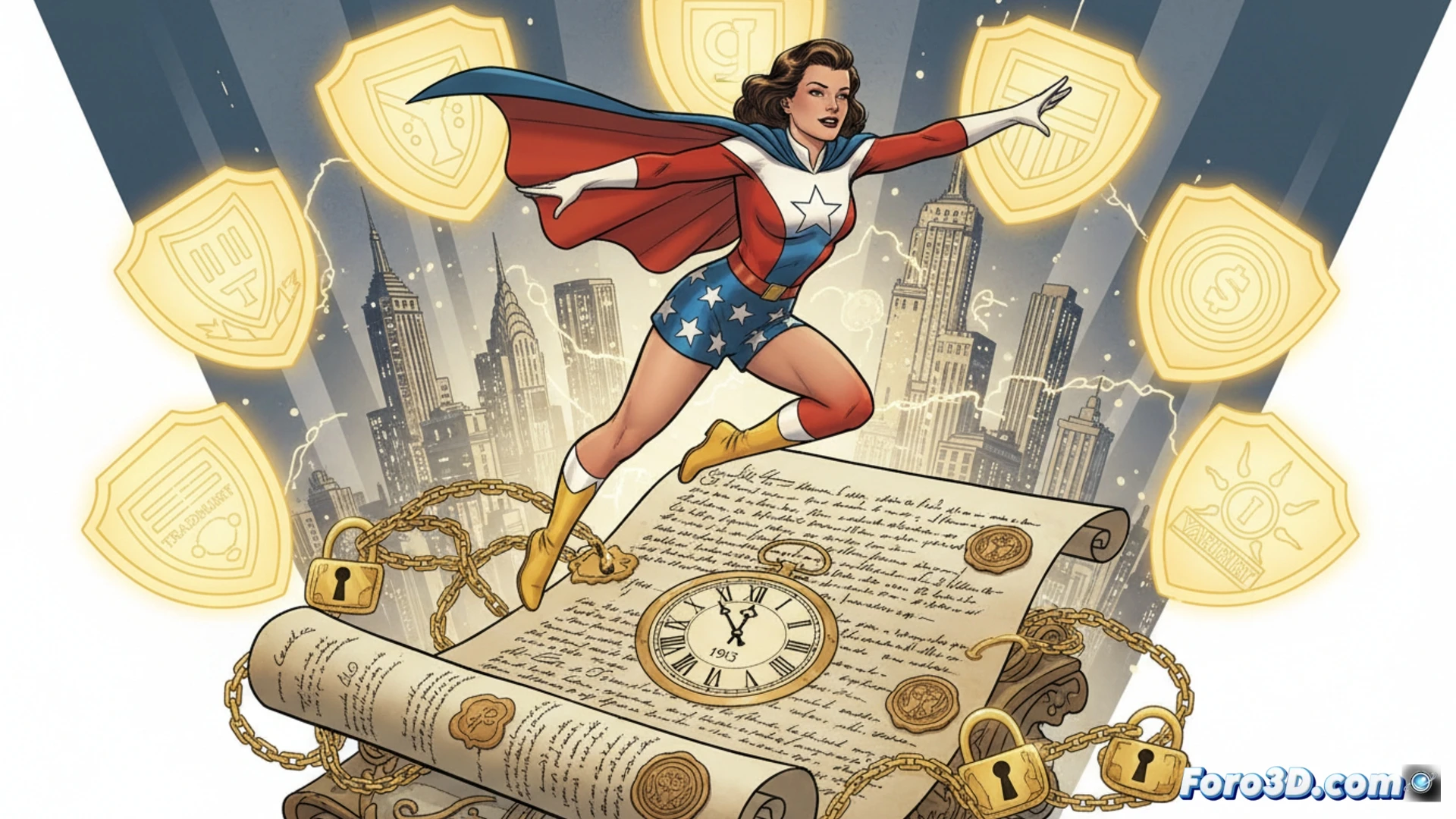
Technical rights analysis for 3D modeling 🛡️
For a 3D artist wishing to recreate Miss America, the legal risk is high. Marvel owns the copyright on the specific graphic representation and the trade name. However, the generic concept of a heroine with super strength and flight after an electrical accident could be reinterpreted if distinctive elements such as the original costume design, emblem, or name are avoided. Creating a marketable NFT or 3D model would require an official license or a significant transformation that avoids confusion with the protected work.
Implications for the independent creator ⚖️
The lesson for the digital ecosystem is clear: a character's age does not guarantee freedom of use. Many creators mistakenly assume that Golden Age works are public domain. In reality, corporations like Marvel have shielded their catalog through litigation and copyright renewals. For 3D projects, the safest strategy is to draw inspiration from archetypes (electric heroine) without replicating protected elements, or to seek characters whose copyright has legally expired.
How the creation of Miss America in 1943 influences current copyright legislation and the protection of historical characters in the digital realm
(PS: copyright is like bed leveling: without human intervention, everything comes out crooked)