The MiniMax Video-01 model has burst into the digital animation sector with a disruptive proposal: generating hyperrealistic video sequences of human figures without the need for rigging, motion capture (mocap), or blendshapes. This multimodal intelligence system produces natural movements and detailed facial textures that challenge traditional synthetic realism. For creators of digital humanoids, this represents a paradigm shift, allowing a transition from controlled simulation to the spontaneous generation of organic behaviors.
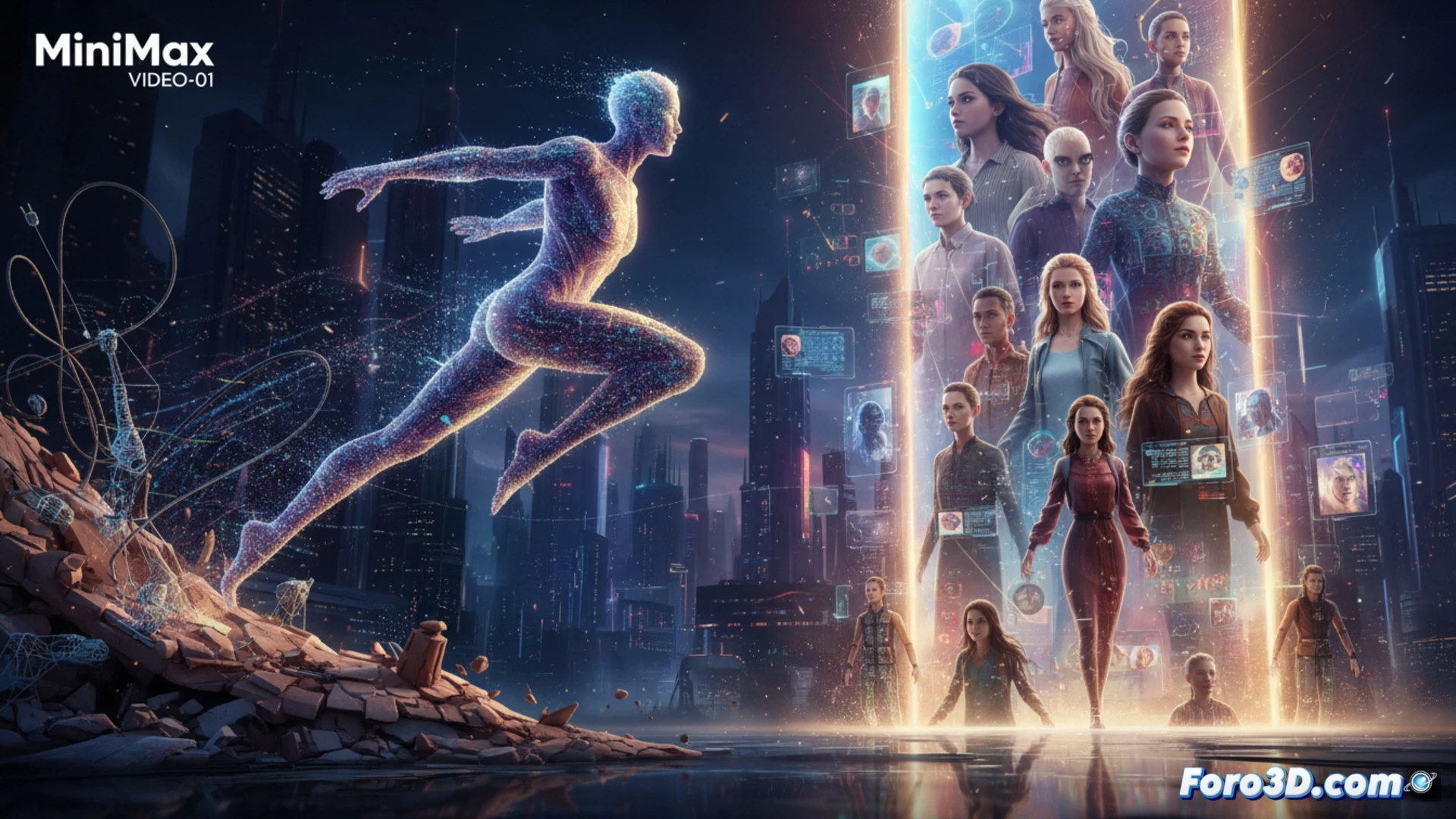
Technical Analysis: Advanced Physics and Facial Textures Without Manual Control 🤖
Unlike the classic workflow, which requires 3D modeling, skeletal rigging, and keyframe or mocap animation, MiniMax Video-01 operates on a latent video space. Its architecture processes multimodal data to infer body dynamics and facial micro-expressions. The result is sequences where tissue inertia, clothing interaction with the body, and skin folds are generated procedurally with fidelity close to real capture. However, this power comes with a critical technical trade-off: the lack of direct control over geometry and temporality. While a rigger can adjust a specific bone, the generative model acts as a black box, limiting the correction of errors in temporal consistency (such as flickering or abrupt lighting changes between frames).
Implications for the Future of Simulation and Entertainment 🎬
The application of MiniMax Video-01 in film, video games, and simulation is immense, but not without limitations. For scene previsualization or generating backgrounds with digital crowds, its speed and realism are unmatched. However, in productions that demand precise control over acting performance or the exact repetition of a gesture, the technology still falters. The digital humanoid community must adopt this model as a tool for inspiration and rapid prototyping, complementing, not replacing, the artisanal precision of traditional animation.
How can MiniMax Video-01 solve the challenge of the uncanny valley in generating hyperrealistic digital humanoids without falling into the perception of artificiality?
(PS: Digital humanoids have the advantage that they never complain about the rigging.)