Honey has been sweetening lives and promising health for centuries, but not all honeys are the same. While refined white sugar has a glycemic index (GI) of 65, honey can range from a modest 32 to a dangerous 85, depending on its floral origin. This variation depends on the mix of glucose and fructose, and on compounds like phenolic acids and flavonoids, which slow down sugar absorption.
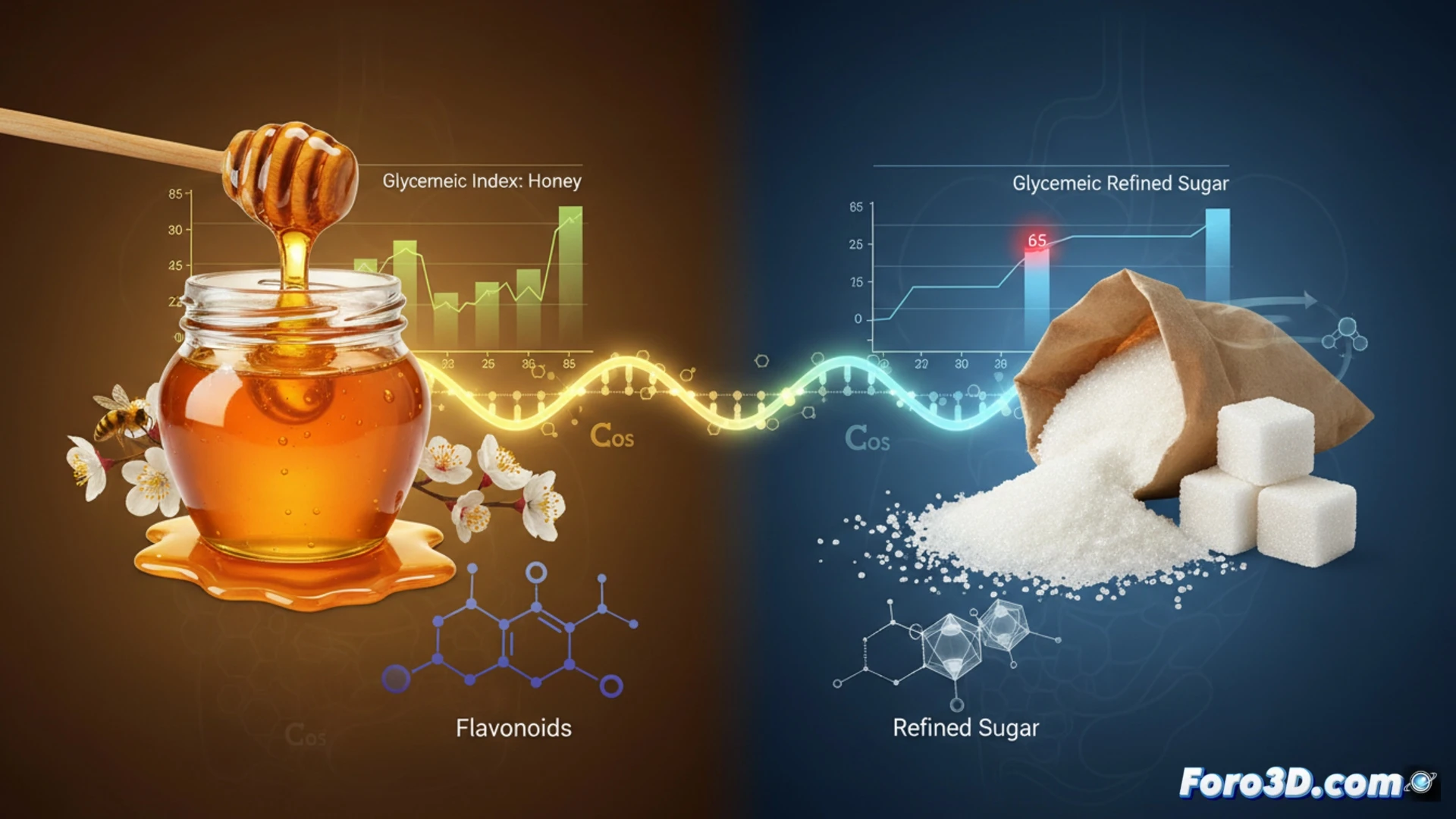
The chemical profile of honey and its impact on sweetener development 🧪
In the technological field, raw honey is of interest for its antioxidants, which could offer protection against diseases. However, replicating its properties in artificial sweeteners is complex. The proportion of glucose and fructose varies depending on flowering and processing, affecting the GI. While sidra honey has a low GI, Greek thyme honey spikes levels. Phenolic acids and flavonoids add a plus, but they do not compensate for its caloric load.
Raw honey: the superfood your baby shouldn't even smell 🍼
Raw honey preserves all its magical compounds, but it also harbors an unwelcome guest: the bacterium Clostridium botulinum. For adults, it is harmless, but in babies under one year old, it produces a toxin that sends them straight to the hospital. So, if your child is crawling and sees the jar, better hide it. Don't say we didn't warn you: antioxidants are fine, but gastroenteritis is not so cool.