The vitrification of nuclear waste encapsulates dangerous isotopes in a borosilicate glass matrix, designed to isolate them for millennia. However, recent inspections using industrial computed tomography (CT) have revealed a critical phenomenon: networks of thermal micro-cracks that act as conduits for radioactive leaks. This article breaks down the 3D analysis of these fractures and their multiphysics simulation. 🔬
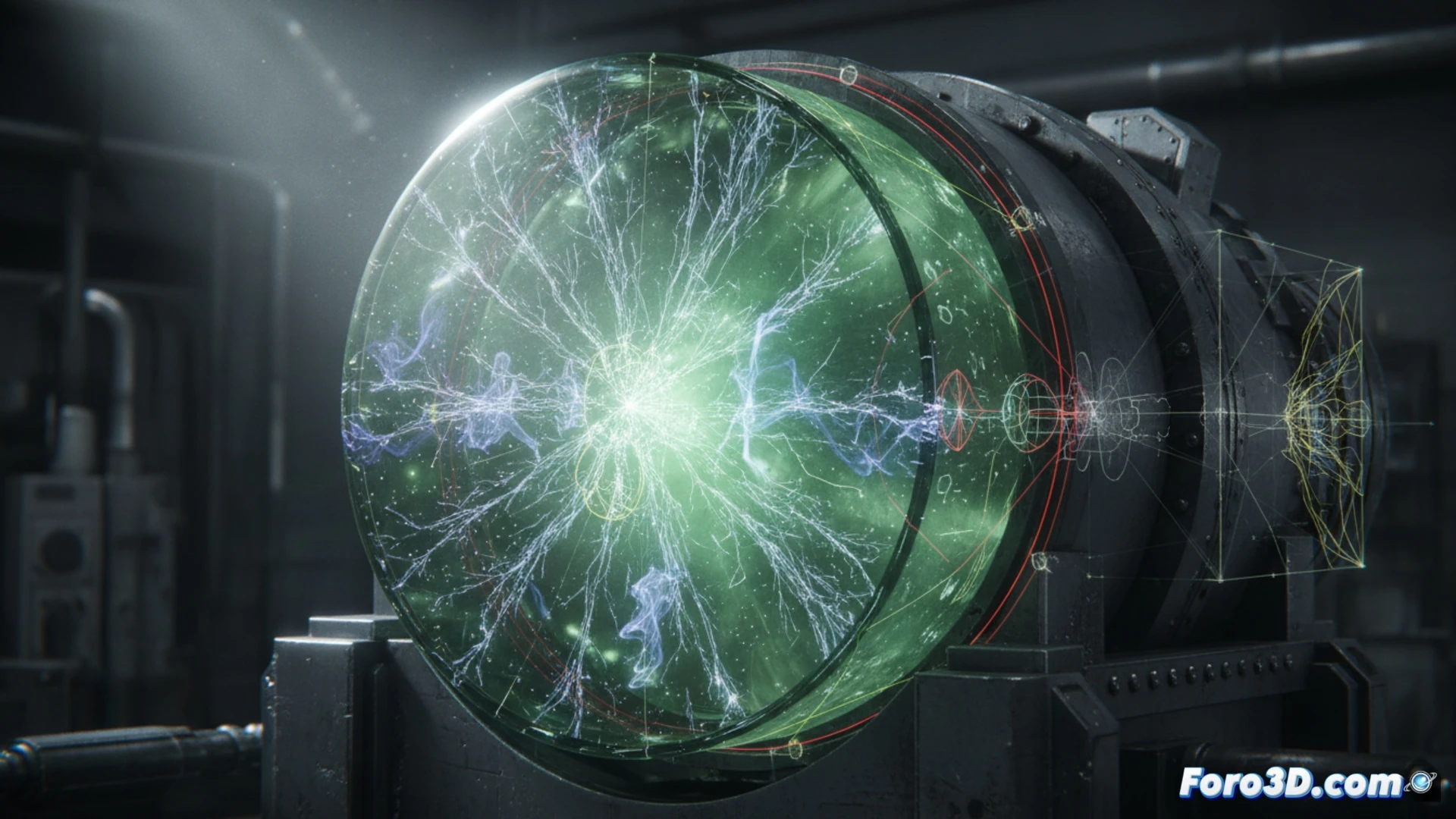
Mapping the crack network using industrial CT and simulation in COMSOL 🧊
The cooling process of molten glass generates residual stresses that cause extensive micro-cracking, invisible to the naked eye but detectable with high-resolution CT. Industrial CT software reconstructs precise 3D models of the fracture network, while COMSOL Multiphysics simulates the evolution of these cracks under thermal and mechanical stress. Integrating this data into Rhino allows visualization of how cracks interconnect, creating preferential pathways for the migration of isotopes such as Cesium-137. Predictive models indicate that crack density can double in residual heat cycles, compromising the long-term barrier.
The glass paradox: an eternal container with invisible leaks ⚠️
Vitrification technology is currently the gold standard for waste immobilization, but micro-cracking introduces critical uncertainty into geological safety timelines. The 3D damage analysis reveals that chemically stable glass is not enough; its physical integrity under thermal gradients must be precisely modeled. Multiphysics simulation thus becomes an indispensable tool for redesigning cooling cycles and predicting the matrix's behavior over centuries, preventing a container designed to last 10,000 years from failing due to a microscopic defect.
How can radiation-induced microcracks in nuclear borosilicate glass compromise the prediction of its long-term durability in fatigue simulations under geological storage conditions?
(PS: Material fatigue is like yours after 10 hours of simulation.)