The loss of sealing in a cryopreservation bank has destroyed decades of biological research by exposing samples to lethal temperatures. Forensic analysis, using 3D electron microscopy, revealed micro-porosities in the graphite gaskets, a classic material fatigue failure that compromised the vacuum seal. This case demonstrates how submillimeter defects, invisible in 2D inspections, can ruin critical systems.
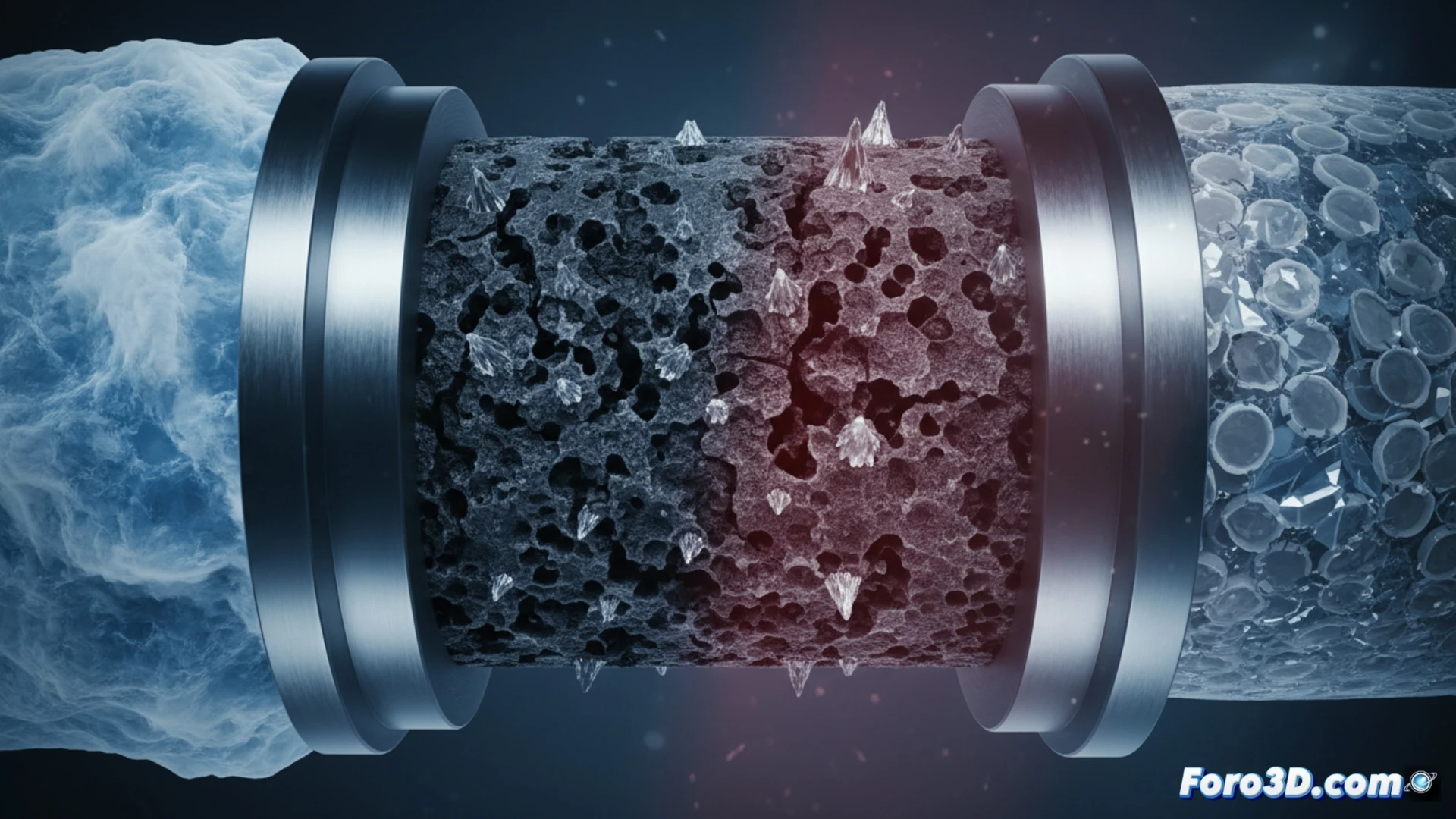
3D Surface Analysis with MountainsMap and KeyShot 🔬
MountainsMap processed the topographic data from electron microscopy to quantify the roughness and depth of micro-porosities in the graphite gaskets. The software isolated the peaks of plastic deformation, highlighting zones of cyclic stress concentration. Subsequently, MeshLab cleaned the point cloud to generate a precise mesh, which was imported into KeyShot for technical rendering. The resulting images, with heat maps on the surface, clearly illustrated the vacuum leak paths, facilitating communication of the failure to materials engineers.
Predictive Redesign in Fusion 360 to Avoid Fatigue ⚙️
Using the data from MountainsMap, an optimized graphite gasket was modeled in Fusion 360. The fatigue simulation applied pressure and temperature cycles equivalent to 20 years of operation. The results showed that a 0.2 mm chamfer on the contact edge reduces micro-deformations by 40%, eliminating zones prone to porosity. Fusion 360 allowed iterating the design in minutes, offering a viable solution to prevent future catastrophes in biological banks.
When simulating material fatigue in graphite gaskets with micro-porosities during cryopreservation cycles, which parameters of pore density and distribution are most critical for predicting long-term sealing loss in biological banks?
(PS: Material fatigue is like yours after 10 hours of simulation.)