A patient suffered a critical airway obstruction following the collapse of a long-term tracheal stent. Forensic analysis of the implant, performed using micro-CT and 3D modeling, revealed that the nitinol mesh had lost its shape memory. The cause was an unexpected galvanic reaction between the metal and pulmonary mucus, whose acidic pH accelerated material corrosion, leading to device fracture.
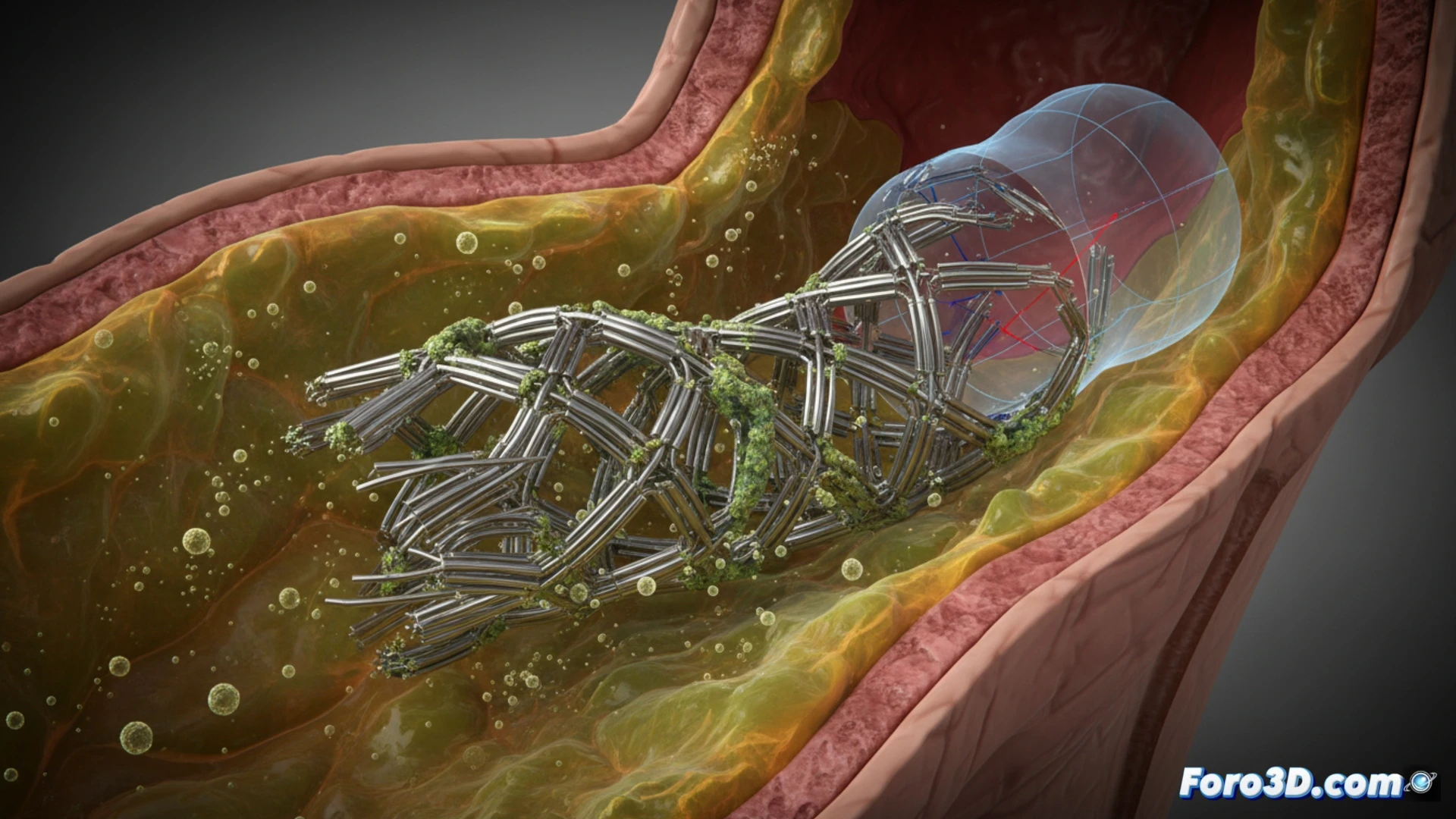
3D reconstruction and finite element simulation of the failure mechanism 🧬
The team used Materialise Mimics to segment the micro-CT images and generate a detailed three-dimensional model of the fractured mesh. MeshLab was used to clean and optimize the mesh for subsequent analysis. Finite element simulation in Abaqus allowed recreating the cyclic loads of the respiratory tract. The results showed that galvanic corrosion, induced by the contact of nitinol with an acidic electrolyte (mucus with pH below 5.5), generated surface pits that acted as stress concentrators. This drastically reduced the material's fatigue resistance, leading to stent collapse.
Lessons for implant design: the biological environment as a critical variable ⚠️
This case demonstrates that mechanical biocompatibility is not sufficient; the patient's chemical environment is a risk factor. The combination of micro-CT and finite element simulation is becoming an indispensable tool for implant engineering. Incorporating galvanic corrosion models into the design phases would allow predicting these failures, avoiding traumatic reinterventions and improving the safety of long-term tracheal stents.
What clinical implications does galvanic corrosion in nitinol tracheal stents have for the design of future long-term implantable devices?
(PS: If you 3D print a heart, make sure it beats... or at least doesn't cause copyright issues.)