An Explosive Ordnance Disposal (EOD) suit failed during a controlled detonation, exposing the operator to critical risks. Forensic analysis using micro-computed tomography (micro-CT) revealed that ambient humidity had altered the crystalline structure of the aramid fibers, reducing their resistance to cyclic fatigue. This technical article details how nCode, Abaqus, and Mimics were used to model the failure and propose improvements in the design and storage of these suits.
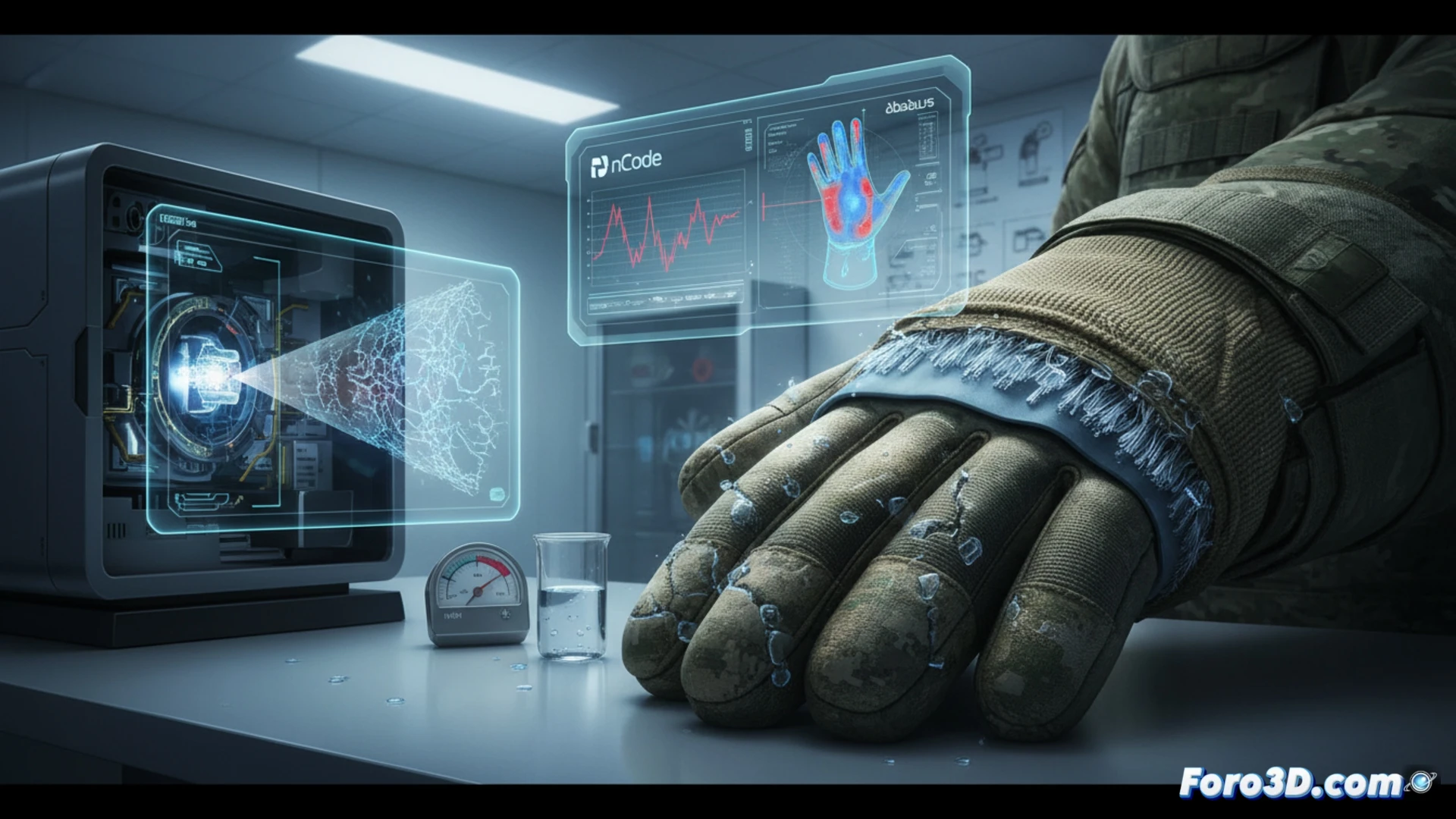
Multiscale analysis: from microstructure to fatigue failure 🔬
The process began with the segmentation of micro-CT images in Materialise Mimics, where zones of microcracks and filament misalignment were identified in the aramid weave exposed to relative humidity above 85% for 18 months. These imperfections were imported into Abaqus to simulate the impact of the blast wave on the degraded fabric. Residual stress data were transferred to nCode DesignLife, where specific S-N curves were constructed for the hydrolyzed polymer. The 3D damage maps showed that the material's fatigue life was reduced by 62% compared to fibers stored under controlled conditions, explaining the premature failure during the detonation.
Lessons for the design and storage of EOD suits 🛡️
The integrated simulation demonstrates that humidity not only degrades static strength but also drastically accelerates fatigue damage accumulation under repetitive loads. To mitigate this risk, it is recommended to implement humidity sensors in storage containers and conduct periodic fatigue tests with nCode on aged fabric batches. Additionally, the weave design should include a vapor diffusion barrier between aramid layers, verifiable through micro-CT and Abaqus. A service life protocol based on humidity cycles, rather than calendar time, will prevent future catastrophic failures in EOD operations.
What limitations does the combined use of micro-CT and nCode present for modeling the progressive degradation of aramid fiber in EOD suits under cyclic humidity conditions and repetitive explosive loading?
(PS: Material fatigue is like yours after 10 hours of simulation.)