A batch of extended-release medications caused mass poisoning in patients. The cause was not the dose of the active ingredient, but a critical failure in the polymer coating. Analysis using micro-CT and Volume Graphics software revealed variations of just 5 microns in the coating thickness, allowing immediate drug release (dumping). This case demonstrates that 3D metrology is now an indispensable tool in pharmaceutical safety.
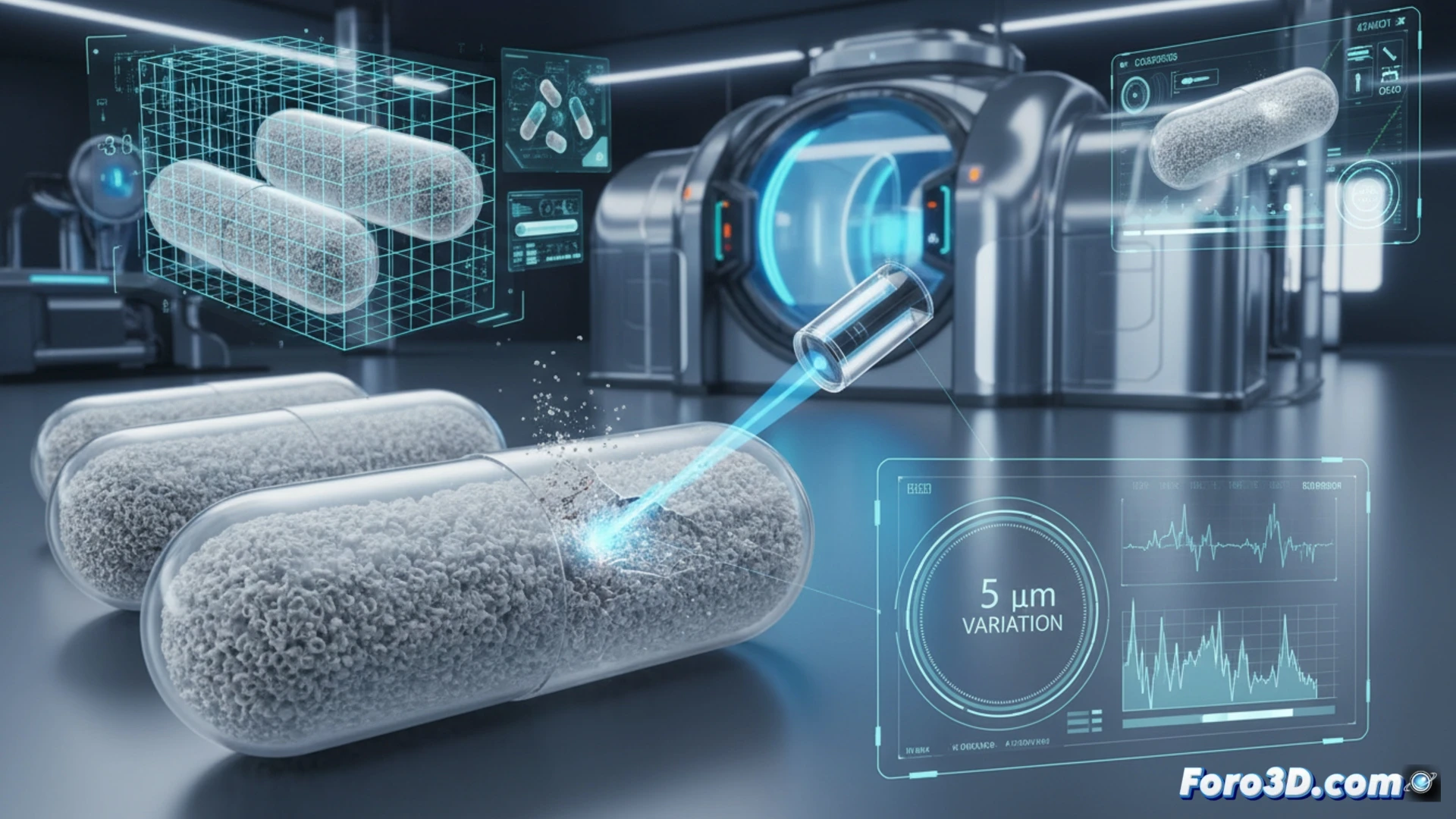
3D Pipeline for Coating Metrology in Tablets 🔬
The workflow begins with the acquisition of high-resolution tomographies (micro-CT) on individual tablets. Volume Graphics software allows segmenting the drug core and the polymer layer, generating 3D thickness maps with sub-micrometer precision. The Wall Thickness Analysis tool identifies areas where the coating is less than 30 microns, a critical threshold for controlled release. Complementarily, the Keyence VK Analyzer provides surface topographic profiles to correlate roughness with thickness variations. GMP standards now require non-destructive controls like this for extended-release batches.
The Cost of Ignoring 5 Microns in Public Health 💊
A difference of 5 microns, invisible to the human eye and conventional HPLC methods, turned a safe medication into an overdose. The clinical impact was immediate: poisoned patients required hospitalization. The pharmaceutical industry must integrate 3D metrology as a standard in quality control, not only to avoid litigation but to save lives. Micro-CT is no longer just a laboratory tool; it becomes a shield against manufacturing error.
How can the combination of micro-CT and 3D metrology detect sub-micrometer defects in pharmaceutical coatings before they compromise the controlled release of the active ingredient and prevent mass poisoning in production batches?
(PS: If you 3D print a heart, make sure it beats... or at least that it doesn't cause copyright issues.)