The intravascular fracture of a robotic catheter during a complex surgery has put the shape memory properties of Nitinol under scrutiny. The incident, where the device tip became lodged in an artery, is now being analyzed using micro-CT and finite element analysis (FEA) in Abaqus. The main hypothesis points to overheating during sterilization, which would have degraded the alloy's crystalline structure, causing a catastrophic failure under cyclic loading.
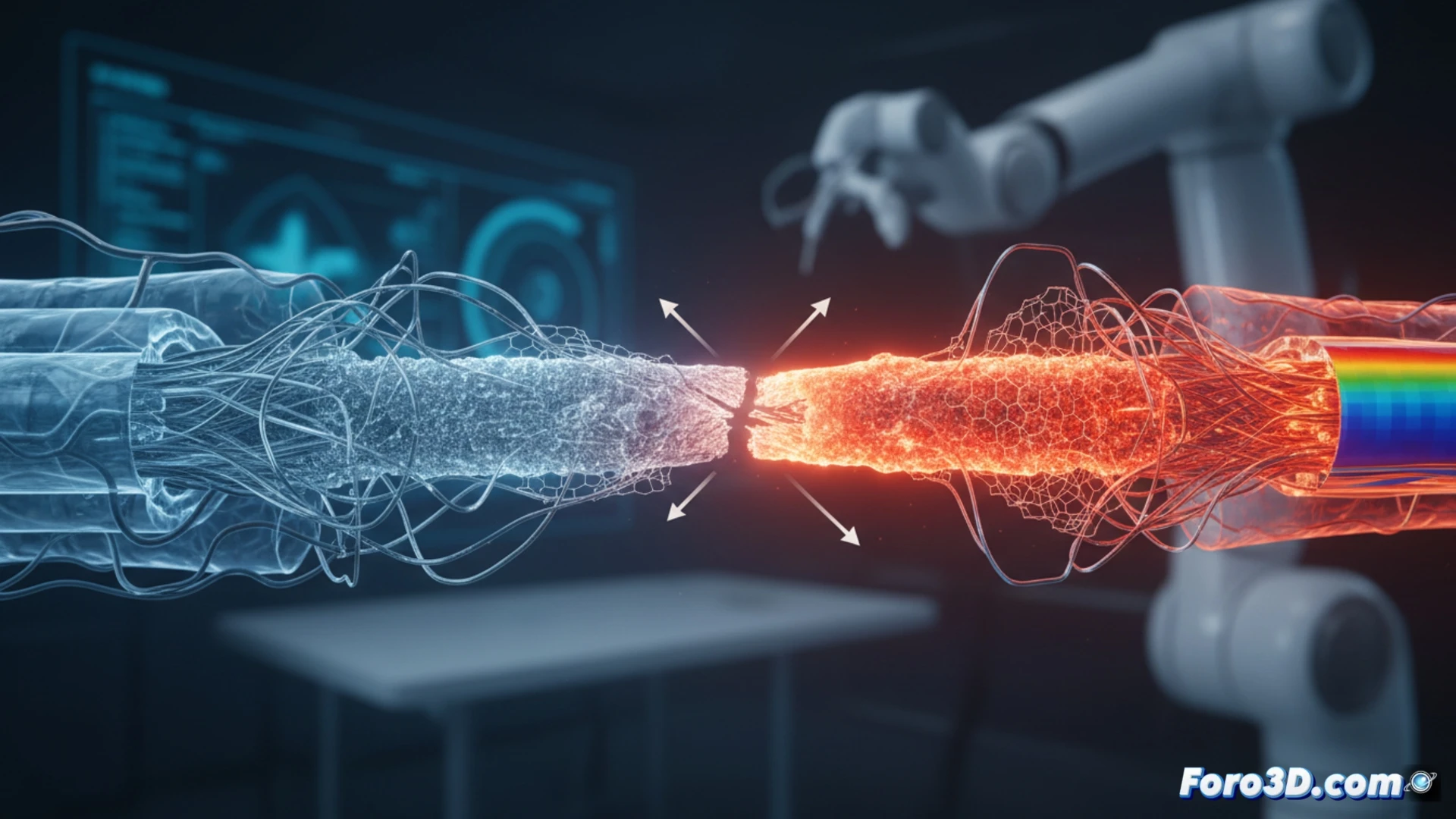
3D reconstruction and forensic simulation of the fracture mechanism 🔬
The forensic workflow begins with micro-CT data acquisition, processed in Materialise Mimics to generate a high-resolution volumetric model of the fractured tip. This model is exported to Abaqus, where boundary conditions replicating arterial tortuosity and torsional forces are applied. The FEA reveals stress concentration zones that exactly match the separation point. Fatigue parameters indicate that the Nitinol transition temperature rose above 70°C during autoclaving, destabilizing the martensitic phase and reducing yield strength by up to 40% compared to the nominal value.
Lessons for fatigue simulation in shape memory alloys ⚙️
This case demonstrates that thermal process validation is as critical as mechanical design in implantable devices. The combination of micro-CT and FEA not only identifies the fracture origin but also allows quantifying the safety margin lost for each degree of overheating. For simulation engineers, the lesson is clear: Nitinol fatigue models must include a complete thermal history, from sterilization to surgical handling, to predict failures that visual inspection would never detect.
Since the combination of Micro-CT and FEA allowed identifying that the fatigue failure of the Nitinol catheter originated at points of localized overheating during robotic navigation, what design criteria or process parameters could be implemented to mitigate that thermal risk without compromising the material's shape memory?
(PS: Material fatigue is like yours after 10 hours of simulation.)