An outbreak of food poisoning at a pioneering 3D-printed food restaurant has been traced back to the print heads. Analysis using micro-computed tomography (micro-CT) revealed that the additive design of the ducts contains microscopic cavities where bacterial colonies lodged, inaccessible to conventional cleaning protocols. This case marks a turning point in the epidemiology of emerging technologies.
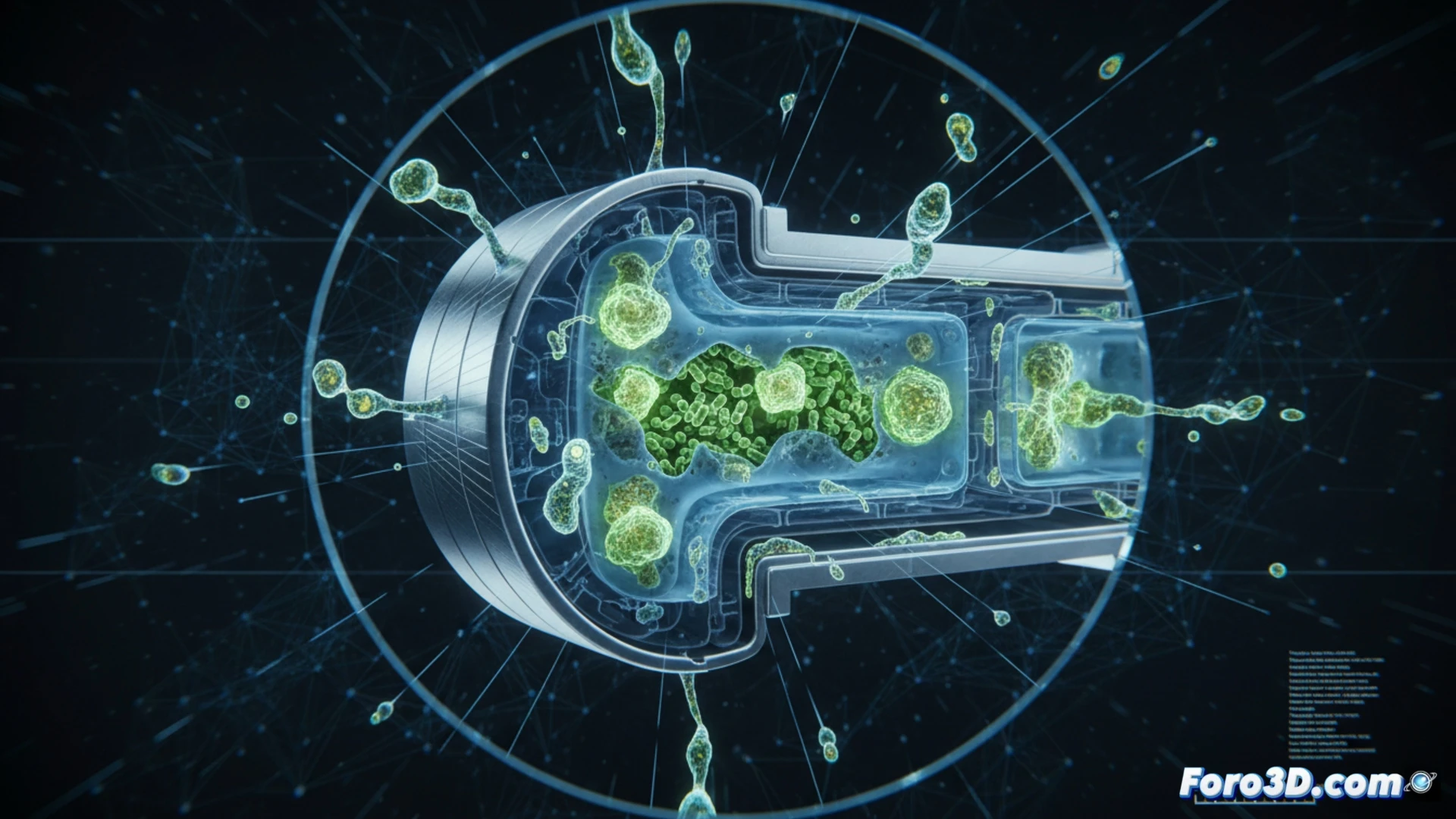
Volumetric analysis and 3D reconstruction of the hygienic failure 🧬
Using VGSTUDIO MAX for industrial tomography analysis, data from the suspected print head was processed. The Dragonfly software allowed segmentation of the internal cavities, revealing a dead volume of 0.04 mm3 per nozzle where organic residues accumulated. Reconstruction with Fusion 360 demonstrated that these cavities were inherent to the original design, a product of a 45-degree exit angle that generated a stagnation zone. Simulations in KeyShot visualized the impossible trajectory of cleaning fluids, confirming that cross-contamination was inevitable by design.
Redesigning safety from additive manufacturing 🔬
This case demonstrates that visual epidemiology serves not only to track outbreaks but also to audit the design of medical and food devices before commercialization. Micro-CT thus becomes an essential regulatory tool. The future of 3D food printing requires that sanitary standards include virtual cleaning tests on CAD models, preventing complex geometries from becoming biological traps.
Considering that Micro-CT detected pathogenic biofilms in inaccessible areas of the print head, what predictive hygiene protocols based on volumetric imaging should be implemented in 3D food printing to prevent future infection foci without compromising the integrity of the mechanism?
(PS: public health graphs always show curves... just like ours after Christmas)