A silent failure in a nuclear fusion waste container has put the spotlight on composite material fatigue. A radiation leak, detected in a tritium storage cylinder, has been attributed to micro-channels formed by gas bubbles trapped in the polymer concrete shielding. 3D micro-CT analysis becomes the key tool for understanding this phenomenon.
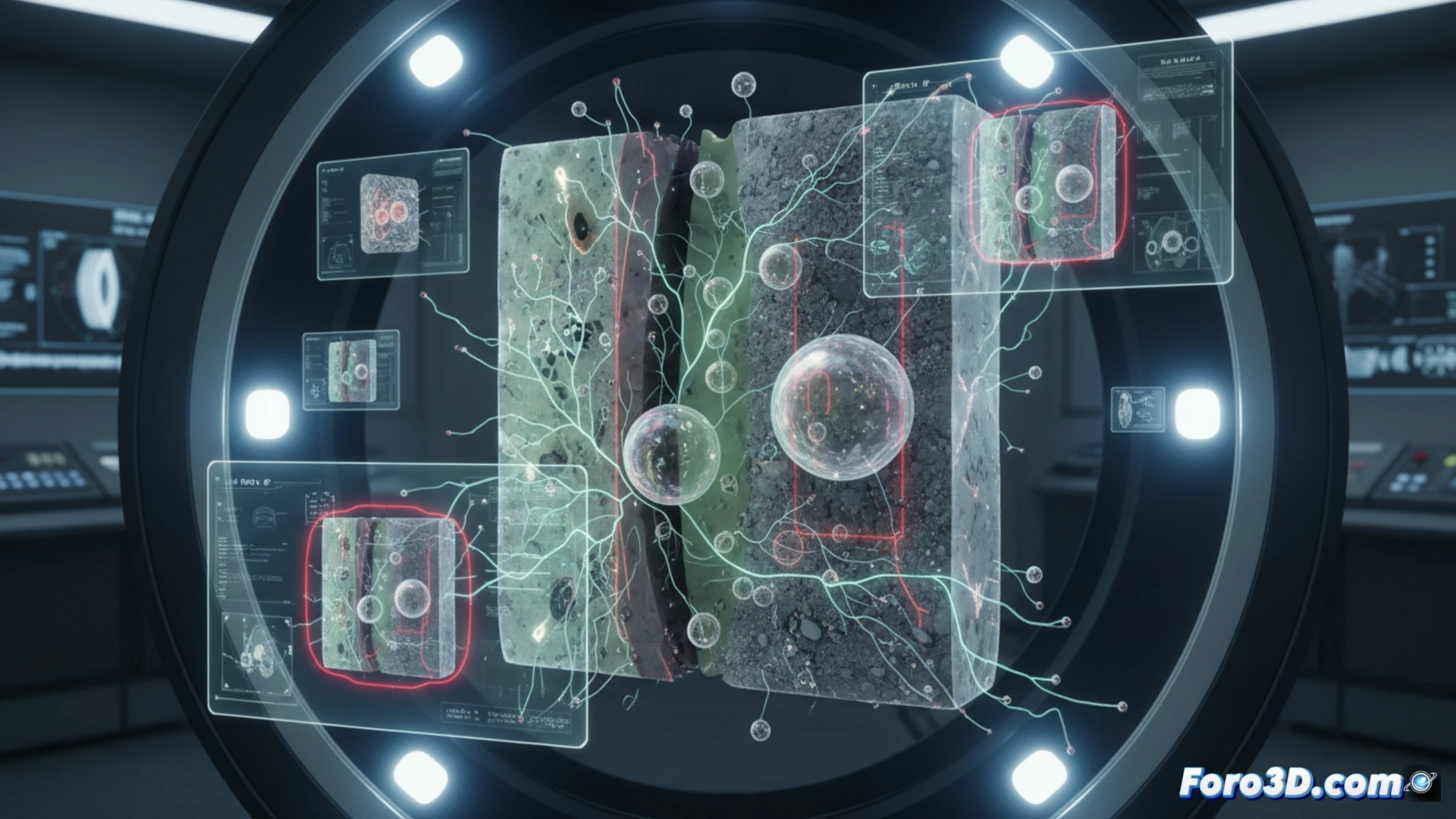
Fatigue analysis using VGSTUDIO MAX and 3D micro-CT 🛠️
The non-destructive inspection process begins with digitizing the shielding using computed microtomography. Volumetric images are processed in VGSTUDIO MAX, where segmentation algorithms are applied to isolate each gas bubble. Fatigue simulation evaluates how these microscopic cavities, subjected to thermal cycles and pressure, act as stress concentrators. Over time, cracks coalesce, creating leak channels that compromise the container's seal. The mapping of these leak paths is subsequently visualized in Adobe Substance 3D Painter, allowing correlation of porosity with the risk of isotope release.
Lessons for composite material engineering ⚠️
This incident underscores an uncomfortable truth: in materials like polymer concrete, fatigue does not always begin at the surface. Gas bubbles, often considered aesthetic or low-criticality defects, can be the origin of catastrophic failures in nuclear environments. The integration of tools like Catia V6 for shield design and NVIDIA Omniverse for collaborative mechanical behavior simulation, along with micro-CT inspection, is emerging as the necessary standard to validate the long-term integrity of these containers before they are put into service.
Is it possible to predict the onset of fatigue cracks in nuclear shielding composites from the three-dimensional distribution of microporosities detected by Micro-CT, or is a model that integrates their dynamic evolution with radiation and the thermal cycle necessary?
(PS: Material fatigue is like yours after 10 hours of simulation.)