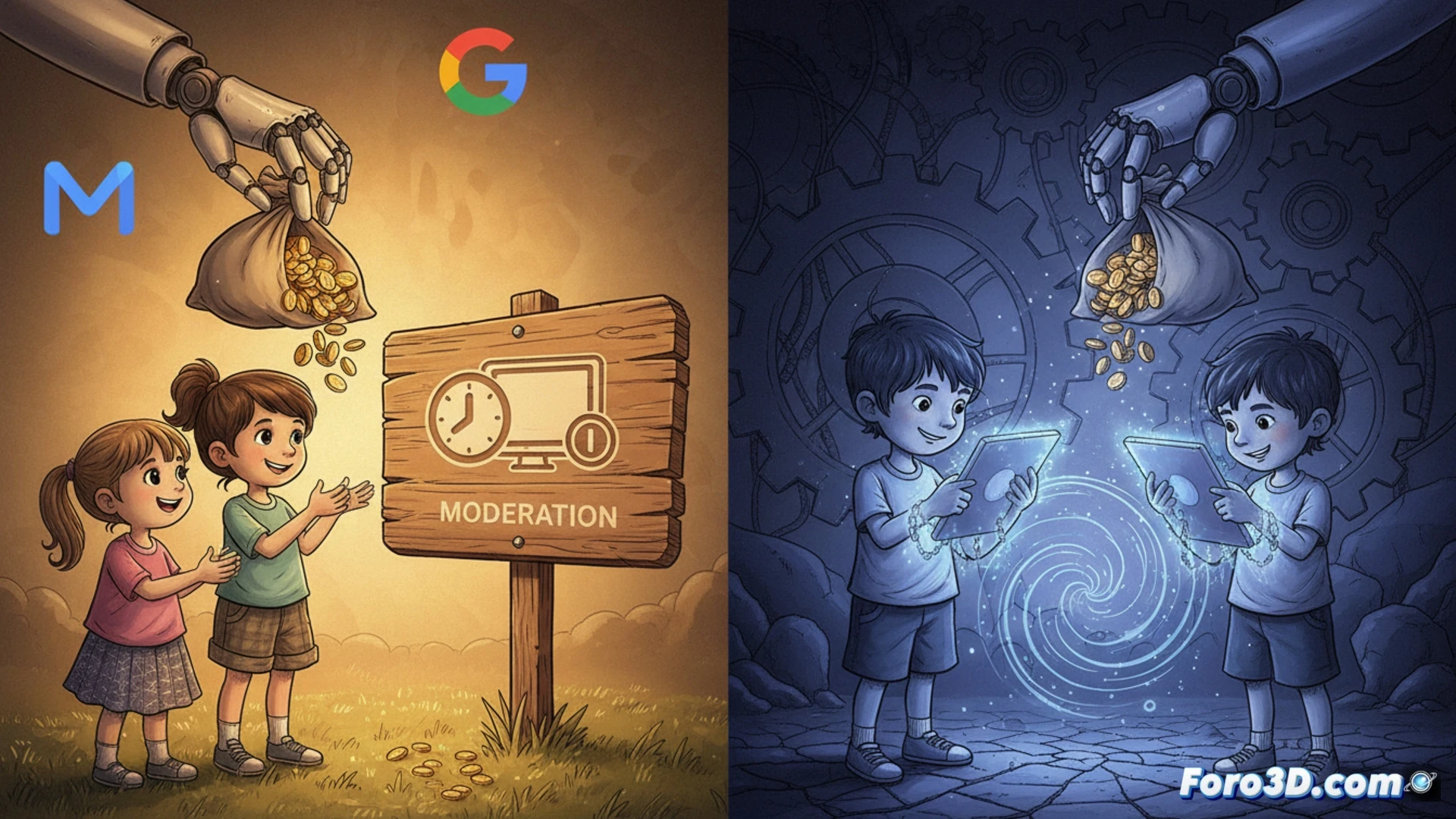
A Reuters investigation uncovers the strategy of Meta and Google: funding children's organizations like Sesame Workshop, Highlights Magazine, and the Girl Scouts with tens of millions of dollars. The goal is to promote moderate technology use among children. However, at the same time, both companies design apps with mechanisms that make disconnection difficult, creating a contradiction between their rhetoric and their business model.
The technical paradox of children's digital well-being 🤔
Google has committed at least $20 million to digital well-being initiatives for 2024. Its educational materials normalize smartphone use in children aged 6 to 12, clashing with the recommendations of the American Academy of Pediatrics, which suggests delaying their use. Meanwhile, interfaces like YouTube Kids or Instagram are designed with feedback loops and notifications that encourage staying, not pausing. Funding children's organizations acts as a shield of social responsibility while usage patterns remain intact.
The double digital life manual 😅
So now it turns out that the same company that designs an infinite feed so you don't put down your phone pays your friends from Sesame Street to teach you to put it down. It's like a drug dealer funding a talk about the dangers of sugar. The funniest part is that the educational materials, paid for with advertising money, suggest using well-being apps from the same company. The solution to the problem they created comes in their own little box with a recycling sticker.