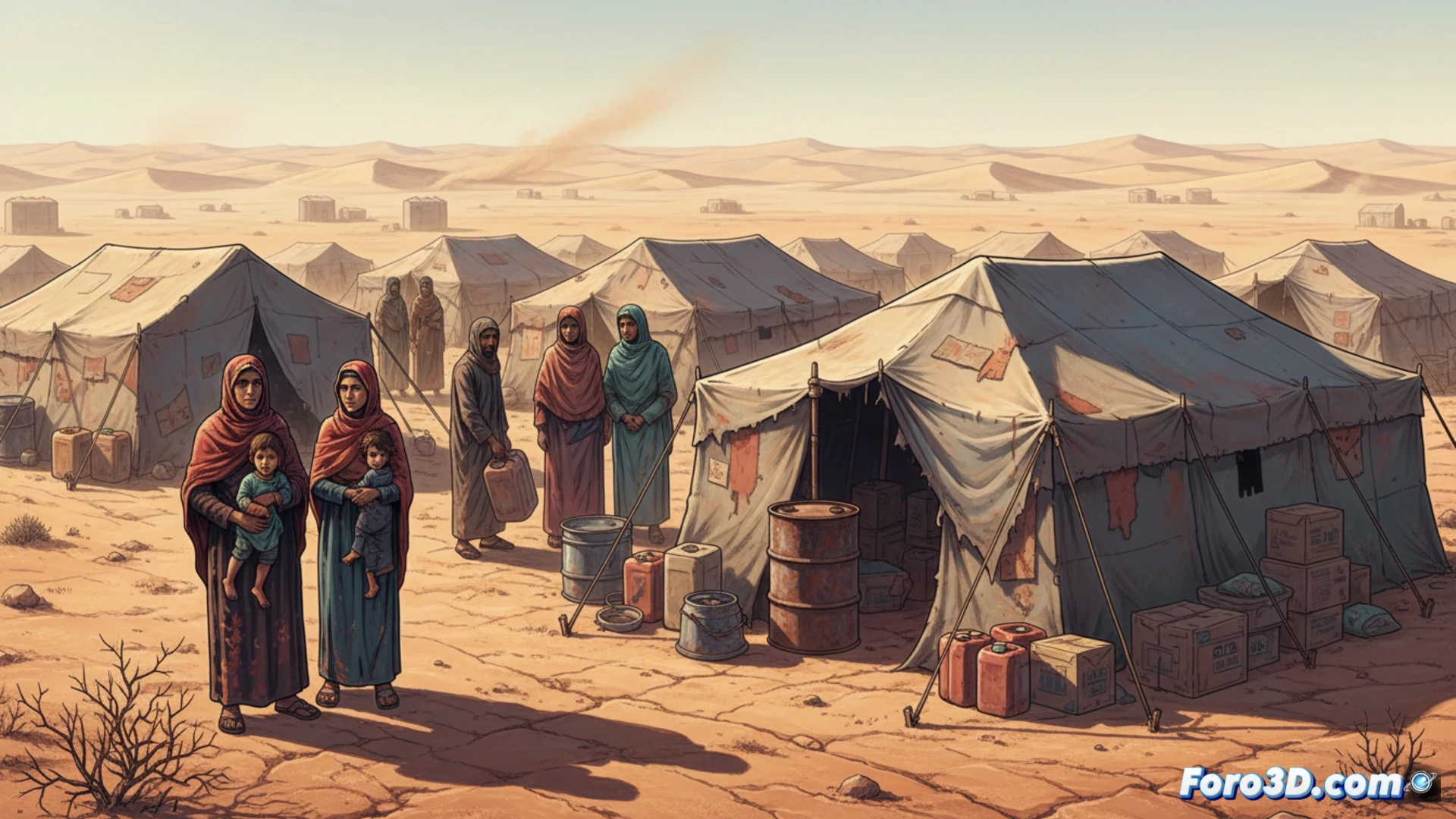
Five decades after its establishment in the Algerian desert, more than 170,000 Sahrawi refugees survive in camps where extreme heat, isolation, and lack of resources are the norm. Dependence on international aid is total, and the fear of being left behind in a world with constant crises grows every day.
Technological deployment in the desert: connectivity as a frontier 📡
Telecommunications infrastructure in the camps is limited. Mobile coverage depends on satellite antennas and signal repeaters that operate with solar panels, given the absence of a stable electrical grid. Digital radio projects and internet access via fiber optics have been implemented by cooperation agencies, but bandwidth is low and equipment maintenance is complex due to sand and extreme temperatures.
Desert wifi: slower than a hungover dromedary 🐪
The connection speed in the camps is so low that downloading a meme takes longer than setting up a tent. Young Sahrawis have developed stoic patience: they wait five minutes for a one-minute video to load. At least, when the wind knocks down the antenna, they have the perfect excuse to blame the weather and take a nap in the sun.