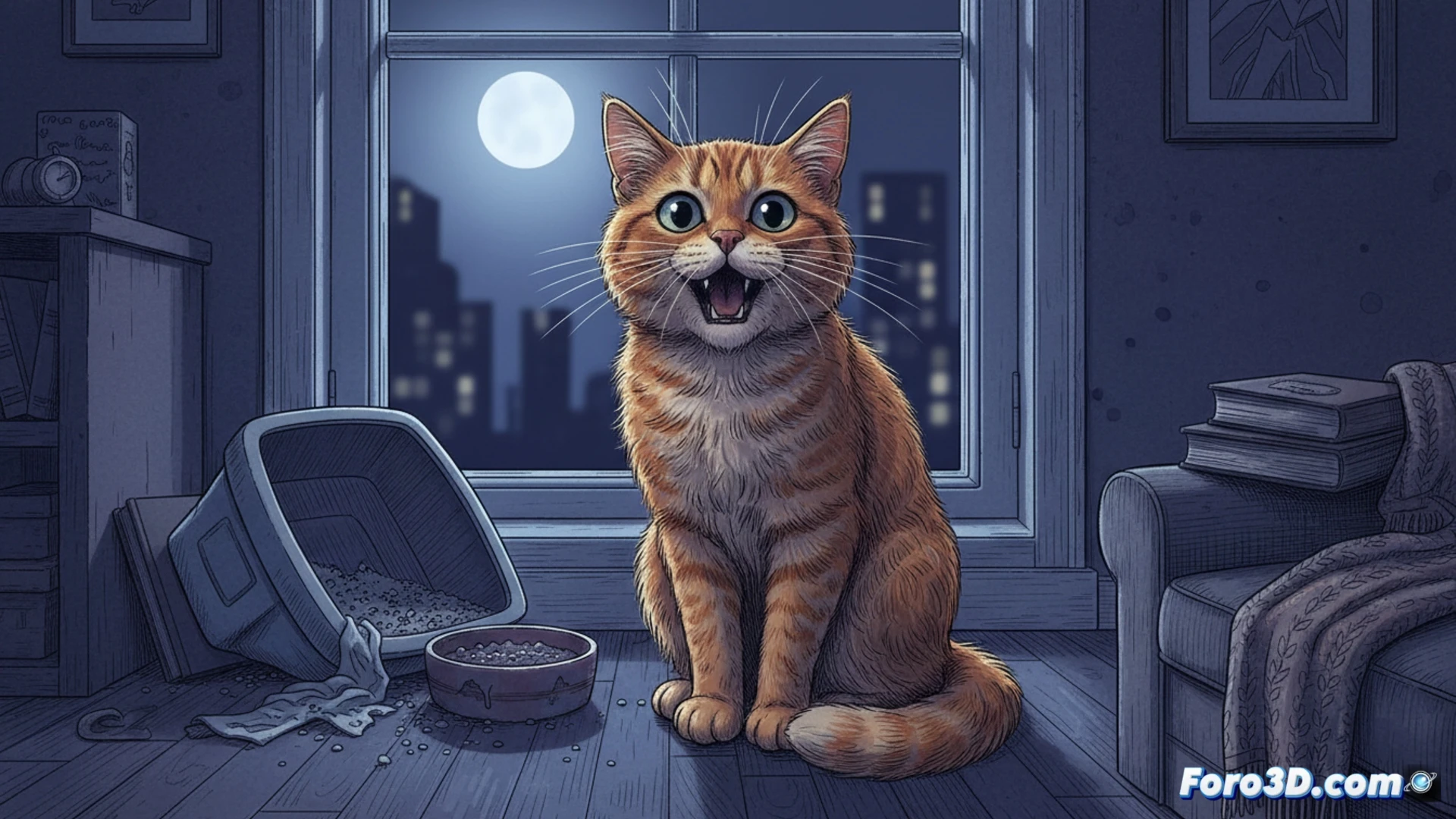
Veterinarians have issued a warning for owners of cats over 10 years old: if the animal starts meowing excessively during the night, it could be a symptom of cognitive dysfunction syndrome, a disease similar to human Alzheimer's. This disorder progresses gradually and alters sleep, orientation, and basic habits such as litter box use.
How technology helps monitor cognitive changes in pets 🐾
Devices such as activity sensor collars and night vision cameras exist that allow recording sleep patterns and erratic movements of the cat. This data, combined with behavioral tracking apps, helps the veterinarian detect early signs of cognitive decline. Artificial intelligence is also used to analyze variations in meowing frequency, offering predictive alerts before the condition progresses.
The cat meows at night: existential philosophy or senile dementia? 😼
Your 14-year-old cat spends the early morning hours meowing as if arguing with a ghost. No, it hasn't discovered the meaning of life nor is it demanding a premium kibble. Experts call it cognitive dysfunction; you call it insomnia. The worst part is that when you get up to see what's wrong, it looks at you as if you were the weird one. Feline old age spares no one.