22cans has unveiled Masters of Albion, a title that bets on a stylized visual style and an ambitious real-time crowd simulation. The chosen engine is Unity with its HDRP pipeline, allowing precise control over lighting and depth of field. However, the real technical challenge lies in integrating external tools like Blender and Houdini to feed an engine that must render hundreds of characters without sacrificing artistic coherence.
Procedural workflow and real-time modeling 🎨
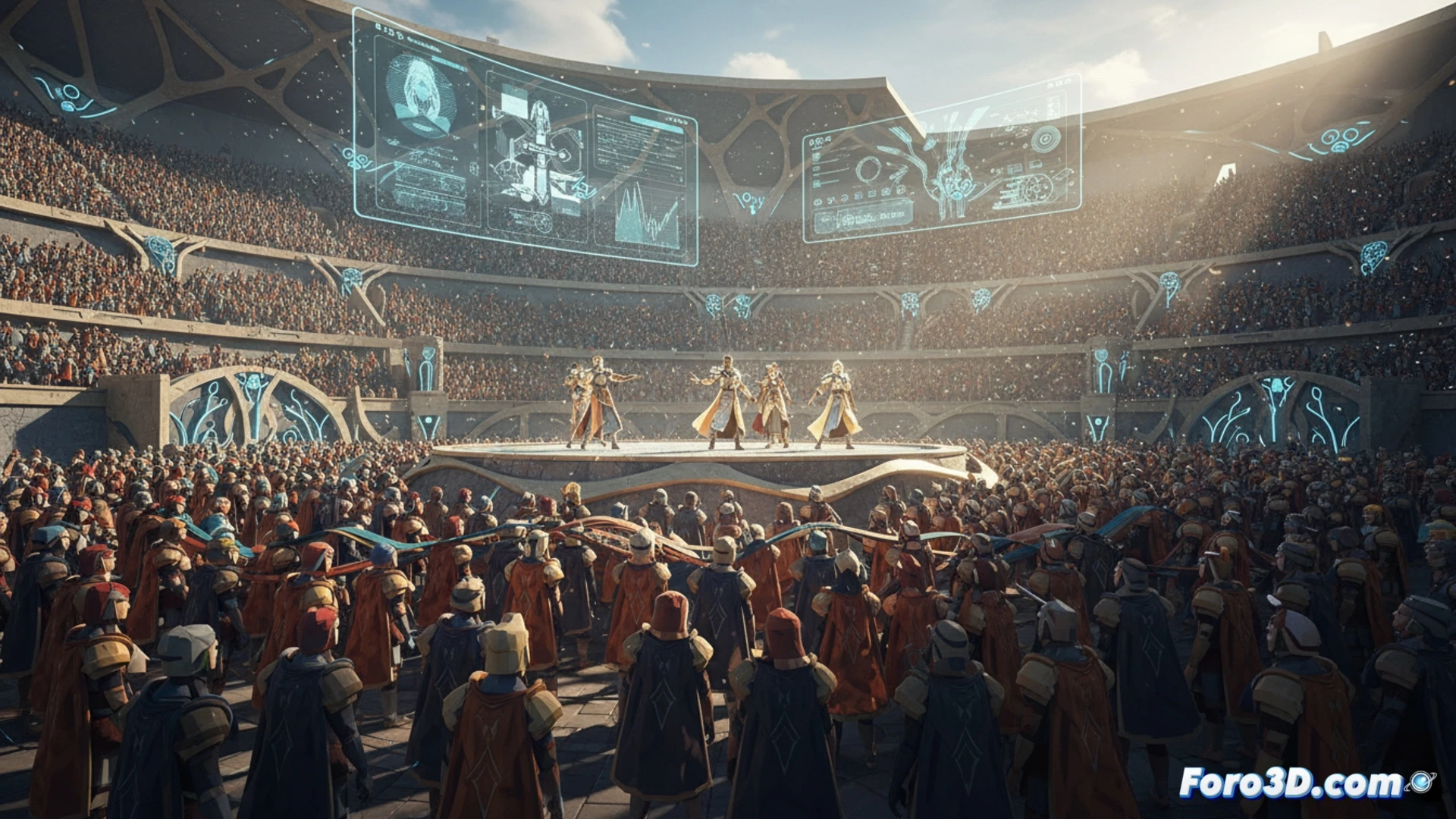
The team uses Houdini for the procedural generation of structures and terrains, a key decision for a world that needs to feel organic without requiring manual modeling of every element. These assets are exported to Unity HDRP, where the depth of field system helps hide the geometric limitations of distant objects. For characters and hero elements, Blender is used, prioritizing clear silhouettes and flat color palettes that work well with HDRP's volumetric lighting. Crowd optimization is managed through aggressive LODs and GPU instancing, leveraging the high-fidelity rendering profile without falling into polygon overload.
The stylized crowd paradox 🤔
Masters of Albion raises an interesting reflection for independent development. While the stylized approach reduces pressure on textures and complex shaders, crowd simulation introduces a CPU load that can be counterproductive. The decision to use Houdini for asset placement and Blender for key art suggests that 22cans has opted for a hybrid workflow: automation for the world and a handcrafted touch for the characters. For any indie studio, this balance between procedural efficiency and manual visual identity is the project's most valuable lesson.
What optimization techniques in Unity HDRP allow rendering high-density stylized crowds without sacrificing visual quality or performance in Masters of Albion?
(PS: game jams are like weddings: everyone is happy, nobody sleeps, and you end up crying)