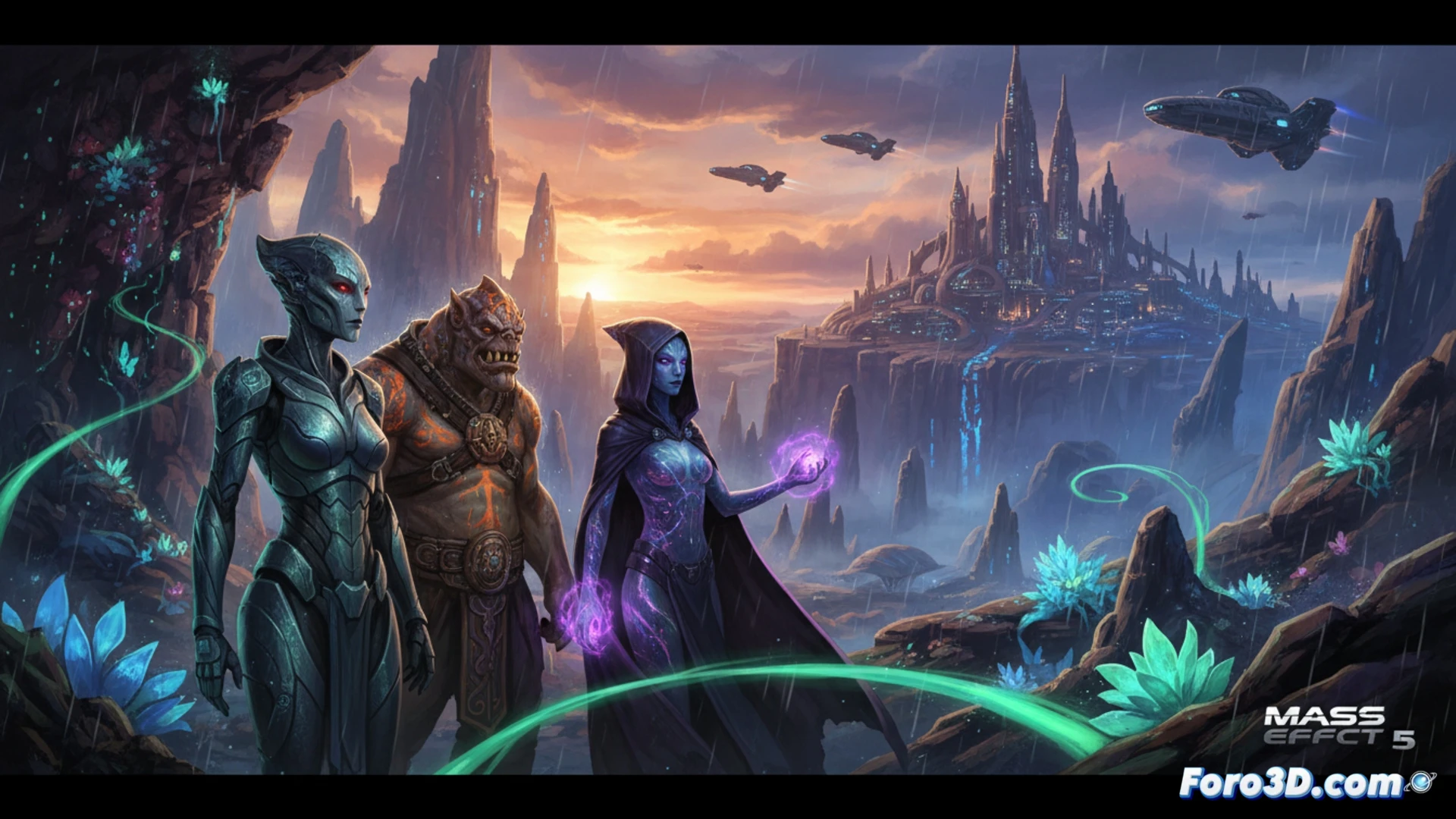
The return of the Mass Effect saga marks a technical milestone at BioWare with the definitive abandonment of Frostbite. The transition to Unreal Engine 5 not only solves the development problems that plagued previous titles but also opens the door to unprecedented visual fidelity. The main focus rests on two pillars: the hyper-realistic representation of alien characters and the creation of massive planetary biomes, leveraging UE5's native tools like Nanite and Lumen.
Asset pipeline: Maya, ZBrush, and Substance 🎨
The production of assets for Mass Effect 5 follows a classic but optimized route. Maya acts as the backbone for rigging and base animation, while ZBrush handles high-frequency details in the dermal textures of species like the turians or asari. The move to Substance Designer and Painter allows for generating procedural materials that adapt to UE5's dynamic lighting conditions. This is crucial for maintaining visual coherence in environments ranging from bioluminescent jungles to toxic deserts, where each texture must respond to normals and displacement in real-time.
The challenge of audio and planetary immersion 🔊
Wwise will be the audio engine responsible for sustaining the atmosphere of each world. Integration with UE5 will allow ambient sounds, such as wind on an icy moon or reverberation in a Prothean relic, to react to geometry generated by Nanite. For developers, this implies an optimization challenge: synchronizing audio events with the dynamic weather transitions promised by the new open-world system. Alien fidelity will not only be visual but also auditory, marking a new era for realism in playable science fiction.
What specific technical challenges in the transition from Frostbite to Unreal Engine 5 for Mass Effect 5 could mark a before and after in the development of open-world RPG video games?
(PS: shaders are like mayonnaise: if they break, you start all over again)