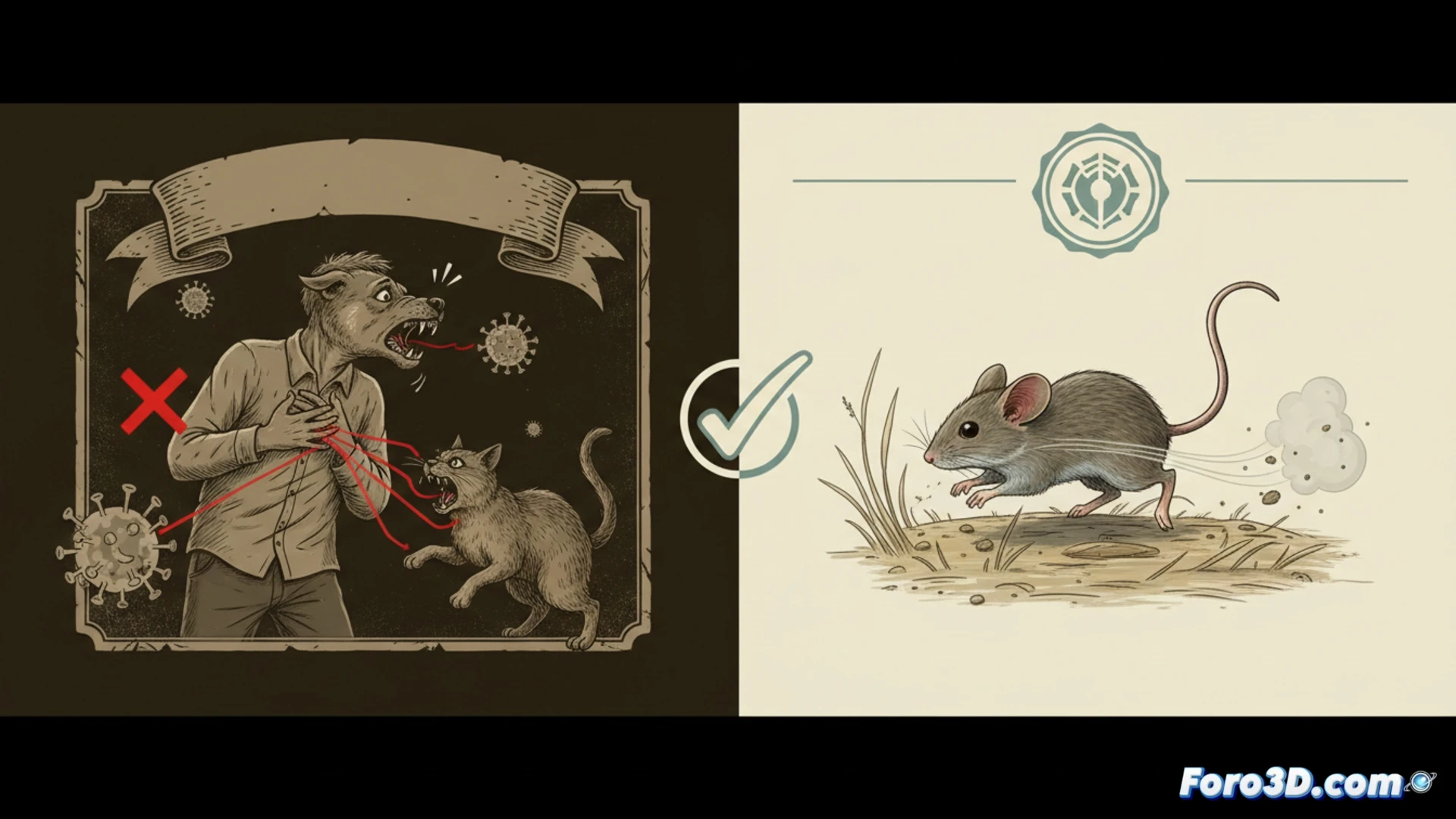
There is a circulating idea that dogs and cats can transmit hantavirus directly to people. However, health data indicates otherwise. Domestic pets are not natural vectors of the virus. The real risk lies in contact with wild rodents or their droppings. We clarify why your dog or cat is not a problem in this regard.
The transmission mechanism: infection technology and biological barriers 🧬
Hantavirus spreads mainly through aerosols of urine, feces, or saliva from rodents such as the long-tailed mouse. Dogs and cats have an immune system that does not favor virus replication, acting as dead-end hosts without active excretion capacity. Serological studies show that, although they can be exposed, they do not develop sufficient viremia to transmit. The species-specific barrier is key here.
Is your cat a secret agent of hantavirus? Spoiler: no 🐱
If your cat stares at you while you clean the litter box, it's not because it's planning a viral attack. It's because it wants you to change its food. Science is clear: felines and canines are terrible carriers of hantavirus. So you can breathe easy, though perhaps not next to its litter box if you haven't changed it in three days. That said, rodent droppings dust remains the true villain.