A spoofing attack has managed to breach a high-security facial recognition system. The weapon used is not a digital deepfake, but a hyper-realistic mask made of silicone and micrometric 3D scanning. This incident exposes a new frontier in fraud auditing: the need to analyze the physical morphology of masks to detect printing patterns and textures that are invisible to the human eye but detectable by optical metrology.
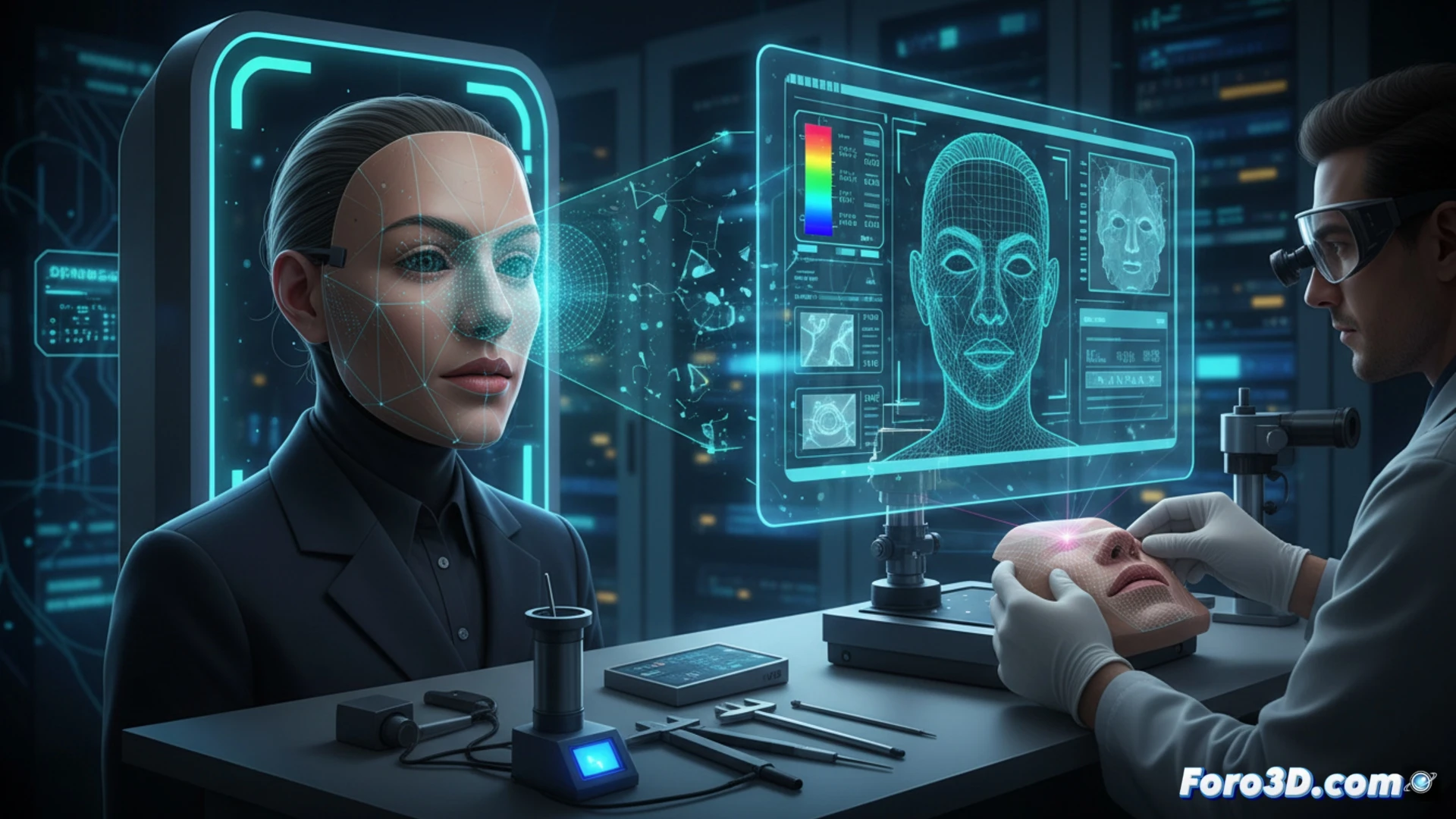
Forensic Workflow with Artec and MountainsMap 🕵️
The auditing process begins with capturing the suspicious mask using an Artec Space Spider scanner, which offers micrometric precision. The resulting point cloud is imported into PolyWorks Inspector to align the geometry against a reference model of the real face. The critical phase occurs in MountainsMap, where surface roughness and texture periodicity are analyzed. Here, 3D printing patterns are revealed: layer lines, artificial porosity, and casting micro-defects that are impossible to replicate in human skin. These markers are the signature of fraud.
Implications for Physical Deepfake Auditing 🧠
This case demonstrates that the boundary between the digital and the physical has blurred. A deepfake is no longer just projected on a screen; it can now materialize into a mask that bypasses biometric systems. For auditors, the lesson is clear: defense against these attacks requires a hybrid approach combining spectral reflectance analysis with surface metrology. Tools like Blender allow simulating these textures, but only the tactile inspection of an optical profilometer can certify whether a face is flesh or silicone.
In a forensic deepfake audit, how can one technically differentiate between a physical 3D mask and an AI-generated spoof when analyzing textures and the spectral response of the skin?
(PS: Detecting deepfakes is like playing Where's Wally? but with suspicious pixels.)